
Race and the Execution of Troy Davis
The execution of Troy Davis has reopened the debate around the death penalty in the United States. In the majority of nations, including Chile, capital punishment has been abolished. Sixteen states in the United States have also abolished it while others, without renouncing it, don’t impose it. In practice only a dozen states use it. 80 percent of executions take place in southern states and a high percentage of those executed are black.
There are many reasons why states have renounced taking the lives of those convicted of major crimes. The first, naturally, is political and corresponds to the will of the majority of the population. This is despite the fact that it is common to find minorities who are significant supporters of execution, especially when it comes to the murder of children. A second reason to refrain from the firing squad, or other methods, is the high level of uncertainty that exists about the guilt of the defendants. In the United States, throughout the last century, almost a third of the capital punishments administered have been questioned. And, of course, there is the ethical objection that says that men should not cut short the life of other men.
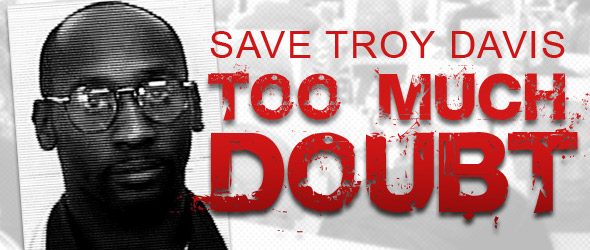
The case of Davis became emblematic, well encapsulating many of the criticisms of the death penalty. From the start his guilt wasn’t clear enough to be able to declare beyond a reasonable doubt that he had killed. Nine witnesses recanted their original testimonies. Later, witnesses claimed that it was a different person who fired the shot. The murder weapon used to kill an off-duty police officer in 1989 was never found. The incident occurred in confusing circumstances outside a fast food place in which many people participated, including Davis. The ballistic reports were contested and irregularities were detected in the police proceedings.
In addition to the previous is the fact that Davis was black. It is not possible to declare that American courts use racial criteria to give sentences. In fact, the jury that judged Davis was composed of seven blacks and five whites. But what is indisputable are the statistics that show that more than 40 percent of capital punishments are applied to blacks in circumstances where they represent only 12 percent of the population. Amnesty International, which leads the campaign against the death penalty, cites a study conducted in Connecticut by Yale University School of Law that demonstrates that African Americans are convicted at a rate three times greater than whites when it comes to the killing of a white person. In addition, those who kill whites receive harsher punishments than those who kill members of minority groups. The study was reinforced by similar studies in other states and one conducted by a law school in Philadelphia determined that a third of blacks sentenced to death would have received life sentences had they been white. When it comes to lives, it is always preferable to err on the side of tolerance than go the route of irreparable acts.
There are many reasons why states have renounced taking the lives of those convicted of major crimes. The first, naturally, is political and corresponds to the will of the majority of the population. This is despite the fact that it is common to find minorities who are significant supporters of execution, especially when it comes to the murder of children. A second reason to refrain from the firing squad, or other methods, is the high level of uncertainty that exists about the guilt of the defendants. In the United States, throughout the last century, almost a third of the capital punishments administered have been questioned. And, of course, there is the ethical objection that says that men should not cut short the life of other men.
The case of Davis became emblematic, well encapsulating many of the criticisms of the death penalty. From the start his guilt wasn’t clear enough to be able to declare beyond a reasonable doubt that he had killed. Nine witnesses recanted their original testimonies. Later, witnesses claimed that it was a different person who fired the shot. The murder weapon used to kill an off-duty police officer in 1989 was never found. The incident occurred in confusing circumstances outside a fast food place in which many people participated, including Davis. The ballistic reports were contested and irregularities were detected in the police proceedings.
In addition to the previous is the fact that Davis was black. It is not possible to declare that American courts use racial criteria to give sentences. In fact, the jury that judged Davis was composed of seven blacks and five whites. But what is indisputable are the statistics that show that more than 40 percent of capital punishments are applied to blacks in circumstances where they represent only 12 percent of the population. Amnesty International, which leads the campaign against the death penalty, cites a study conducted in Connecticut by Yale University School of Law that demonstrates that African Americans are convicted at a rate three times greater than whites when it comes to the killing of a white person. In addition, those who kill whites receive harsher punishments than those who kill members of minority groups. The study was reinforced by similar studies in other states and one conducted by a law school in Philadelphia determined that a third of blacks sentenced to death would have received life sentences had they been white. When it comes to lives, it is always preferable to err on the side of tolerance than go the route of irreparable acts.
Previous article
