
Edited by Natalie Clager
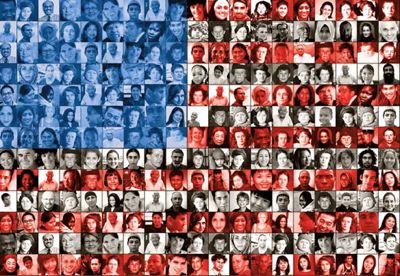
The Colors of the United States
Published in El Universal
(Mexico) on 12 November 2012
by Gabriel Guerra Castellanos (link to
original)
$2.5 billion later, Barack Obama has done it: The first African-American president of the U.S. was reelected and will have the chance to show if he truly does represent the beginning of a transformation for the country. If two decades ago someone had predicted that the presidency would be fought for by an African-American and a Mormon, that it would be a close race until the end and that it would revolve more around the candidates' proposals than their races or religions, nobody would have it believed it possible.
While Obama's reelection would seem like a triumph for tolerance and diversity, a closer look at U.S. voting tendencies reveals an electorate divided by race, region, gender, religious beliefs and age. It's normal that one candidate is more attractive to female voters, young people or to a specific minority group, but in this case voters' preferences were almost exclusively one-sided, speaking more of a country that is polarized than of one merging together and forgetting differences.
To analyze demographic voting tendencies, one needs to take into account the social and cultural currents of the time, currents which in this case widely favored the Democrats. Issues like same-sex marriage and the decriminalization of marijuana in some states have shown how the conservative wave that seemed to have swept the country a decade ago has come to an end or at least hit a wall.
If we add their generational defeat to the gradual decrease in the Protestant vote as a percentage of the electorate, we see that the conservatives could well be an endangered species, despite the enormous resources that different religious/Christian/conservative movements pumped into not only Romney (despite his own religion, which continues to be considered plainly unacceptable to many in the U.S.) but into many other candidates in Congress that ended up having no success.
A view of the already famous (or infamous, depending on whom you ask) Electoral College shows us that the Democrats have managed to take control and wall out Republicans. Chris Lizza of the Washington Post gives us the following figure: in the last six presidential elections, Republican candidates have had an average of 210 electoral votes against an average of 327 for Democrats. This seems to mark an irreversible tendency, at least for the time being, in U.S. politics. It's the liberals and minorities in power now. Will they know how to take advantage of this moment in history? On it will depend the future color, or colors, of the United States.
While Obama's reelection would seem like a triumph for tolerance and diversity, a closer look at U.S. voting tendencies reveals an electorate divided by race, region, gender, religious beliefs and age. It's normal that one candidate is more attractive to female voters, young people or to a specific minority group, but in this case voters' preferences were almost exclusively one-sided, speaking more of a country that is polarized than of one merging together and forgetting differences.
To analyze demographic voting tendencies, one needs to take into account the social and cultural currents of the time, currents which in this case widely favored the Democrats. Issues like same-sex marriage and the decriminalization of marijuana in some states have shown how the conservative wave that seemed to have swept the country a decade ago has come to an end or at least hit a wall.
If we add their generational defeat to the gradual decrease in the Protestant vote as a percentage of the electorate, we see that the conservatives could well be an endangered species, despite the enormous resources that different religious/Christian/conservative movements pumped into not only Romney (despite his own religion, which continues to be considered plainly unacceptable to many in the U.S.) but into many other candidates in Congress that ended up having no success.
A view of the already famous (or infamous, depending on whom you ask) Electoral College shows us that the Democrats have managed to take control and wall out Republicans. Chris Lizza of the Washington Post gives us the following figure: in the last six presidential elections, Republican candidates have had an average of 210 electoral votes against an average of 327 for Democrats. This seems to mark an irreversible tendency, at least for the time being, in U.S. politics. It's the liberals and minorities in power now. Will they know how to take advantage of this moment in history? On it will depend the future color, or colors, of the United States.