
Ukraine after Iran
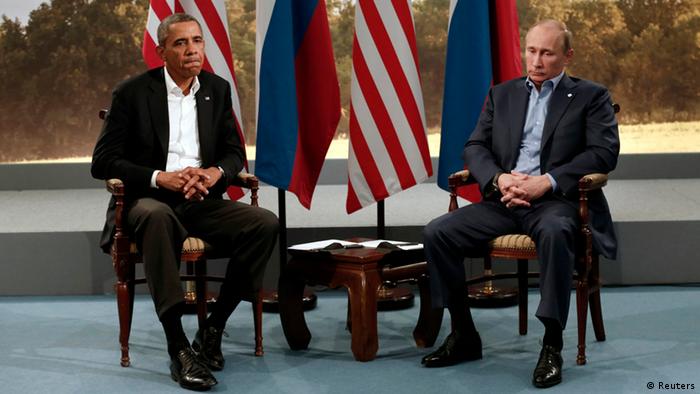
It looks like we can cautiously congratulate American diplomats on their agreement with Iran. President Barack Obama demonstrated that he really does know how to achieve goals he sets for himself and which he deems a high priority.
The Iranian agreement is a good opportunity to once again explain why Obama isn't as decisive on the Ukrainian issue as on Iran. It's enough to recognize what the U.S. president himself admitted in his interview with "The Atlantic": Namely, that his foreign policy legacy as president will be measured by the success of the Iran agreement, as opposed to how the conflict over Ukraine is resolved. Presidential legacies are serious business in the [United] States.
Is it good or bad that the Iranians are at the center of the current U.S. president's foreign policy objectives, rather than we Ukrainians?
The issue is ambiguous. Firstly, the Iranian agreement has proven once again that in order to be considered a priority by the U.S., one must either be a real threat, or of real value, to its national security. And not being a high U.S. priority isn't necessarily always a bad thing. As Washington Post journalist Anne Applebaum noted at one of our events, Switzerland isn't a U.S. priority, and that isn't hurting them.
Secondly, Ukraine could suffer consequences in the short term as a result of the processes taking place in Iran, since the White House will have a different focus and will be trying to keep from provoking Russia. However, we could win in the medium and long term due to lower energy prices and a Russia more ready for dialogue. Russia can rejoice today that it played a part and that it's being praised for its constructive position. However, it could be that the Iranian agreement will become yet another subtle sanction Russia helped levy upon itself.
Now there is another open question: After reaching an agreement with Iran, will Obama have more room to maneuver on Ukrainian issues, since he doesn't need as much from Russia as before the Iran agreement? Or will he court Russia until the agreement is firmly on its feet in terms of implementation?
One more thing: The Iranian agreement succeeded because the key political leaders on both sides really wanted it, were ready to compromise, and were prepared to base the agreement on verification rather than trust. This wasn't just a matter of political will; this was a matter of political obsession. Washington clearly understands that not everyone involved in the Ukraine conflict is ready to compromise, and obviously not everyone is ready for an agreement based on verification. That's only one explanation for why it's significantly easier for Obama to pass off the Ukraine issue to the next president like a hot potato. And we need to look at these things with eyes wide open.
The Iranian agreement is a good opportunity to once again explain why Obama isn't as decisive on the Ukrainian issue as on Iran. It's enough to recognize what the U.S. president himself admitted in his interview with "The Atlantic": Namely, that his foreign policy legacy as president will be measured by the success of the Iran agreement, as opposed to how the conflict over Ukraine is resolved. Presidential legacies are serious business in the [United] States.
Is it good or bad that the Iranians are at the center of the current U.S. president's foreign policy objectives, rather than we Ukrainians?
The issue is ambiguous. Firstly, the Iranian agreement has proven once again that in order to be considered a priority by the U.S., one must either be a real threat, or of real value, to its national security. And not being a high U.S. priority isn't necessarily always a bad thing. As Washington Post journalist Anne Applebaum noted at one of our events, Switzerland isn't a U.S. priority, and that isn't hurting them.
Secondly, Ukraine could suffer consequences in the short term as a result of the processes taking place in Iran, since the White House will have a different focus and will be trying to keep from provoking Russia. However, we could win in the medium and long term due to lower energy prices and a Russia more ready for dialogue. Russia can rejoice today that it played a part and that it's being praised for its constructive position. However, it could be that the Iranian agreement will become yet another subtle sanction Russia helped levy upon itself.
Now there is another open question: After reaching an agreement with Iran, will Obama have more room to maneuver on Ukrainian issues, since he doesn't need as much from Russia as before the Iran agreement? Or will he court Russia until the agreement is firmly on its feet in terms of implementation?
One more thing: The Iranian agreement succeeded because the key political leaders on both sides really wanted it, were ready to compromise, and were prepared to base the agreement on verification rather than trust. This wasn't just a matter of political will; this was a matter of political obsession. Washington clearly understands that not everyone involved in the Ukraine conflict is ready to compromise, and obviously not everyone is ready for an agreement based on verification. That's only one explanation for why it's significantly easier for Obama to pass off the Ukraine issue to the next president like a hot potato. And we need to look at these things with eyes wide open.
Previous article
