
The Coronation of Trump
The Republican candidate is trying to create unity among conservatives.
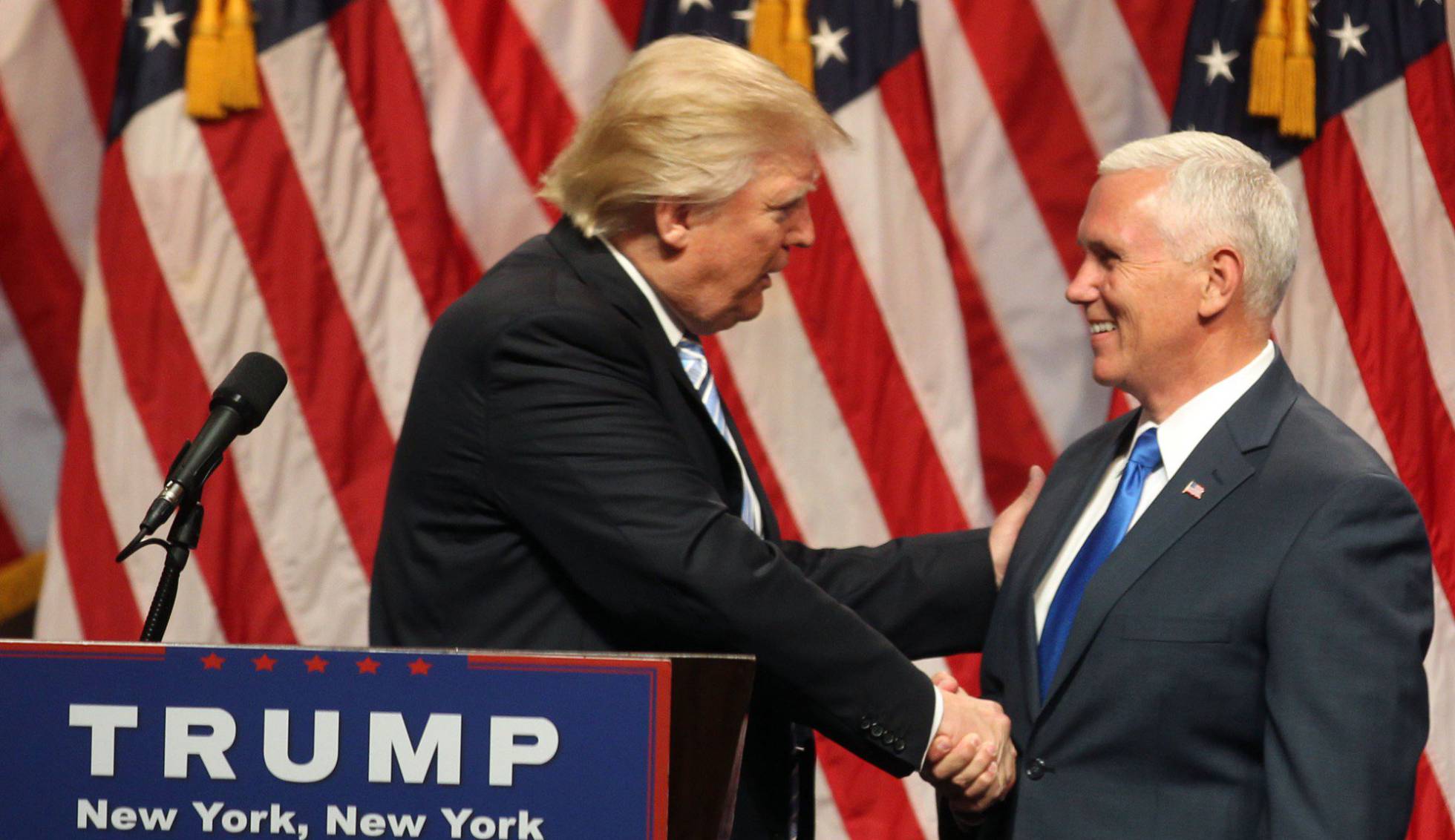
With the designation of Indiana Gov. Mike Pence as his vice-presidential running mate, Donald Trump is getting ready to face the Republican Convention, which started yesterday and will name him as the party’s nominee for the White House. This is a smart move for someone whose whole campaign has been characterized by outbursts, missteps, and withering dismissals of his closest collaborators. Among them was his campaign manager, no less, who was let go just three weeks ago.
Pence is a conservative who wears his religious faith on his sleeve and who will act, or so he hopes, as a counterweight to Trump’s economic ultraliberalism and unorthodox moral profile. After conquering the party base which gave him their support in the primaries, the multimillionaire New Yorker is now trying to anesthetize the party establishment, which has always seen him as a social climber. The party establishment feels that he has taken advantage of the crisis in the Republican Party over the past few years in order to use it as a stepping stone to the most important political office on the planet. In the coming days, we will see to what extent Trump’s strategy is correct.
But independent of his choice of a running mate for the Republican ticket, what is certain is that Trump has already decisively influenced the Republican Party, and that his emergence on the conservative political scene will have important consequences, many of them negative. Probably the clearest example is the adoption by the Republicans of the controversial proposal with which Trump jumped into this race. Among others, many of those who are now his fellow party members considered this proposal — namely, the construction of a wall along the border with Mexico, in theory to put the brakes to illegal immigration — to be a dangerous blunder.
That a party so fundamental to the history of the world’s most important democracy and which was prepared to face a civil war in order to end slavery should embrace one of the most racist and xenophobic measures in politics in recent years shows the extent to which the Republican Party’s political discourse has been degraded in its quest to achieve power.
Trump is not a phenomenon that came out of nowhere. His candidacy has been fueled by the anti-establishment rhetoric adopted over the past few years by the extreme right in the United States. These views have been embodied by the tea party, the most conservative faction in the Republican Party, which instead of proposing a constructive alternative to the Democratic Party has been dedicated to discrediting the entire political class. In this way, it has created a large base receptive to the simplistic, demagogic, and vulgar rhetoric of a problematic entrepreneur who, old argument, thinks that a country can be run like one of his companies.
The big question remaining prior to the start of the convention is whether Trump has finally turned into a Republican, or whether the Republican Party has become Trumpist. If this strategy results in victory, or if it takes the Grand Old Party to the brink of the political abyss, will be decided in the election in November.
With the designation of Indiana Gov. Mike Pence as his vice-presidential running mate, Donald Trump is getting ready to face the Republican Convention, which started yesterday and will name him as the party’s nominee for the White House. This is a smart move for someone whose whole campaign has been characterized by outbursts, missteps, and withering dismissals of his closest collaborators. Among them was his campaign manager, no less, who was let go just three weeks ago.
Pence is a conservative who wears his religious faith on his sleeve and who will act, or so he hopes, as a counterweight to Trump’s economic ultraliberalism and unorthodox moral profile. After conquering the party base which gave him their support in the primaries, the multimillionaire New Yorker is now trying to anesthetize the party establishment, which has always seen him as a social climber. The party establishment feels that he has taken advantage of the crisis in the Republican Party over the past few years in order to use it as a stepping stone to the most important political office on the planet. In the coming days, we will see to what extent Trump’s strategy is correct.
But independent of his choice of a running mate for the Republican ticket, what is certain is that Trump has already decisively influenced the Republican Party, and that his emergence on the conservative political scene will have important consequences, many of them negative. Probably the clearest example is the adoption by the Republicans of the controversial proposal with which Trump jumped into this race. Among others, many of those who are now his fellow party members considered this proposal — namely, the construction of a wall along the border with Mexico, in theory to put the brakes to illegal immigration — to be a dangerous blunder.
That a party so fundamental to the history of the world’s most important democracy and which was prepared to face a civil war in order to end slavery should embrace one of the most racist and xenophobic measures in politics in recent years shows the extent to which the Republican Party’s political discourse has been degraded in its quest to achieve power.
Trump is not a phenomenon that came out of nowhere. His candidacy has been fueled by the anti-establishment rhetoric adopted over the past few years by the extreme right in the United States. These views have been embodied by the tea party, the most conservative faction in the Republican Party, which instead of proposing a constructive alternative to the Democratic Party has been dedicated to discrediting the entire political class. In this way, it has created a large base receptive to the simplistic, demagogic, and vulgar rhetoric of a problematic entrepreneur who, old argument, thinks that a country can be run like one of his companies.
The big question remaining prior to the start of the convention is whether Trump has finally turned into a Republican, or whether the Republican Party has become Trumpist. If this strategy results in victory, or if it takes the Grand Old Party to the brink of the political abyss, will be decided in the election in November.
Next article