
The Retail Chain Crisis in Trump’s America
Donald Trump is destabilizing America’s international relations as well as demolishing his predecessor’s health care reforms and environmental policies. Despite that, he still has a strong following and the stock market looks favorably on him because, according to many, he knows his way around the economic field and has made jobs a priority.
Even in this case though, an optical illusion has triumphed over reality. The White House has bet everything on energy (by bringing back coal) and on recovering production facilities that had been moved abroad (to Mexico and Asia). The president vows to reopen coal mines while ignoring the consequences for the environment (pollution and the greenhouse effect) and defies the whole world without achieving the employment gains he promised. When he announced that he was withdrawing the U.S. from the Paris climate agreement, Trump justified this grave step by claiming he was safeguarding jobs. As an example, he mentioned a new coal mine in Pennsylvania, the Acosta Mine. The Corsa Coal Corporation has announced that 70 workers will be hired for this plant. The mine that symbolizes the climate clash between Trump and the rest of the world will therefore have fewer employees than a supermarket. (The average U.S. supermarket employs 92 workers.)
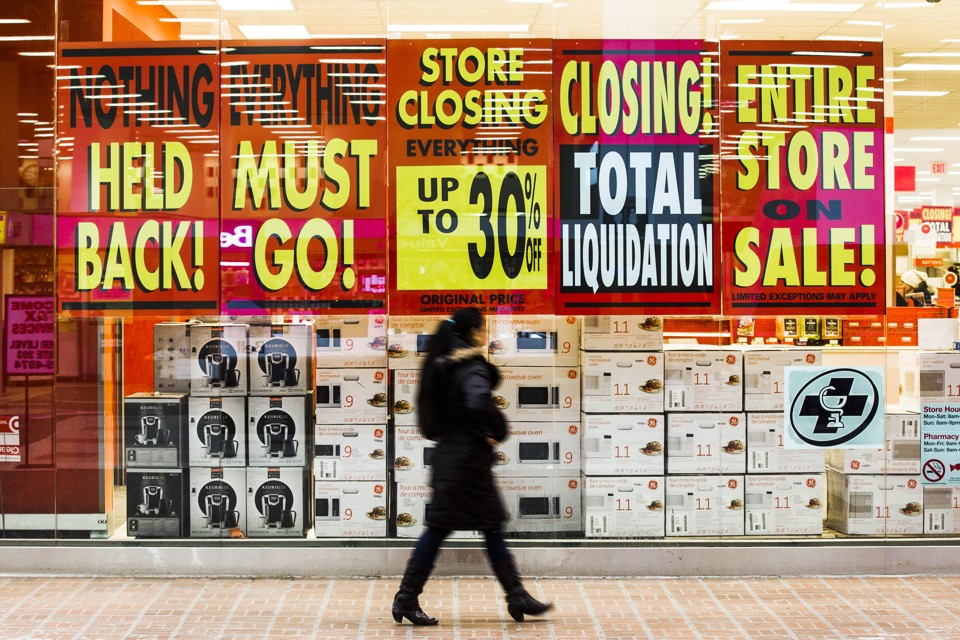
In the meantime, as he celebrates the return of some (almost completely automated) factories to the American soil, the tycoon who made it to the White House ignores the real employment crisis that is hitting the U.S. - the retail sales crisis. Because of the increase in online shopping sales and the change in American consumers’ habits (they spend more on travel and health care and less on clothes and furniture), major retail chains such as Macy’s Inc., Sears Holding Corp. and J.C. Penney Co. have announced that they will shut down hundreds of their stores. Between the beginning of the year and April 6, according to the analysis from Credit Suisse, 2,880 stores have closed in the United States. By the end of the year, that number is expected to rise to 8,600. Many department stores, symbols of American shopping, are becoming eerie places. Some are preserved by replacing their shops with offices, medical practices and restaurants. According to analysts though, at least 400 out of 1,100 American malls will close. The retail sector, which employs more people (15.9 million) than the factories, has already lost 50,000 workers since the moment Trump became president. However, he has not noticed that yet.
Even in this case though, an optical illusion has triumphed over reality. The White House has bet everything on energy (by bringing back coal) and on recovering production facilities that had been moved abroad (to Mexico and Asia). The president vows to reopen coal mines while ignoring the consequences for the environment (pollution and the greenhouse effect) and defies the whole world without achieving the employment gains he promised. When he announced that he was withdrawing the U.S. from the Paris climate agreement, Trump justified this grave step by claiming he was safeguarding jobs. As an example, he mentioned a new coal mine in Pennsylvania, the Acosta Mine. The Corsa Coal Corporation has announced that 70 workers will be hired for this plant. The mine that symbolizes the climate clash between Trump and the rest of the world will therefore have fewer employees than a supermarket. (The average U.S. supermarket employs 92 workers.)
In the meantime, as he celebrates the return of some (almost completely automated) factories to the American soil, the tycoon who made it to the White House ignores the real employment crisis that is hitting the U.S. - the retail sales crisis. Because of the increase in online shopping sales and the change in American consumers’ habits (they spend more on travel and health care and less on clothes and furniture), major retail chains such as Macy’s Inc., Sears Holding Corp. and J.C. Penney Co. have announced that they will shut down hundreds of their stores. Between the beginning of the year and April 6, according to the analysis from Credit Suisse, 2,880 stores have closed in the United States. By the end of the year, that number is expected to rise to 8,600. Many department stores, symbols of American shopping, are becoming eerie places. Some are preserved by replacing their shops with offices, medical practices and restaurants. According to analysts though, at least 400 out of 1,100 American malls will close. The retail sector, which employs more people (15.9 million) than the factories, has already lost 50,000 workers since the moment Trump became president. However, he has not noticed that yet.
Previous article

Next article
