Warning: Fake News
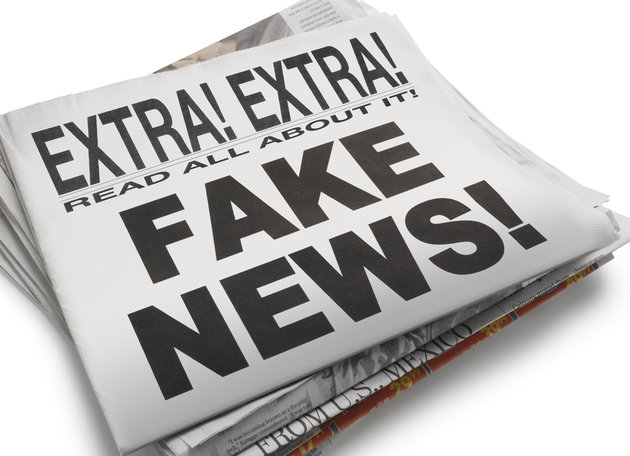
While Donald Trump dallies around with those attacking the mass media, European governments and digital platforms worry about fake news. This week, Brussels launched a task force of European Union experts to battle manipulation and disinformation on the internet, and the European Parliament dedicated a plenary session in Strasbourg titled "Topical Debate on Russia – the Influence of Propaganda on EU Countries.”
Meanwhile in Washington, representatives of Facebook, Google and Twitter, testifying before a Senate committee on Wednesday, stated that they had learned important lessons about how fake news and Russian propaganda spread through their sites during the 2016 presidential election. This is why they are working to ensure that this does not happen again in 2018. The three companies presented plans that promise more transparency and methods to prevent fake news from flooding into and poisoning this new election cycle.
Internet as a Battlefield
In “Hit Refresh” (HarperCollins, 2017), Satya Nadella, CEO of Microsoft, asks for a multilateral agreement that establishes global cybersecurity laws, much like a digital Geneva Convention. Just as governments met in 1949 to protect civilians in times of war, this digital agreement would oblige governments to implement norms to protect civilians on the internet in times of peace. We are fully entering the geopolitics of cyberspace. Goodbye to the Age of Innocence over the neutrality of the internet and the libertarian utopia on the web; there is a search for security and trust, protected from viruses, cyberattacks and malicious campaigns. Freedom of expression and democracy are exposed in the virtual world, as in the real world, to new battles and challenges.
Meanwhile in Washington, representatives of Facebook, Google and Twitter, testifying before a Senate committee on Wednesday, stated that they had learned important lessons about how fake news and Russian propaganda spread through their sites during the 2016 presidential election. This is why they are working to ensure that this does not happen again in 2018. The three companies presented plans that promise more transparency and methods to prevent fake news from flooding into and poisoning this new election cycle.
Internet as a Battlefield
In “Hit Refresh” (HarperCollins, 2017), Satya Nadella, CEO of Microsoft, asks for a multilateral agreement that establishes global cybersecurity laws, much like a digital Geneva Convention. Just as governments met in 1949 to protect civilians in times of war, this digital agreement would oblige governments to implement norms to protect civilians on the internet in times of peace. We are fully entering the geopolitics of cyberspace. Goodbye to the Age of Innocence over the neutrality of the internet and the libertarian utopia on the web; there is a search for security and trust, protected from viruses, cyberattacks and malicious campaigns. Freedom of expression and democracy are exposed in the virtual world, as in the real world, to new battles and challenges.
Previous article
Next article