
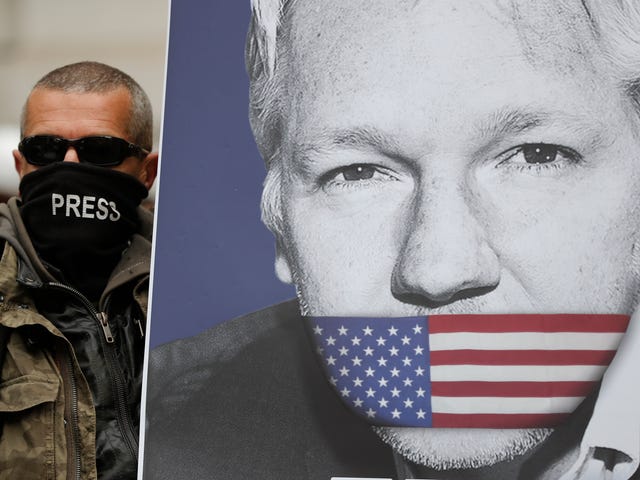
Julian Assange Could Face 170 Years in Prison under the Espionage Act
While the United States prepares an extradition case against WikiLeaks founder Julian Assange, the Department of Justice has revealed a series of new charges against him for which, if convicted, he could face 170 years in prison.
The new allegations include 17 separate charges under the Espionage Act of 1917. According to the Department of Justice, all are linked to the leaking of classified documents related to U.S. national security, in part by Chelsea Manning, who, after receiving a presidential pardon from Barack Obama, was returned to prison by the Trump administration for her refusal to testify against Assange.
According to Antiwar.com, the scenario indicates a potentially very controversial case. Although typically used to pursue cases of espionage by foreign governments, the Espionage Act of 1917 has been applied repeatedly to attack journalists and their sources. Its use against the press has historically been deeply criticized.
The Trump administration has tried to push a narrative that, in spite of the fact that WikiLeaks behaves like an ordinary news outlet, it is something different. This is almost certainly an argument to give Wikileaks a different status so the case is not about censorship of the media.
If Julian Assange is convicted, it would have a chilling effect on the U.S. press and, in fact, the international press because Assange is not an American, nor was he living in the U.S. at the time of the “crimes” in question, establishing that the U.S. government can jail journalists for reporting on the country’s embarrassing secrets, noted Antiwar.
The new allegations include 17 separate charges under the Espionage Act of 1917. According to the Department of Justice, all are linked to the leaking of classified documents related to U.S. national security, in part by Chelsea Manning, who, after receiving a presidential pardon from Barack Obama, was returned to prison by the Trump administration for her refusal to testify against Assange.
According to Antiwar.com, the scenario indicates a potentially very controversial case. Although typically used to pursue cases of espionage by foreign governments, the Espionage Act of 1917 has been applied repeatedly to attack journalists and their sources. Its use against the press has historically been deeply criticized.
The Trump administration has tried to push a narrative that, in spite of the fact that WikiLeaks behaves like an ordinary news outlet, it is something different. This is almost certainly an argument to give Wikileaks a different status so the case is not about censorship of the media.
If Julian Assange is convicted, it would have a chilling effect on the U.S. press and, in fact, the international press because Assange is not an American, nor was he living in the U.S. at the time of the “crimes” in question, establishing that the U.S. government can jail journalists for reporting on the country’s embarrassing secrets, noted Antiwar.
Previous article

Next article
