
Political Incompetence as a System
A default has been averted with a compromise that no one likes. How long does the United States intend to let this dysfunction continue?
At this point, it’s hard to count how many times Republicans have instigated this game: Whenever a Democratic president sits in the White House and Republicans have a majority in the House of Representatives, the Republicans exploit the routine political process of raising or suspending the debt ceiling to blackmail their own government. They gamble until the last minute in dramatic negotiations so they can proudly announce afterward that they have wrested some spending cuts from the government. In the meantime, the United States faces a default and the world economy shudders.
As president, Donald Trump perfected the strategy of constantly causing crises and then bragging about finding the solutions. He saw this method of consciously applied irresponsibility as a legitimate way of doing politics. This can be done by those who are quite certain they can hold the other party responsible in the case of failure. Trump is more cunning in this behavior than Republican House Speaker Kevin McCarthy.
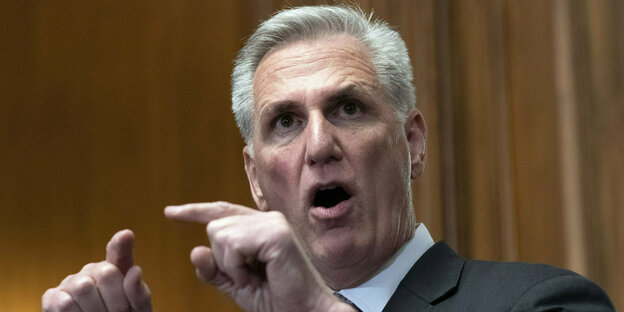
McCarthy, who came into office weakened by the chaos of 15 rounds of voting, can only lose in this situation. If he hadn’t used the instrument of the debt ceiling, the Republican hard-liners in his own party would have attacked him immediately. He didn’t get much through and made a deal with which no one is at all satisfied. Not even those who agreed with him. The relief of averting a default is significant, but this is just another case of having prevented a homemade catastrophe.
It’s up to the United States to decide how long it intends to let such dysfunction continue in its political system. The thing is, when checks and balances become an expression of inability in politics and reform, democracy’s reputation is severely damaged. And unfortunately not just in America.
At this point, it’s hard to count how many times Republicans have instigated this game: Whenever a Democratic president sits in the White House and Republicans have a majority in the House of Representatives, the Republicans exploit the routine political process of raising or suspending the debt ceiling to blackmail their own government. They gamble until the last minute in dramatic negotiations so they can proudly announce afterward that they have wrested some spending cuts from the government. In the meantime, the United States faces a default and the world economy shudders.
As president, Donald Trump perfected the strategy of constantly causing crises and then bragging about finding the solutions. He saw this method of consciously applied irresponsibility as a legitimate way of doing politics. This can be done by those who are quite certain they can hold the other party responsible in the case of failure. Trump is more cunning in this behavior than Republican House Speaker Kevin McCarthy.
McCarthy, who came into office weakened by the chaos of 15 rounds of voting, can only lose in this situation. If he hadn’t used the instrument of the debt ceiling, the Republican hard-liners in his own party would have attacked him immediately. He didn’t get much through and made a deal with which no one is at all satisfied. Not even those who agreed with him. The relief of averting a default is significant, but this is just another case of having prevented a homemade catastrophe.
It’s up to the United States to decide how long it intends to let such dysfunction continue in its political system. The thing is, when checks and balances become an expression of inability in politics and reform, democracy’s reputation is severely damaged. And unfortunately not just in America.
Previous article
Next article