
The Benefit Goes to Israel’s Enemies
Published in Frankfurter Allgemeine Zeitung
(Germany) on 21 June 2024
by Nikolas Busse (link to
original)
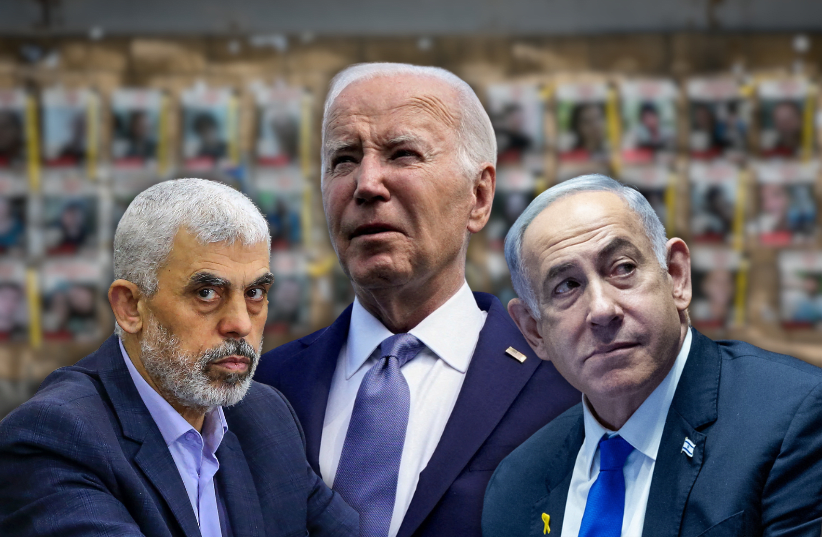
The conflict between President Biden and Prime Minister Netanyahu mostly benefits Hamas and Hezbollah. The same can be said for the domestic disputes in Israel.
The exchange of blows between Benjamin Netanyahu and Joe Biden’s administration benefits Israel’s enemies more than anyone else. Hezbollah and Hamas can only feel empowered when their opponent is publicly arguing with its most important ally about weapons shipments. And, in their strategic planning, Hezbollah and Hamas can take into account the restrictions Washington is imposing on Israel.
Similar to the war in Ukraine, there is a price the West has to pay for moving the debate about weapons aid and military strategy out into the open. Today, the West’s enemies can often spare themselves tedious reconnaissance efforts because they get enough information from the media.
Muslim Voters
In the case of Israel, too, there is no telling whether this approach will pay off politically. By insisting on humanitarian issues, Biden may be able to score a few points among Muslim voters. But the same voters see that there appears to be no end to the war, and the Democrats have many Jewish supporters.
Netanyahu, in turn, cannot overlook the growing criticism at home over the lack of any strategy by disparaging the United States. Netanyahu is increasingly caught between military leadership, which is increasingly opposing him more openly, and his coalition partners, who dream of resettling Gaza. Israel’s enemies are profiting from this disunity, too.
The exchange of blows between Benjamin Netanyahu and Joe Biden’s administration benefits Israel’s enemies more than anyone else. Hezbollah and Hamas can only feel empowered when their opponent is publicly arguing with its most important ally about weapons shipments. And, in their strategic planning, Hezbollah and Hamas can take into account the restrictions Washington is imposing on Israel.
Similar to the war in Ukraine, there is a price the West has to pay for moving the debate about weapons aid and military strategy out into the open. Today, the West’s enemies can often spare themselves tedious reconnaissance efforts because they get enough information from the media.
Muslim Voters
In the case of Israel, too, there is no telling whether this approach will pay off politically. By insisting on humanitarian issues, Biden may be able to score a few points among Muslim voters. But the same voters see that there appears to be no end to the war, and the Democrats have many Jewish supporters.
Netanyahu, in turn, cannot overlook the growing criticism at home over the lack of any strategy by disparaging the United States. Netanyahu is increasingly caught between military leadership, which is increasingly opposing him more openly, and his coalition partners, who dream of resettling Gaza. Israel’s enemies are profiting from this disunity, too.
Previous article
Next article