
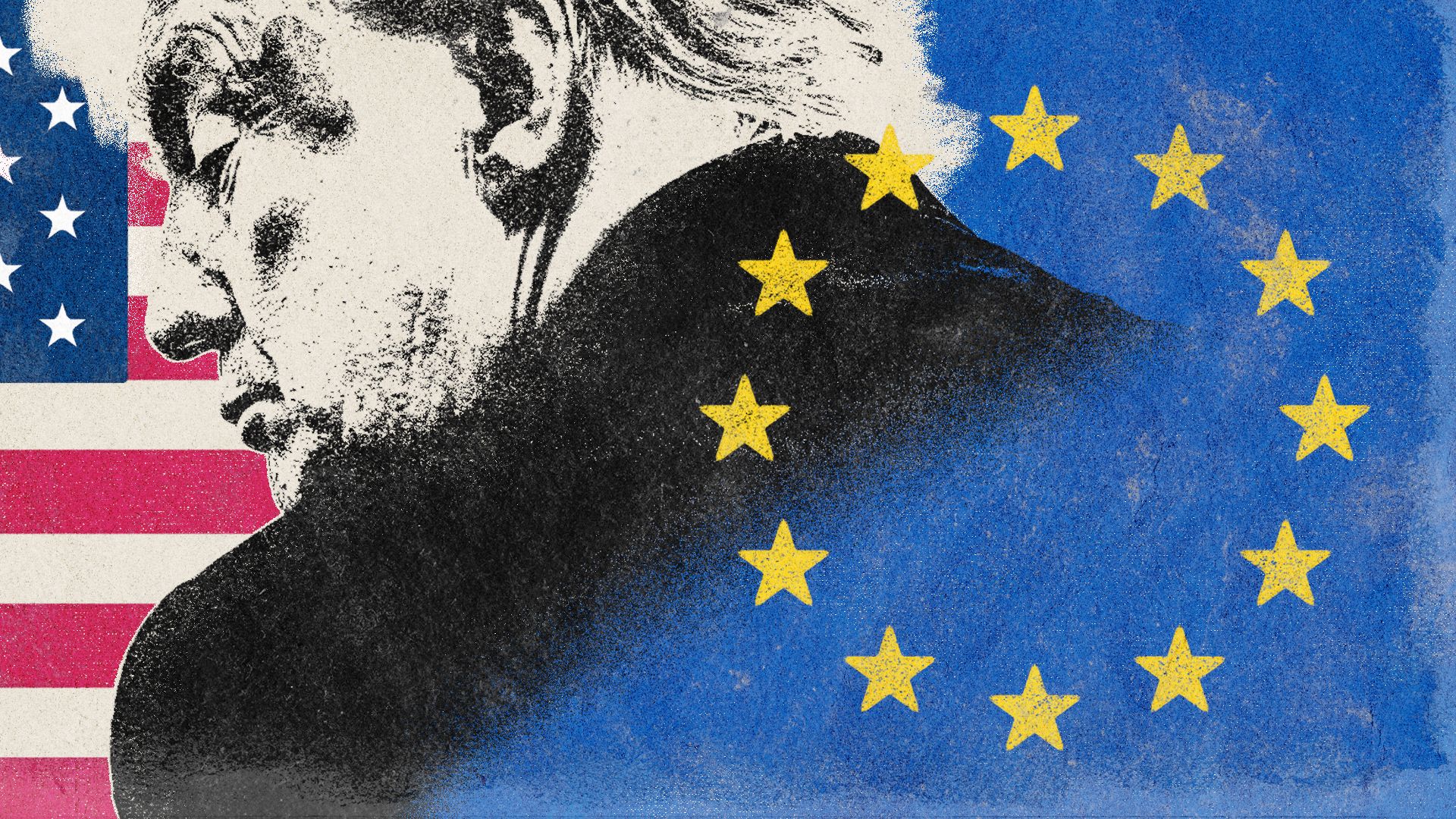
Welcome to Trumpembourg? On Precarious Interactions with Trump’s America*
Trump declares Europe an enemy. The new U.S. security strategy openly favors right-wing parties — and undermines the EU from within. It won’t be easy for Luxembourg’s policies either.
Europeans have long feared that the transatlantic love affair is going cold. The good news under Donald Trump 2.0 is that there is still interest. The bad news — it is aimed at bringing right-wing parties to power and destroying the European Union.
Since the publication of the recent U.S. National Security Strategy, it can be read in black and white. The White House warns of “civilizational erasure” and “economic decline.” Only “the growing influence of patriotic European parties” provides a reason to be optimistic.
In other words, Trump & Co. want to bring about regime change in the countries of the European Union. Europe as we know it has been served divorce papers.
U.S. diplomats were briefed. Trump Secretary of State Marco Rubio instructed his “ambassadors” in Europe in a diplomatic dispatch on Nov. 21 around “talking points” for discussions with the respective national governments. The New York Times wrote about it.
According to the dispatch, diplomats are supposed to send the U.S. Department of State reports about criminality among migrants and the host government’s response to it. A particular point of interest are governments which have “policies that unduly favor migrants at the expense of local populations.” Another text called for diplomats to include cases of foreign governments that support mass immigration in the countries’ annual reports on human rights.
When the dispatches arrived in European capitals, Stacey Feinberg had been sworn in as U.S. ambassador to Luxembourg for one week. Since then, the 61-year-old has met with a decent segment of the government — Luc Frieden, Xavier Bettel, Yuriko Backes, Stéphanie Obertin, Lex Delles, and Gilles Roth — about the U.S. administration’s “talking points.”
The usual first weeks in office, really. But these are unusual times. Feinberg’s statements don’t hide that fact when she says, “We are closer to Europe than we've ever been since World War II. We want a strong Europe.” Feinberg’s admission of closeness and Trump’s “I love Europe” in front of his followers in Pennsylvania elicit much more uneasiness than trust.
Europe’s right-wing parties are rejoicing. The Alternative for Germany in Germany sees the U.S. security strategy as a “confirmation of the parties’ positions.” Vladimir Putin is also celebrating and probably thinking to himself that not even he could have done better.
And Luxembourg? The Grand Duchy’s last traveler to Moscow made a stop in Washington last week. There, Fernand Kartheiser met with Russia-friendly U.S. Rep. Anna Paulina Luna. In front of Alternative Democratic Reform Party representatives in the EU Parliament, a series of AfD politicians beat a path to the Make America Great Again fanatic’s doorstep. Europe’s right-wingers are moving like fish through the sewage that Trump is dumping on Europe. And they are talking, like Fred Keup in the RTL radio program, about the “other reading” that he, as an AfD politician, sees in the new U.S. security strategy — such that we can wonder how many readings “civilizational erasure” can have.
For once, the political leaders in Europe and in Luxembourg really are not in an enviable position. Trump’s interactions (and ways of interacting) make normal communication impossible. The confusion is desired. But now the White House has written it down, and Europe should adhere to it: Trump’s U.S. wants to dictate our economy, control us digitally, in short, eviscerate us. And what’s more, for whatever reason, they want to force their racism on us.
If we’re being honest, at this point, there is no use in talking further. Better to do something against the influence campaign that they’ve announced. Ingratiation can no longer be considered a method of choice; the Europeans have tried that unsuccessfully up to now. The result of the kowtowing can be read about in the new National Security Strategy.
*Editor's note: This article is available in its original language with a paid subscription.
Europeans have long feared that the transatlantic love affair is going cold. The good news under Donald Trump 2.0 is that there is still interest. The bad news — it is aimed at bringing right-wing parties to power and destroying the European Union.
Since the publication of the recent U.S. National Security Strategy, it can be read in black and white. The White House warns of “civilizational erasure” and “economic decline.” Only “the growing influence of patriotic European parties” provides a reason to be optimistic.
In other words, Trump & Co. want to bring about regime change in the countries of the European Union. Europe as we know it has been served divorce papers.
U.S. diplomats were briefed. Trump Secretary of State Marco Rubio instructed his “ambassadors” in Europe in a diplomatic dispatch on Nov. 21 around “talking points” for discussions with the respective national governments. The New York Times wrote about it.
According to the dispatch, diplomats are supposed to send the U.S. Department of State reports about criminality among migrants and the host government’s response to it. A particular point of interest are governments which have “policies that unduly favor migrants at the expense of local populations.” Another text called for diplomats to include cases of foreign governments that support mass immigration in the countries’ annual reports on human rights.
When the dispatches arrived in European capitals, Stacey Feinberg had been sworn in as U.S. ambassador to Luxembourg for one week. Since then, the 61-year-old has met with a decent segment of the government — Luc Frieden, Xavier Bettel, Yuriko Backes, Stéphanie Obertin, Lex Delles, and Gilles Roth — about the U.S. administration’s “talking points.”
The usual first weeks in office, really. But these are unusual times. Feinberg’s statements don’t hide that fact when she says, “We are closer to Europe than we've ever been since World War II. We want a strong Europe.” Feinberg’s admission of closeness and Trump’s “I love Europe” in front of his followers in Pennsylvania elicit much more uneasiness than trust.
Europe’s right-wing parties are rejoicing. The Alternative for Germany in Germany sees the U.S. security strategy as a “confirmation of the parties’ positions.” Vladimir Putin is also celebrating and probably thinking to himself that not even he could have done better.
And Luxembourg? The Grand Duchy’s last traveler to Moscow made a stop in Washington last week. There, Fernand Kartheiser met with Russia-friendly U.S. Rep. Anna Paulina Luna. In front of Alternative Democratic Reform Party representatives in the EU Parliament, a series of AfD politicians beat a path to the Make America Great Again fanatic’s doorstep. Europe’s right-wingers are moving like fish through the sewage that Trump is dumping on Europe. And they are talking, like Fred Keup in the RTL radio program, about the “other reading” that he, as an AfD politician, sees in the new U.S. security strategy — such that we can wonder how many readings “civilizational erasure” can have.
For once, the political leaders in Europe and in Luxembourg really are not in an enviable position. Trump’s interactions (and ways of interacting) make normal communication impossible. The confusion is desired. But now the White House has written it down, and Europe should adhere to it: Trump’s U.S. wants to dictate our economy, control us digitally, in short, eviscerate us. And what’s more, for whatever reason, they want to force their racism on us.
If we’re being honest, at this point, there is no use in talking further. Better to do something against the influence campaign that they’ve announced. Ingratiation can no longer be considered a method of choice; the Europeans have tried that unsuccessfully up to now. The result of the kowtowing can be read about in the new National Security Strategy.
*Editor's note: This article is available in its original language with a paid subscription.
Previous article

Next article
