
A Billionaire Murders the Press
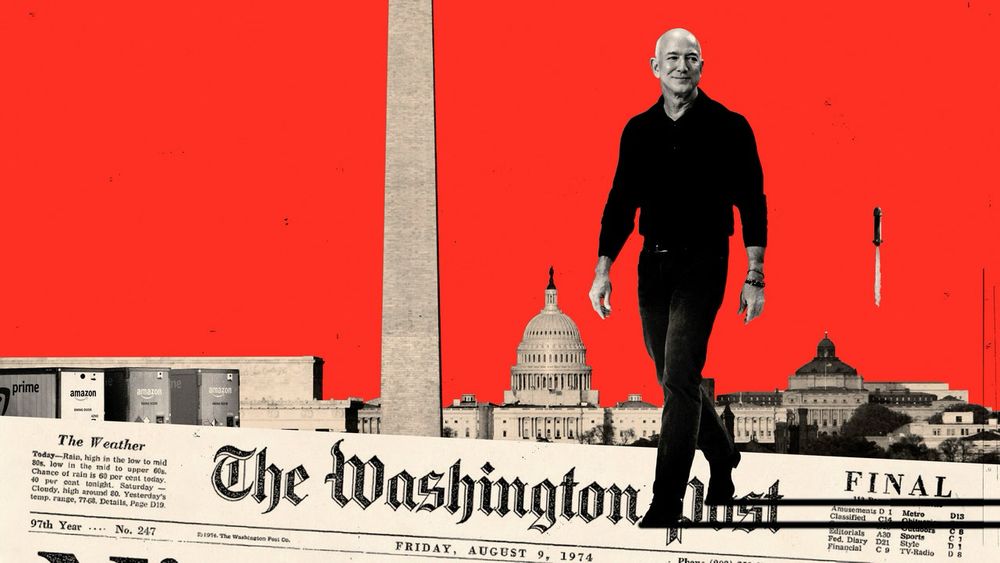
The Washington Post is being destroyed by shocking layoffs as Bezos sacrifices to Trump. To the newspaper that covered Watergate, where is your courage now?
An elegy for the death of a newspaper is underway. On Feb. 4, The Washington Post, a U.S. daily newspaper, announced plans to lay off more than 300 of its 800 reporters. That means Washington and international news coverage will decrease, book reviews will disappear, and the watchful eye on power will weaken. If we view this simply as the result of a declining newspaper industry, we fail to understand the outpouring of grief from rival news media like The New York Times to social media. “This is a tragic day for American journalism, the city of Washington and the country as a whole,” said Jeff Stein, the Post’s chief economics correspondent. Ashley Parker, a journalist at The Atlantic, used the word “murder,” joining the outcry over the perception that Amazon founder Jeff Bezos, who bought the paper in 2013, has sacrificed the newspaper to President Donald Trump.
It is true that The Washington Post recorded losses of $77 million in 2023 and $100 million in 2024. However, as Forbes reported in its February issue, the billionaire’s assets have increased tenfold to $250 billion since acquiring the newspaper. The deficit therefore can’t be such a serious burden. It is likely that currying favor with Trump to save Bezos’ other businesses was more important. At first, Bezos did not interfere with the newspaper. But after he realized during Trump’s first term that there was a cost to opposing the president, for example Amazon’s failure to win a $10 billion Defense Department cloud computing contract, Bezos clearly opted to take a pro-Trump route. Before the October 2024 presidential election, Bezos blocked the Post’s endorsement of Democratic candidate Kamala Harris. In February 2025, he announced that the opinion section would take a new direction. “We are going to be writing every day in support and defense of two pillars: personal liberties and free markets,” Bezos declared. National Public Radio reported that roughly 370,000 paid readers cancelled their subscriptions immediately after these two announcements, and many reporters quit. The person who cost the newspaper both readers and trust was the owner himself.
It might seem paradoxical for an owner to destroy his own company. However, newspapers are inherently conflicted. That’s because their purpose of turning a profit as a business does not align with their public mission to report the truth. Newspapers established the principle of editorial independence to manage this conflict. When this principle fails to work, the press becomes vulnerable to private interests exploited not only by owners but journalists as well. Reporters have written favorable articles about companies to boost stock prices and then they generate a profit from selling shares. Film producers collect large sums in return for producing whistleblowing campaigns against competitors. Journalists have represented the interests of their companies and then leave their jobs for more lucrative careers.
Bezos’ transformation of his paper is especially tragic because The Washington Post is a newspaper remembered for the name of its original owner. When the paper published legendary exposes of events including the Watergate scandal and the publication of the Pentagon Papers, owner Katherine Graham was in charge of decisions that risked the very existence of the newspaper. Her father, Eugene Meyer, firmly established that a newspaper owner should identify not as a manager but as a journalist. After he acquired the Post in 1933, Meyer published what he coined “The Seven Principles for the Conduct of a Newspaper.” The first principle declared that “the first mission of a newspaper is to tell the truth as nearly as the truth may be ascertained,” followed by the striking principles that “The newspaper’s duty is to its readers and to the public at large, and not to the private interests of its owners” and “In the pursuit of truth, the newspaper shall be prepared to make sacrifices of its material fortunes, if such course be necessary for the public good.” Has there ever been another owner so clearly bound by a journalistic code?
Journalism where owners and reporters work together for a common goal without fear or favor is likely to remain a myth. It would certainly be hard to find in today’s world. However, journalists who are faithful to their calling do exist. Some fight fiercely to save every article, every headline. They have an inner self-critical nature and culture unimaginable in other professions.
Such struggles preserve the fragile principles of journalism. Journalists don’t fight with those who have political power. They fight for the truth at the end of every day. I hope more people will understand how this inner struggle and effort form the essence of journalism — and like The Washington Post Reporters who develop ideas and provide sources to their fellow reporters who are in the middle of their own reporting, they will find courage in standing together.
An elegy for the death of a newspaper is underway. On Feb. 4, The Washington Post, a U.S. daily newspaper, announced plans to lay off more than 300 of its 800 reporters. That means Washington and international news coverage will decrease, book reviews will disappear, and the watchful eye on power will weaken. If we view this simply as the result of a declining newspaper industry, we fail to understand the outpouring of grief from rival news media like The New York Times to social media. “This is a tragic day for American journalism, the city of Washington and the country as a whole,” said Jeff Stein, the Post’s chief economics correspondent. Ashley Parker, a journalist at The Atlantic, used the word “murder,” joining the outcry over the perception that Amazon founder Jeff Bezos, who bought the paper in 2013, has sacrificed the newspaper to President Donald Trump.
It is true that The Washington Post recorded losses of $77 million in 2023 and $100 million in 2024. However, as Forbes reported in its February issue, the billionaire’s assets have increased tenfold to $250 billion since acquiring the newspaper. The deficit therefore can’t be such a serious burden. It is likely that currying favor with Trump to save Bezos’ other businesses was more important. At first, Bezos did not interfere with the newspaper. But after he realized during Trump’s first term that there was a cost to opposing the president, for example Amazon’s failure to win a $10 billion Defense Department cloud computing contract, Bezos clearly opted to take a pro-Trump route. Before the October 2024 presidential election, Bezos blocked the Post’s endorsement of Democratic candidate Kamala Harris. In February 2025, he announced that the opinion section would take a new direction. “We are going to be writing every day in support and defense of two pillars: personal liberties and free markets,” Bezos declared. National Public Radio reported that roughly 370,000 paid readers cancelled their subscriptions immediately after these two announcements, and many reporters quit. The person who cost the newspaper both readers and trust was the owner himself.
It might seem paradoxical for an owner to destroy his own company. However, newspapers are inherently conflicted. That’s because their purpose of turning a profit as a business does not align with their public mission to report the truth. Newspapers established the principle of editorial independence to manage this conflict. When this principle fails to work, the press becomes vulnerable to private interests exploited not only by owners but journalists as well. Reporters have written favorable articles about companies to boost stock prices and then they generate a profit from selling shares. Film producers collect large sums in return for producing whistleblowing campaigns against competitors. Journalists have represented the interests of their companies and then leave their jobs for more lucrative careers.
Bezos’ transformation of his paper is especially tragic because The Washington Post is a newspaper remembered for the name of its original owner. When the paper published legendary exposes of events including the Watergate scandal and the publication of the Pentagon Papers, owner Katherine Graham was in charge of decisions that risked the very existence of the newspaper. Her father, Eugene Meyer, firmly established that a newspaper owner should identify not as a manager but as a journalist. After he acquired the Post in 1933, Meyer published what he coined “The Seven Principles for the Conduct of a Newspaper.” The first principle declared that “the first mission of a newspaper is to tell the truth as nearly as the truth may be ascertained,” followed by the striking principles that “The newspaper’s duty is to its readers and to the public at large, and not to the private interests of its owners” and “In the pursuit of truth, the newspaper shall be prepared to make sacrifices of its material fortunes, if such course be necessary for the public good.” Has there ever been another owner so clearly bound by a journalistic code?
Journalism where owners and reporters work together for a common goal without fear or favor is likely to remain a myth. It would certainly be hard to find in today’s world. However, journalists who are faithful to their calling do exist. Some fight fiercely to save every article, every headline. They have an inner self-critical nature and culture unimaginable in other professions.
Such struggles preserve the fragile principles of journalism. Journalists don’t fight with those who have political power. They fight for the truth at the end of every day. I hope more people will understand how this inner struggle and effort form the essence of journalism — and like The Washington Post Reporters who develop ideas and provide sources to their fellow reporters who are in the middle of their own reporting, they will find courage in standing together.
Previous article

Next article