
The 48-Hour Ultimatum Testing the World Order
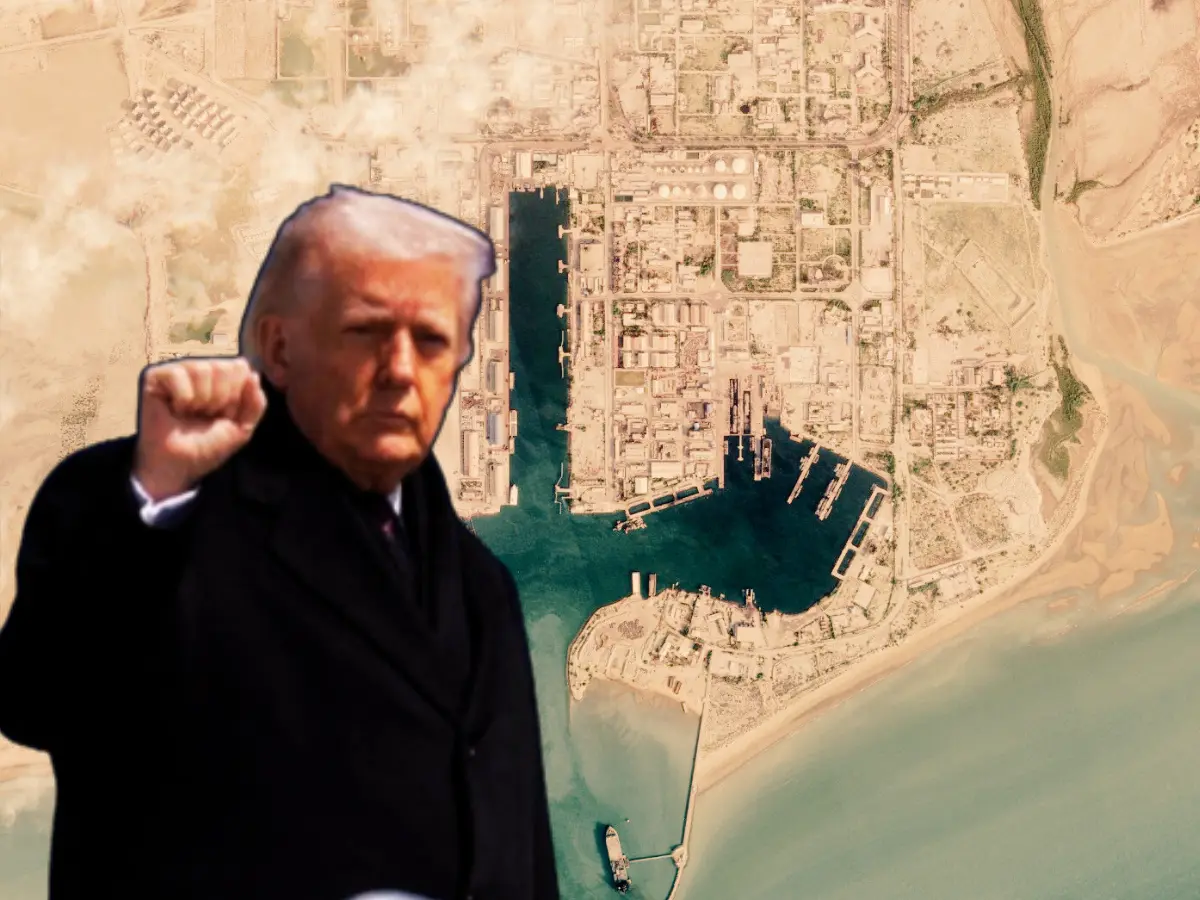
We cannot view Donald Trump's social media post as routine verbal escalation, but rather as a fully formulated scenario for the use of force. We are presented with a three-part equation: a defined time limit, a political security condition (opening the Strait of Hormuz without threats) and a qualitative military punishment (striking power plants, starting with the biggest one). This structure itself reveals that the discourse is no longer directed solely at Iran, but at the entire world order, as an attempt to impose legitimacy by force outside the usual institutional frameworks.
Regionally, this ultimatum is reshaping the deterrence environment in the Persian Gulf. Instead of a careful balance, we are seeing an attempt to impose a rapid resolution within 48 hours, a logic that is incompatible with the nature of asymmetric conflicts in the region.
Iran, with its long experience in managing pressure, will not treat the deadline as a commitment, but as a tool it will use to force an indirect response. This opens the door to scenarios of gradual escalation, including threats to navigation, operations via proxies or even calculated moves in low-intensity flashpoints.
The result is that the deadline, instead of imposing decisiveness, may lead to prolonging tension and raising it to more complex levels.
Conversely, the Gulf states find themselves facing a sharp strategic paradox. They are the primary beneficiaries of securing navigation in the Strait of Hormuz, but they are also most vulnerable to Iranian retaliation. Iran could meet any strike on its infrastructure by targeting Gulf energy facilities or disrupting supply chains. Thus, security once assumed turns into a complicated state of vulnerability, where the entire region becomes hostage to the exchange of military signaling.
Internationally, this discourse presents Western allies with a difficult test. Europe, which historically prefers containment and diplomacy, will find itself facing two costly options: either support military escalation that lacks clear legal cover, or oppose it, with the attendant tension in relations with Washington. At the same time, world powers such as Russia and China will exploit this tension to bolster their narrative regarding U.S. unilateralism, further eroding international consensus on crisis management rules.
However, the most sensitive point remains the position of international law regarding this type of ultimatum.
First, according to the U.N. Charter, specifically Article 2(4), states are prohibited from threatening to use force or using it against the territorial integrity or political independence of any state. Trump’s social media post, with its explicit and time-specific threat to use force, places it within the scope of an illegal threat in principle.
Second, the primary exception to this ban is the right of self-defense under Article 51. However, this right is conditional upon the occurrence of an armed attack or the existence of a proven imminent threat. Here lies the dilemma: linking the use of force to a political condition, like opening the strait, rather than a direct response to an actual attack, weakens the legal basis for any potential military action. In other words, converting a navigation issue into justification for striking infrastructure within a sovereign state remains the subject of profound legal debate.
Third, targeting power stations raises complications related to international humanitarian law. These facilities, even if they are dual-use facilities, are subject to the principles of distinction and proportionality. Any attack must prove that the target is a legitimate military objective and that collateral damage to civilians is not excessive compared to the anticipated military advantage. Striking “the biggest one first,” as Trump posted, suggests a broad punitive or deterrent logic, which you could interpret as violating the principle of proportionality if it results in extensive harm to the civilian population.
Fourth, freedom of navigation in international straits, such as the Strait of Hormuz, is protected under international maritime law. However, protecting this freedom does not automatically grant the right to use force outside the framework of the Security Council or without meeting the conditions of self-defense. Any military action under this cover remains subject to legal challenge, especially if conducted unilaterally.
In conclusion, Trump’s ultimatum brings us to a moment where the political intersects sharply with the legal. On the one hand, there is an attempt to impose a security paradigm through force and deadlines. On the other, there is an international legal system based on restricting the use of force and linking it to strict conditions. The gap between the two is the source of real danger; the wider it becomes, the greater the likelihood of sliding into a conflict not governed by clear rules.
In this context, the danger of Trump's post lies not only in what it says but in what it establishes. This sets a precedent that could be used later by other powers to justify similar threats. When ultimatums become a natural tool in managing international relations, the world order itself enters a state of gradual erosion, where rules of power replace the power of rules.
Regionally, this ultimatum is reshaping the deterrence environment in the Persian Gulf. Instead of a careful balance, we are seeing an attempt to impose a rapid resolution within 48 hours, a logic that is incompatible with the nature of asymmetric conflicts in the region.
Iran, with its long experience in managing pressure, will not treat the deadline as a commitment, but as a tool it will use to force an indirect response. This opens the door to scenarios of gradual escalation, including threats to navigation, operations via proxies or even calculated moves in low-intensity flashpoints.
The result is that the deadline, instead of imposing decisiveness, may lead to prolonging tension and raising it to more complex levels.
Conversely, the Gulf states find themselves facing a sharp strategic paradox. They are the primary beneficiaries of securing navigation in the Strait of Hormuz, but they are also most vulnerable to Iranian retaliation. Iran could meet any strike on its infrastructure by targeting Gulf energy facilities or disrupting supply chains. Thus, security once assumed turns into a complicated state of vulnerability, where the entire region becomes hostage to the exchange of military signaling.
Internationally, this discourse presents Western allies with a difficult test. Europe, which historically prefers containment and diplomacy, will find itself facing two costly options: either support military escalation that lacks clear legal cover, or oppose it, with the attendant tension in relations with Washington. At the same time, world powers such as Russia and China will exploit this tension to bolster their narrative regarding U.S. unilateralism, further eroding international consensus on crisis management rules.
However, the most sensitive point remains the position of international law regarding this type of ultimatum.
First, according to the U.N. Charter, specifically Article 2(4), states are prohibited from threatening to use force or using it against the territorial integrity or political independence of any state. Trump’s social media post, with its explicit and time-specific threat to use force, places it within the scope of an illegal threat in principle.
Second, the primary exception to this ban is the right of self-defense under Article 51. However, this right is conditional upon the occurrence of an armed attack or the existence of a proven imminent threat. Here lies the dilemma: linking the use of force to a political condition, like opening the strait, rather than a direct response to an actual attack, weakens the legal basis for any potential military action. In other words, converting a navigation issue into justification for striking infrastructure within a sovereign state remains the subject of profound legal debate.
Third, targeting power stations raises complications related to international humanitarian law. These facilities, even if they are dual-use facilities, are subject to the principles of distinction and proportionality. Any attack must prove that the target is a legitimate military objective and that collateral damage to civilians is not excessive compared to the anticipated military advantage. Striking “the biggest one first,” as Trump posted, suggests a broad punitive or deterrent logic, which you could interpret as violating the principle of proportionality if it results in extensive harm to the civilian population.
Fourth, freedom of navigation in international straits, such as the Strait of Hormuz, is protected under international maritime law. However, protecting this freedom does not automatically grant the right to use force outside the framework of the Security Council or without meeting the conditions of self-defense. Any military action under this cover remains subject to legal challenge, especially if conducted unilaterally.
In conclusion, Trump’s ultimatum brings us to a moment where the political intersects sharply with the legal. On the one hand, there is an attempt to impose a security paradigm through force and deadlines. On the other, there is an international legal system based on restricting the use of force and linking it to strict conditions. The gap between the two is the source of real danger; the wider it becomes, the greater the likelihood of sliding into a conflict not governed by clear rules.
In this context, the danger of Trump's post lies not only in what it says but in what it establishes. This sets a precedent that could be used later by other powers to justify similar threats. When ultimatums become a natural tool in managing international relations, the world order itself enters a state of gradual erosion, where rules of power replace the power of rules.
Previous article