US-Saudi Relations: Shared Interests Then and Now
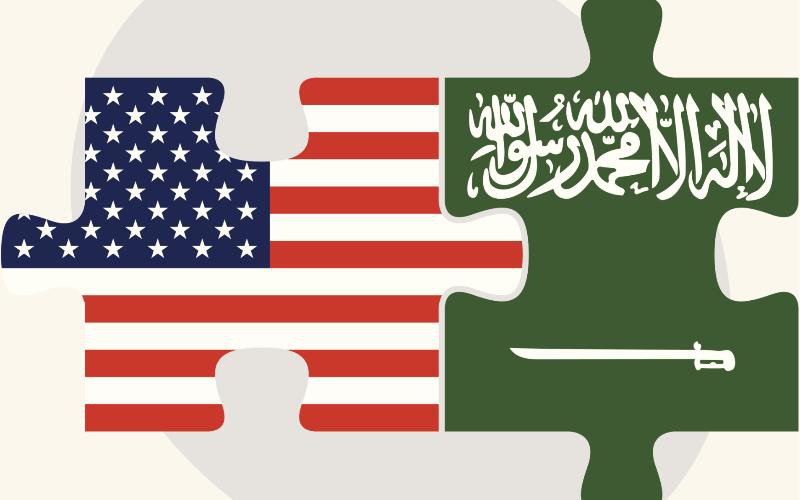
Saudi Arabia has historically been a strategic partner of the U.S. in a relationship based on equality, parity and common goals. The kingdom has benefited from this long-standing and friendly relationship with the U.S. in terms of developing its natural resources, consolidating the structure of its national economy and supporting its defensive capabilities.
As one of the main determinants of the geopolitical landscape in the Middle East and as an important factor directing economic and political currents around the world, Saudi-American relations are thought of by many as a development born out of the 1970s. In fact, what we observe today stems from an even older relationship dating back to the first third of the 20th century. A better appreciation for this relationship from a historical perspective can help ensure and strengthen its quality now and into the future.
The outlines of Saudi-American relations began to take shape with the beginning of the modern Saudi state, following King Abdulaziz's meeting with the late U.S. President Franklin Roosevelt in 1945. Until that point, no U.S. president had taken much personal interest in this relationship. Soon after came diplomatic relations at the embassy level and through special envoys, as well as the semidiplomatic relations formed through trade and exchange. Considered as all part of one “supreme strategy,” no aspect of the exchange was a gift from one party to the other. Each side logically considered its policy in light of the objective data and its respective national interests. They found that their shared desire for economic growth and development was best served by cooperation. Nor was it based on the presumed superiority of either party over the other. Each side acknowledged that the other belonged to its own civilization and national heritage, and respected their differing societal and cultural norms. In this sense, it was based on both pragmatism and morality, in the words of Henry Kissinger: Pragmatism without virtue breeds chaotic and cruel efficiency, whereas a morality detached from reality tends toward intolerance and absolutism.
It is in this general context that we talk about Saudi-American relations as being one of the most important and central axes around which our entire foreign policy is based. U.S.-Saudi relations were never unilateral and always covered a wide range of common interests, with our role as a leading part of the Islamic and Arab world contrasting with America’s role as a global superpower. On the one hand, our intellectual and doctrinal stance predisposed us toward independence and to reject destructive, foreign principles contrary to Islam. At the same time, we had to balance our national interests and our desire to keep areas of strategic interest from falling under foreign control. Our fundamental concern was always the development and improvement of our country into a better place, and the U.S. was the most important hub for technological, material, urban and educational development in the world. We also shared a common concern for stability, particularly in the Middle East, and supported an open economic system and free exchange. On many counts, then, we recognized the importance of cooperation between our two countries and saw it as a key factor in achieving many of our goals. All of these substantive geopolitical pillars have made Saudi-American relations a tightly woven fabric that cannot be fully appreciated through an economic perspective alone.
Saudi Arabia is a sovereign state with a clear vision, objectively facing the facts whenever it approaches international dealings with any global or regional power. Just as it believes in virtuous moderation and its independence of opinion, it is committed to spreading peace and stability as a foundational concept and moral value. The precise balance adopted by the kingdom’s policies is to safeguard both its national interests and its status as a leader of the Islamic and Arab world. This balance is present in its foreign policy toward the U.S. as well as other international powers.
For its part, the U.S. realizes that the importance of the kingdom extends beyond the Arab and Islamic world, occupying a pivotal role in the economic and political stability of the broader region and even the globe. As the greatest producer of energy in the world, Saudi Arabia is one of the largest active members of the World Trade Organization, a senior member of the Group of 20 industrial and emerging-market nations and one of the founding members of the United Nations.
In its current phase, the U.S.-Saudi relationship has taken on a new form. A changing global landscape and regional political developments have forcefully summoned the kingdom onto the world stage, where it utilizes its significant political, economic and strategic weight in a leading capacity. The political importance of both partners is now so great that in any given regional or global strategic endeavor, each side must strongly consider the position and role of the other.
All of these compelling strategic and geopolitical considerations underlie the kingdom’s relations with the U.S. and reflect how it must balance its status as a leading Arab and Islamic country with its position in the international community. When we look at the matter logically, we find that the strength of bilateral relations between our countries is at the center of our economic strategy. As we approach Vision 2030 and look toward the nation we wish to become, we strive to achieve a standard of living for the Saudi people equal to those of the most advanced societies on earth. This vision, championed tirelessly by Crown Prince Mohammed bin Salman (may God preserve him), is the guide to all our foreign relations. Our close cooperation with the U.S. is likewise pursued on the basis of it serving this national goal.
As one of the main determinants of the geopolitical landscape in the Middle East and as an important factor directing economic and political currents around the world, Saudi-American relations are thought of by many as a development born out of the 1970s. In fact, what we observe today stems from an even older relationship dating back to the first third of the 20th century. A better appreciation for this relationship from a historical perspective can help ensure and strengthen its quality now and into the future.
The outlines of Saudi-American relations began to take shape with the beginning of the modern Saudi state, following King Abdulaziz's meeting with the late U.S. President Franklin Roosevelt in 1945. Until that point, no U.S. president had taken much personal interest in this relationship. Soon after came diplomatic relations at the embassy level and through special envoys, as well as the semidiplomatic relations formed through trade and exchange. Considered as all part of one “supreme strategy,” no aspect of the exchange was a gift from one party to the other. Each side logically considered its policy in light of the objective data and its respective national interests. They found that their shared desire for economic growth and development was best served by cooperation. Nor was it based on the presumed superiority of either party over the other. Each side acknowledged that the other belonged to its own civilization and national heritage, and respected their differing societal and cultural norms. In this sense, it was based on both pragmatism and morality, in the words of Henry Kissinger: Pragmatism without virtue breeds chaotic and cruel efficiency, whereas a morality detached from reality tends toward intolerance and absolutism.
It is in this general context that we talk about Saudi-American relations as being one of the most important and central axes around which our entire foreign policy is based. U.S.-Saudi relations were never unilateral and always covered a wide range of common interests, with our role as a leading part of the Islamic and Arab world contrasting with America’s role as a global superpower. On the one hand, our intellectual and doctrinal stance predisposed us toward independence and to reject destructive, foreign principles contrary to Islam. At the same time, we had to balance our national interests and our desire to keep areas of strategic interest from falling under foreign control. Our fundamental concern was always the development and improvement of our country into a better place, and the U.S. was the most important hub for technological, material, urban and educational development in the world. We also shared a common concern for stability, particularly in the Middle East, and supported an open economic system and free exchange. On many counts, then, we recognized the importance of cooperation between our two countries and saw it as a key factor in achieving many of our goals. All of these substantive geopolitical pillars have made Saudi-American relations a tightly woven fabric that cannot be fully appreciated through an economic perspective alone.
Saudi Arabia is a sovereign state with a clear vision, objectively facing the facts whenever it approaches international dealings with any global or regional power. Just as it believes in virtuous moderation and its independence of opinion, it is committed to spreading peace and stability as a foundational concept and moral value. The precise balance adopted by the kingdom’s policies is to safeguard both its national interests and its status as a leader of the Islamic and Arab world. This balance is present in its foreign policy toward the U.S. as well as other international powers.
For its part, the U.S. realizes that the importance of the kingdom extends beyond the Arab and Islamic world, occupying a pivotal role in the economic and political stability of the broader region and even the globe. As the greatest producer of energy in the world, Saudi Arabia is one of the largest active members of the World Trade Organization, a senior member of the Group of 20 industrial and emerging-market nations and one of the founding members of the United Nations.
In its current phase, the U.S.-Saudi relationship has taken on a new form. A changing global landscape and regional political developments have forcefully summoned the kingdom onto the world stage, where it utilizes its significant political, economic and strategic weight in a leading capacity. The political importance of both partners is now so great that in any given regional or global strategic endeavor, each side must strongly consider the position and role of the other.
All of these compelling strategic and geopolitical considerations underlie the kingdom’s relations with the U.S. and reflect how it must balance its status as a leading Arab and Islamic country with its position in the international community. When we look at the matter logically, we find that the strength of bilateral relations between our countries is at the center of our economic strategy. As we approach Vision 2030 and look toward the nation we wish to become, we strive to achieve a standard of living for the Saudi people equal to those of the most advanced societies on earth. This vision, championed tirelessly by Crown Prince Mohammed bin Salman (may God preserve him), is the guide to all our foreign relations. Our close cooperation with the U.S. is likewise pursued on the basis of it serving this national goal.
Previous article

Next article