The War in Ukraine and America’s Delusion
Published in Aju Business Daily
(South Korea) on 24 February 2023
by Lee Baeksoon (link to
original)
A year has passed since the beginning of the war in Ukraine. When the war broke out in late February 2022, experts expected it to end shortly. The prediction was based on Russia’s status as the world's second-largest military power and its history of concluding military operations in less than a month when it occupied Crimea in 2014. But this time, things have turned out differently, bringing the war to its first anniversary. Some predict that the war may last even longer.
Damage from the war is increasing astronomically. Ukrainian lands have already been ravaged and its effects are causing a significant impact on the global economy. The number of lives lost on both sides has exceeded 200,000, including more than 7,000 civilian deaths. The world is suffering from severe inflation due to soaring grain, feed and energy prices because of the war, and reports say about 350 million people worldwide are being driven to starvation. The Organization for Economic Co-operation and Development has estimated that the global economic loss caused by the war is $2.8 trillion. Even so, negotiations seem improbable as Ukraine aims to reclaim the territories it lost in 2014 and Russia refuses to give up the lands it occupied. And as Western aid to Ukraine continues, the tragedy of the war is likely to continue as well.
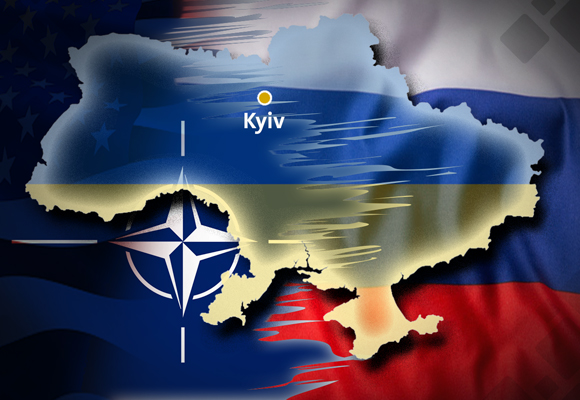
This war could have been avoided through diplomatic negotiations. But gunfire eventually broke out as U.S. and Russian officials failed to reach a compromise at high-level meetings at the end of 2021. Since 2008, Russia has repeatedly declared that it will use force to stop NATO's eastward expansion if it continues. Nevertheless, Ukraine publicized its willingness to join NATO for its security, and the U.S. appeared to support this decision in spite of Russia’s protest. If neighboring powers could have agreed to guarantee Ukraine's security in a different way, war could have been avoided. Instead of making such efforts, they collectively enabled it. Vladimir Putin also misread U.S. intentions and waged an all-out war beyond his capacity.
In some ways, the United States seems to have been waiting for this conflict to break out. Germany and France preferred diplomatic solutions in the wake of the war. But the U.S. openly confronted Russia, going so far as to threaten to halt operation of the Nord Stream gas pipelines. The deep-sea pipelines linking Germany and Russia were blown up three months ago, and there are even investigative reports that the U.S. Navy was behind the sabotage. It is necessary to understand the thinking of the U.S. diplomatic and security elite groups in order to know why the U.S. did not prevent, but seemed to expect, the war’s outbreak.
American diplomatic and security elites are often called armchair warriors or believers in American liberal hegemony. They are evenly distributed among both Democrats and Republicans, and although differences in opinion exist, they tend to form a consensus in foreign policy. Their perspective on foreign policy is as follows.
First, they believe that the United States’ manifest destiny is to spread freedom and democracy around the world. Based on this belief, they started the war on terror with the aim of building a democratic state in Iraq and Afghanistan. However, after losing devastating levels of lives and resources for 20 years, the United States withdrew from these countries and left them in chaos. The U.S. also supported various color revolutions and promoted NATO's eastward expansion to spread democracy to former Soviet satellites. The conflict between U.S. value-oriented diplomacy and Russia's geopolitical interests led to the outbreak of the Ukrainian war. When NATO expansion first began in 1998, American strategist George Kennan had already predicted that the decision was a “tragic mistake” and “the beginning of a new cold war.”
Second, this group believes that Russia must be further deprived of its power so that the U.S. can focus on dealing with China. Through this war, they are attempting to pull European Union states that had little regard for security back into the international political arena and set up a conflict between liberal and authoritarian camps. With this point of view, they claim that Russia will continue to invade neighboring countries if it wins the war. Their argument somewhat resembles the “domino theory” from the Cold War era. This theory was what made the U.S. intervene in the Vietnam War, but no communist regime ended up taking over the Indochina Peninsula. Afterward, the U.S. suffered from enormous war expenses and a disgraceful withdrawal of troops. Considering that present-day Russia has significantly less power than the Soviet Union, it seems unlikely for the domino theory to play out in Europe.
Moreover, while the idea of rallying liberal allies to oppose Russia’s authoritarianism may still be valid, it has not received firm support from Germany, France and some EU states. Doing the same against China seems even more difficult. Sanctioning Russia could be detrimental to national interests in the long run as Russia, humiliated by the U.S., may decide to help China compete against the U.S. as its auxiliary partner. Although China ostensibly does not aid Russia, it is already known that China is backing Russia behind the scenes in its match against Ukraine, which has become an international proxy war.
Third, they believe that sanctions have the power to change the behavior of countries hostile to the U.S. Consequently, they suggest that economic sanctions could destroy the Russian economy and even lead to Putin's downfall or Russia's collapse.
In reality, economic sanctions have not been successful in weakening Russia due to China, India, Turkey and Iran purchasing Russian energy and minerals at discounted prices. The International Monetary Fund’s global economic outlook predicted that the Russian economy will start growing again this year after last year’s contraction. These economic sanctions are rather counterproductive, as they are accelerating economic integration between authoritarian states in Eurasia. Russia's collapse will bring a major backlash to the international order, which will inevitably involve nuclear technology.
As we examined, we should note that the basic premise of liberal hegemony in relation to the Ukraine war does not fit well with reality. Furthermore, it can be seen from the Vietnam War, terrorism and other conflicts, that this group's collective thinking has rarely been successful as a policy in the past. It is a historical fact that direct intervention or imposed sanctions under their leadership with the goal of regime change have rarely succeeded.
Even within the U.S., realistic scholar Stephen Walt has strongly criticized liberal hegemony in his book "The Hell of Good Intentions." He argues that the ideal-based national strategy that has kept failing since the Vietnam War should have been changed earlier. Only then can the U.S. bring together its power and allies to face China's challenge, rather than clinging to the ideal of spreading democracy. That is the right thing to do for a stable international order as well as for national security.
Damage from the war is increasing astronomically. Ukrainian lands have already been ravaged and its effects are causing a significant impact on the global economy. The number of lives lost on both sides has exceeded 200,000, including more than 7,000 civilian deaths. The world is suffering from severe inflation due to soaring grain, feed and energy prices because of the war, and reports say about 350 million people worldwide are being driven to starvation. The Organization for Economic Co-operation and Development has estimated that the global economic loss caused by the war is $2.8 trillion. Even so, negotiations seem improbable as Ukraine aims to reclaim the territories it lost in 2014 and Russia refuses to give up the lands it occupied. And as Western aid to Ukraine continues, the tragedy of the war is likely to continue as well.
This war could have been avoided through diplomatic negotiations. But gunfire eventually broke out as U.S. and Russian officials failed to reach a compromise at high-level meetings at the end of 2021. Since 2008, Russia has repeatedly declared that it will use force to stop NATO's eastward expansion if it continues. Nevertheless, Ukraine publicized its willingness to join NATO for its security, and the U.S. appeared to support this decision in spite of Russia’s protest. If neighboring powers could have agreed to guarantee Ukraine's security in a different way, war could have been avoided. Instead of making such efforts, they collectively enabled it. Vladimir Putin also misread U.S. intentions and waged an all-out war beyond his capacity.
In some ways, the United States seems to have been waiting for this conflict to break out. Germany and France preferred diplomatic solutions in the wake of the war. But the U.S. openly confronted Russia, going so far as to threaten to halt operation of the Nord Stream gas pipelines. The deep-sea pipelines linking Germany and Russia were blown up three months ago, and there are even investigative reports that the U.S. Navy was behind the sabotage. It is necessary to understand the thinking of the U.S. diplomatic and security elite groups in order to know why the U.S. did not prevent, but seemed to expect, the war’s outbreak.
American diplomatic and security elites are often called armchair warriors or believers in American liberal hegemony. They are evenly distributed among both Democrats and Republicans, and although differences in opinion exist, they tend to form a consensus in foreign policy. Their perspective on foreign policy is as follows.
First, they believe that the United States’ manifest destiny is to spread freedom and democracy around the world. Based on this belief, they started the war on terror with the aim of building a democratic state in Iraq and Afghanistan. However, after losing devastating levels of lives and resources for 20 years, the United States withdrew from these countries and left them in chaos. The U.S. also supported various color revolutions and promoted NATO's eastward expansion to spread democracy to former Soviet satellites. The conflict between U.S. value-oriented diplomacy and Russia's geopolitical interests led to the outbreak of the Ukrainian war. When NATO expansion first began in 1998, American strategist George Kennan had already predicted that the decision was a “tragic mistake” and “the beginning of a new cold war.”
Second, this group believes that Russia must be further deprived of its power so that the U.S. can focus on dealing with China. Through this war, they are attempting to pull European Union states that had little regard for security back into the international political arena and set up a conflict between liberal and authoritarian camps. With this point of view, they claim that Russia will continue to invade neighboring countries if it wins the war. Their argument somewhat resembles the “domino theory” from the Cold War era. This theory was what made the U.S. intervene in the Vietnam War, but no communist regime ended up taking over the Indochina Peninsula. Afterward, the U.S. suffered from enormous war expenses and a disgraceful withdrawal of troops. Considering that present-day Russia has significantly less power than the Soviet Union, it seems unlikely for the domino theory to play out in Europe.
Moreover, while the idea of rallying liberal allies to oppose Russia’s authoritarianism may still be valid, it has not received firm support from Germany, France and some EU states. Doing the same against China seems even more difficult. Sanctioning Russia could be detrimental to national interests in the long run as Russia, humiliated by the U.S., may decide to help China compete against the U.S. as its auxiliary partner. Although China ostensibly does not aid Russia, it is already known that China is backing Russia behind the scenes in its match against Ukraine, which has become an international proxy war.
Third, they believe that sanctions have the power to change the behavior of countries hostile to the U.S. Consequently, they suggest that economic sanctions could destroy the Russian economy and even lead to Putin's downfall or Russia's collapse.
In reality, economic sanctions have not been successful in weakening Russia due to China, India, Turkey and Iran purchasing Russian energy and minerals at discounted prices. The International Monetary Fund’s global economic outlook predicted that the Russian economy will start growing again this year after last year’s contraction. These economic sanctions are rather counterproductive, as they are accelerating economic integration between authoritarian states in Eurasia. Russia's collapse will bring a major backlash to the international order, which will inevitably involve nuclear technology.
As we examined, we should note that the basic premise of liberal hegemony in relation to the Ukraine war does not fit well with reality. Furthermore, it can be seen from the Vietnam War, terrorism and other conflicts, that this group's collective thinking has rarely been successful as a policy in the past. It is a historical fact that direct intervention or imposed sanctions under their leadership with the goal of regime change have rarely succeeded.
Even within the U.S., realistic scholar Stephen Walt has strongly criticized liberal hegemony in his book "The Hell of Good Intentions." He argues that the ideal-based national strategy that has kept failing since the Vietnam War should have been changed earlier. Only then can the U.S. bring together its power and allies to face China's challenge, rather than clinging to the ideal of spreading democracy. That is the right thing to do for a stable international order as well as for national security.
Previous article
Next article