
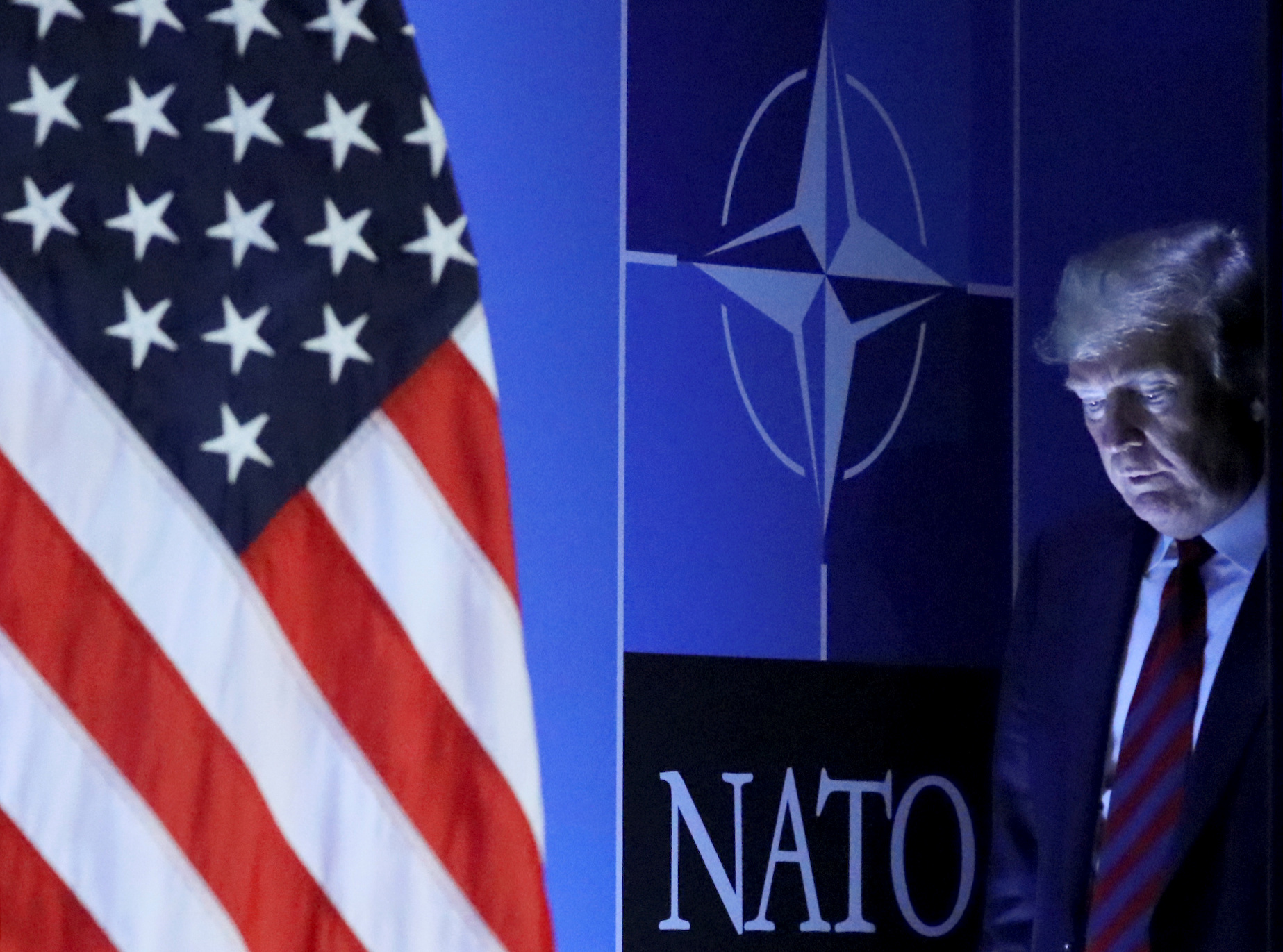
Enough, Mr. Trump! And If You Want To Leave NATO, Go Ahead!
Faced with Donald Trump’s decrees, Europe must break free and consolidate its power. The U.S. president “likes force. He must be met with force.”
Until now, Europeans have endured the humiliation and tried to appease the man in the Oval Office in the hope of maintaining the U.S. alliance and supporting Ukraine, while at the same time developing their own strategic autonomy. Now the time has come to say, “Enough, Mr. Trump! “
Donald Trump threatened to seize by force, if he couldn’t buy it, a territory belonging to a NATO signatory and one of the United States’ most loyal allies. Greenland is a constituent part of the Kingdom of Denmark and does not want to be annexed by the United States. Europe and Canada have a duty to support Greenland and Denmark and, at the request of their respective governments, to send troops to their aid, with orders to open fire in the event of military aggression. It’s reasonable to assume that Trump might think twice before directing fire on allied democratic forces, thereby risking the lives of American soldiers. He likes force. He must be met with force. According to the latest news, he seems to have eased off the gas somewhat on the subject of Greenland. But that takes nothing away from analysis.
Europe: A Commercial Powerhouse
Appeasement is useless with people of his sort. In September 1938, in Munich, the British and French bowed to Adolph Hitler and allowed part of Czechoslovakia’s territory, the Sudetenland, to be ceded to Germany in the hope that peace would preserve the independence of the diminished state. In March 1939, German troops marched into Prague and Hitler wiped Czechoslovakia off the map. The Sudetenland had been only the appetizer in the country's demise. By caving in on Greenland today in hopes of salvaging American aid to Ukraine, Europe will only authorize its loss — only to then watch Trump withdraw his already dwindling support for Ukraine. Europe will have lost everything. And tied dishonor to shame. Much to the delight of the Kremlin leader, whose support for Trump’s ambitions in Greenland mirrors his own plans for Ukraine.
Trump is using tariff threats as a weapon. Such threats ought to finally push the European Union to leverage its own trading power. It has the capacity to do so, as does China. Provided, of course, it still has the will; an issue in itself we must revisit. A U.S. withdrawal from NATO, alarming as it may be to many European partners, could finally offer a chance for the birth of a true European defense. Given Trump’s stance, it would be bold to put faith in America’s commitment to Article 5 of the NATO treaty if Russia were to launch an attack on another neighbor. Then what would remain of NATO?
Toward a True European Defense?
Remember that the American general who serves as NATO’s Supreme Allied Commander of Europe is, at the same time, the commander of U.S. Forces in Europe. These are two distinct commands, yet the American general spends far more time overseeing American forces in Stuttgart than he does serving as SACEUR in Brussels. Aside from its fleet of AWACS surveillance aircraft, NATO lacks operational assets of its own. It is a structure comprising military commands and headquarters, with coordinated responses to threats and interoperability rules for allied armed forces, capable of efficiently coordinating national armies in the face of aggression.
With a budget of about 4.6 billion euros in 2025 (approximately $5.4 billion at today’s rate), this structure receives just 16% of its funding from the United States, with the majority of it coming from Europe and Canada. Should the United States leave the organization, it could be taken over by the Europeans, who would then have at their disposal the headquarters, commands, and planning capabilities they previously lacked. This could give rise to a true European defense, in European hands. So far, Trump has shown no willingness to give up NATO command, which would represent a significant loss of power for the Americans. However, if he does decide to make a threat, why not take him at his word?
One of his latest acts of aggression was the announcement of his “Board of Peace,” strongly resembling a United Nations substitute, placed under his own presidency and domination. A “global hooligan,” the German newspaper Die Zeit recently described him. The only sensible thing to do is to refuse to join.
Europe, Will It Act?
Amid all this, there is the question of whether Europe has the will to act. Many countries have assembled “NATO armies,” following the German model, largely kitted out with American equipment, especially aircraft. Until recently, these nations had only conceived of their defense through NATO with U.S. support. The prospect of that support being withdrawn has left them unsettled and reluctant to face a harsh reality. Since Charles de Gaulle, France has cultivated a tradition of national sovereignty and developed its own independent defense, with nuclear capabilities — all while remaining a loyal Western ally and prominent EU member.
After all, it was France that brought the idea of strategic autonomy to the European stage. President Emmanuel Macron has courageously followed in this tradition. Even at the risk of embarrassing or irritating partners whose thinking is yet to be “decolonized,” France, together with allies like Canada, must continue to raise its voice — the voice of resistance — against outrageous attacks coming from the head of a state that owes much of its independence to us and claims to be our friend.
Cyrille Schott is a former advisor to President François Mitterrand, honorary regional prefect, former president of the National Institute for Advanced Security and Justice Studies (2014-2016), and member of the EuroDefense-France board.
Until now, Europeans have endured the humiliation and tried to appease the man in the Oval Office in the hope of maintaining the U.S. alliance and supporting Ukraine, while at the same time developing their own strategic autonomy. Now the time has come to say, “Enough, Mr. Trump! “
Donald Trump threatened to seize by force, if he couldn’t buy it, a territory belonging to a NATO signatory and one of the United States’ most loyal allies. Greenland is a constituent part of the Kingdom of Denmark and does not want to be annexed by the United States. Europe and Canada have a duty to support Greenland and Denmark and, at the request of their respective governments, to send troops to their aid, with orders to open fire in the event of military aggression. It’s reasonable to assume that Trump might think twice before directing fire on allied democratic forces, thereby risking the lives of American soldiers. He likes force. He must be met with force. According to the latest news, he seems to have eased off the gas somewhat on the subject of Greenland. But that takes nothing away from analysis.
Europe: A Commercial Powerhouse
Appeasement is useless with people of his sort. In September 1938, in Munich, the British and French bowed to Adolph Hitler and allowed part of Czechoslovakia’s territory, the Sudetenland, to be ceded to Germany in the hope that peace would preserve the independence of the diminished state. In March 1939, German troops marched into Prague and Hitler wiped Czechoslovakia off the map. The Sudetenland had been only the appetizer in the country's demise. By caving in on Greenland today in hopes of salvaging American aid to Ukraine, Europe will only authorize its loss — only to then watch Trump withdraw his already dwindling support for Ukraine. Europe will have lost everything. And tied dishonor to shame. Much to the delight of the Kremlin leader, whose support for Trump’s ambitions in Greenland mirrors his own plans for Ukraine.
Trump is using tariff threats as a weapon. Such threats ought to finally push the European Union to leverage its own trading power. It has the capacity to do so, as does China. Provided, of course, it still has the will; an issue in itself we must revisit. A U.S. withdrawal from NATO, alarming as it may be to many European partners, could finally offer a chance for the birth of a true European defense. Given Trump’s stance, it would be bold to put faith in America’s commitment to Article 5 of the NATO treaty if Russia were to launch an attack on another neighbor. Then what would remain of NATO?
Toward a True European Defense?
Remember that the American general who serves as NATO’s Supreme Allied Commander of Europe is, at the same time, the commander of U.S. Forces in Europe. These are two distinct commands, yet the American general spends far more time overseeing American forces in Stuttgart than he does serving as SACEUR in Brussels. Aside from its fleet of AWACS surveillance aircraft, NATO lacks operational assets of its own. It is a structure comprising military commands and headquarters, with coordinated responses to threats and interoperability rules for allied armed forces, capable of efficiently coordinating national armies in the face of aggression.
With a budget of about 4.6 billion euros in 2025 (approximately $5.4 billion at today’s rate), this structure receives just 16% of its funding from the United States, with the majority of it coming from Europe and Canada. Should the United States leave the organization, it could be taken over by the Europeans, who would then have at their disposal the headquarters, commands, and planning capabilities they previously lacked. This could give rise to a true European defense, in European hands. So far, Trump has shown no willingness to give up NATO command, which would represent a significant loss of power for the Americans. However, if he does decide to make a threat, why not take him at his word?
One of his latest acts of aggression was the announcement of his “Board of Peace,” strongly resembling a United Nations substitute, placed under his own presidency and domination. A “global hooligan,” the German newspaper Die Zeit recently described him. The only sensible thing to do is to refuse to join.
Europe, Will It Act?
Amid all this, there is the question of whether Europe has the will to act. Many countries have assembled “NATO armies,” following the German model, largely kitted out with American equipment, especially aircraft. Until recently, these nations had only conceived of their defense through NATO with U.S. support. The prospect of that support being withdrawn has left them unsettled and reluctant to face a harsh reality. Since Charles de Gaulle, France has cultivated a tradition of national sovereignty and developed its own independent defense, with nuclear capabilities — all while remaining a loyal Western ally and prominent EU member.
After all, it was France that brought the idea of strategic autonomy to the European stage. President Emmanuel Macron has courageously followed in this tradition. Even at the risk of embarrassing or irritating partners whose thinking is yet to be “decolonized,” France, together with allies like Canada, must continue to raise its voice — the voice of resistance — against outrageous attacks coming from the head of a state that owes much of its independence to us and claims to be our friend.
Cyrille Schott is a former advisor to President François Mitterrand, honorary regional prefect, former president of the National Institute for Advanced Security and Justice Studies (2014-2016), and member of the EuroDefense-France board.
Previous article
Next article
