
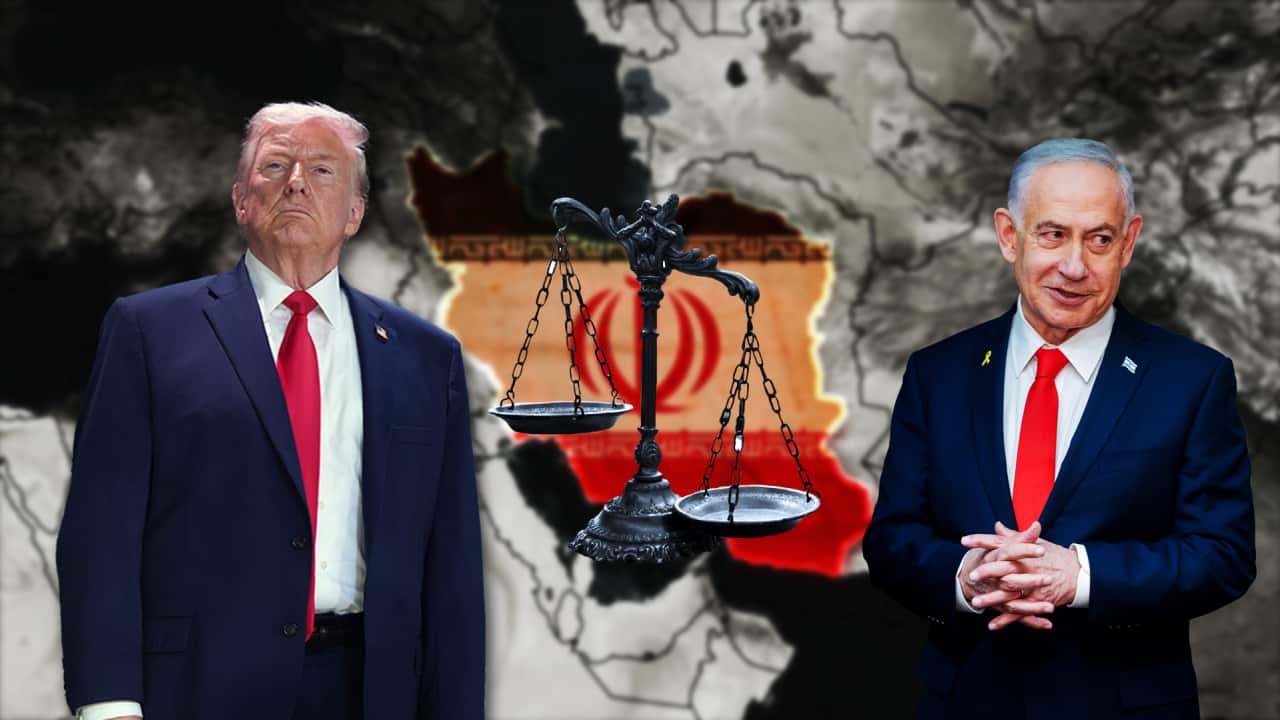
Wanted: Defender of International Law
In light of the war in Iran and the Middle East, Europe now needs to stand united behind international law — otherwise, both will become meaningless in the new world order.
It is difficult to discern the dawn of a new era when you are in the middle of it. It really should require a cool head and the sharpened vision of historical distance. Should. The convulsions of recent years, however, are so obvious, so profound, that even today we can recognize that we are living in a new age in which the old rules no longer apply. And the war that the U.S. and Israel are currently waging against Iran is a new war in this new age.
The long farewell to international law has begun. It is no longer the common currency of the postwar order. The world order is transitioning from one that is rules-based to one based on power. The Russian attack on Ukraine is a result of this new order, like the U.S. invasion of Venezuela – and now, the attack by the U.S. and Israel against Iran. In Europe, this conflict is still being measured by the standards of the old world: Is it legitimate to attack Iran to prevent it from becoming a nuclear power? Does this fall under Israel’s right to defend itself? Can Iran respond by defending itself with attacks against Israel and U.S. military bases in the Gulf states? The protagonists of this war have long stopped concerning themselves with such rules-based considerations. They are acting in a new world of opportunities to extend or secure their spheres of power.
This is a transformation that did not start with the Russian invasion of Ukraine. David Wagner, representative of The Left party, is right when he says that the current Iran conflict reminds him of the 2003 Iraq war, an attack that the U.S. and Great Britain similarly initiated without an explicit mandate from the United Nations, a violation of international law. One can only violated International law so often before it eventually becomes meaningless.
Luxembourg is thus taking a position. On Sunday, Foreign Minister Xavier Bettel criticized the U.S. and Israel’s attack for not being in accordance with international law. Even among the representatives in the Chamber of Deputies, there is agreement across party lines: diplomacy over escalation. In Europe, there is less unity. The heads of state in Germany, the United Kingdom and France issued a joint statement on Sunday condemning Iran’s counterattacks and not precluding European intervention in the conflict—without any mention of international law. It is written there in the best, obfuscating bureaucratic German: “We will take steps to defend our interests and those of our allies in the region, potentially through enabling necessary and proportionate defensive action to destroy Iran’s capability to fire missiles and drones at their source.”
This approach from three of the most powerful European nations sends the wrong signal. In the new world order, Europe needs to stand up for international law; it is part of our identity. If Europe does not position itself united behind international law, both Europe and international law will become meaningless in the new world order.
And Luxembourg Prime Minister Luc Frieden may have just struck a more critical tone with the U.S. and its global security policies for the first time in his speech at Harvard University, a speech overflowing with European self-confidence. But he has not yet publicly taken as clear and unmistakable stance as his foreign minister. With his hastily scheduled government statement before the chamber on Tuesday afternoon, Frieden could now plant his flag – for Europe, its values, and international law.
It is difficult to discern the dawn of a new era when you are in the middle of it. It really should require a cool head and the sharpened vision of historical distance. Should. The convulsions of recent years, however, are so obvious, so profound, that even today we can recognize that we are living in a new age in which the old rules no longer apply. And the war that the U.S. and Israel are currently waging against Iran is a new war in this new age.
The long farewell to international law has begun. It is no longer the common currency of the postwar order. The world order is transitioning from one that is rules-based to one based on power. The Russian attack on Ukraine is a result of this new order, like the U.S. invasion of Venezuela – and now, the attack by the U.S. and Israel against Iran. In Europe, this conflict is still being measured by the standards of the old world: Is it legitimate to attack Iran to prevent it from becoming a nuclear power? Does this fall under Israel’s right to defend itself? Can Iran respond by defending itself with attacks against Israel and U.S. military bases in the Gulf states? The protagonists of this war have long stopped concerning themselves with such rules-based considerations. They are acting in a new world of opportunities to extend or secure their spheres of power.
This is a transformation that did not start with the Russian invasion of Ukraine. David Wagner, representative of The Left party, is right when he says that the current Iran conflict reminds him of the 2003 Iraq war, an attack that the U.S. and Great Britain similarly initiated without an explicit mandate from the United Nations, a violation of international law. One can only violated International law so often before it eventually becomes meaningless.
Luxembourg is thus taking a position. On Sunday, Foreign Minister Xavier Bettel criticized the U.S. and Israel’s attack for not being in accordance with international law. Even among the representatives in the Chamber of Deputies, there is agreement across party lines: diplomacy over escalation. In Europe, there is less unity. The heads of state in Germany, the United Kingdom and France issued a joint statement on Sunday condemning Iran’s counterattacks and not precluding European intervention in the conflict—without any mention of international law. It is written there in the best, obfuscating bureaucratic German: “We will take steps to defend our interests and those of our allies in the region, potentially through enabling necessary and proportionate defensive action to destroy Iran’s capability to fire missiles and drones at their source.”
This approach from three of the most powerful European nations sends the wrong signal. In the new world order, Europe needs to stand up for international law; it is part of our identity. If Europe does not position itself united behind international law, both Europe and international law will become meaningless in the new world order.
And Luxembourg Prime Minister Luc Frieden may have just struck a more critical tone with the U.S. and its global security policies for the first time in his speech at Harvard University, a speech overflowing with European self-confidence. But he has not yet publicly taken as clear and unmistakable stance as his foreign minister. With his hastily scheduled government statement before the chamber on Tuesday afternoon, Frieden could now plant his flag – for Europe, its values, and international law.
Previous article

Next article
