The president of the United States speaks this Tuesday with two themes on the table: North Korea and Iran.
Donald Trump likes a business negotiation, face to face, as he would do in Queens to buy land or sell apartments. This is how he is organizing new international relations. Multilateral bodies and institutions bother him. The rules of the game which protect the weak don’t serve him because he prefers to impose the rules that suit him for each situation.
It was a year ago, when he first attended the annual session of the General Assembly at the United Nations, and made it crystal clear: Only the United States matters to him. The sovereignty of nations is not there to be shared. Each one must turn to its own sovereignty and defend itself with the strength it has. We have never heard such impertinent words spoken by the representative of not just one of the founding countries, but yes, by the country which inspired the organization 70 years ago. Never have there been so many accompanying insults and threats, toward Iran and North Korea. Toward governments and people, and especially Kim Jong Un, the young North Korean leader, whom he called “little rocket man” and with whom Trump said there would be a settling of accounts very soon, totally destroying his country.
One year later in his second appearance before exactly the same forum at the U.N., Trump presents himself with an impressive* balance sheet. At the time of his first appearance he had already knocked down the Paris climate treaty and the two international treaties with Europe and the Pacific Region. This time he arrived with U.S. participation in the Iranian nuclear agreement dissolved, the U.S. Embassy in Israel transferred to Jerusalem, resources for Palestinians eliminated, participation in UNESCO cancelled, contribution to the peace force reduced and trade wars unleashed, especially with China, in an offensive which threatens the very existence of the World Trade Organization. And yes, with the insults to Kim Jong Un totally forgotten.
Now his closest advisers on international matters are new. In 2017, the position of secretary of state was held by the gray-haired Rex Tillerson, an ebullient oil company man, dominated by the president. The national security advisor was H.R. McMaster, a brilliant and prudent general who combined war experience with a notable intellectual trajectory. The two were not doves, but the two people who replaced them were even more hawkish, and probably more submissive to, and trusted by, the capricious and volatile president. In place of Tillerson, Trump has substituted John Bolton, who was U.S. ambassador to the U.N. under George W. Bush and had already in that era proposed eliminating 10 floors of the U.N. building in Manhattan. To replace McMaster, Mike Pompeo was chosen directly from the CIA, being an extremely loyal participant in the paranoid conspiracy theories of his boss.
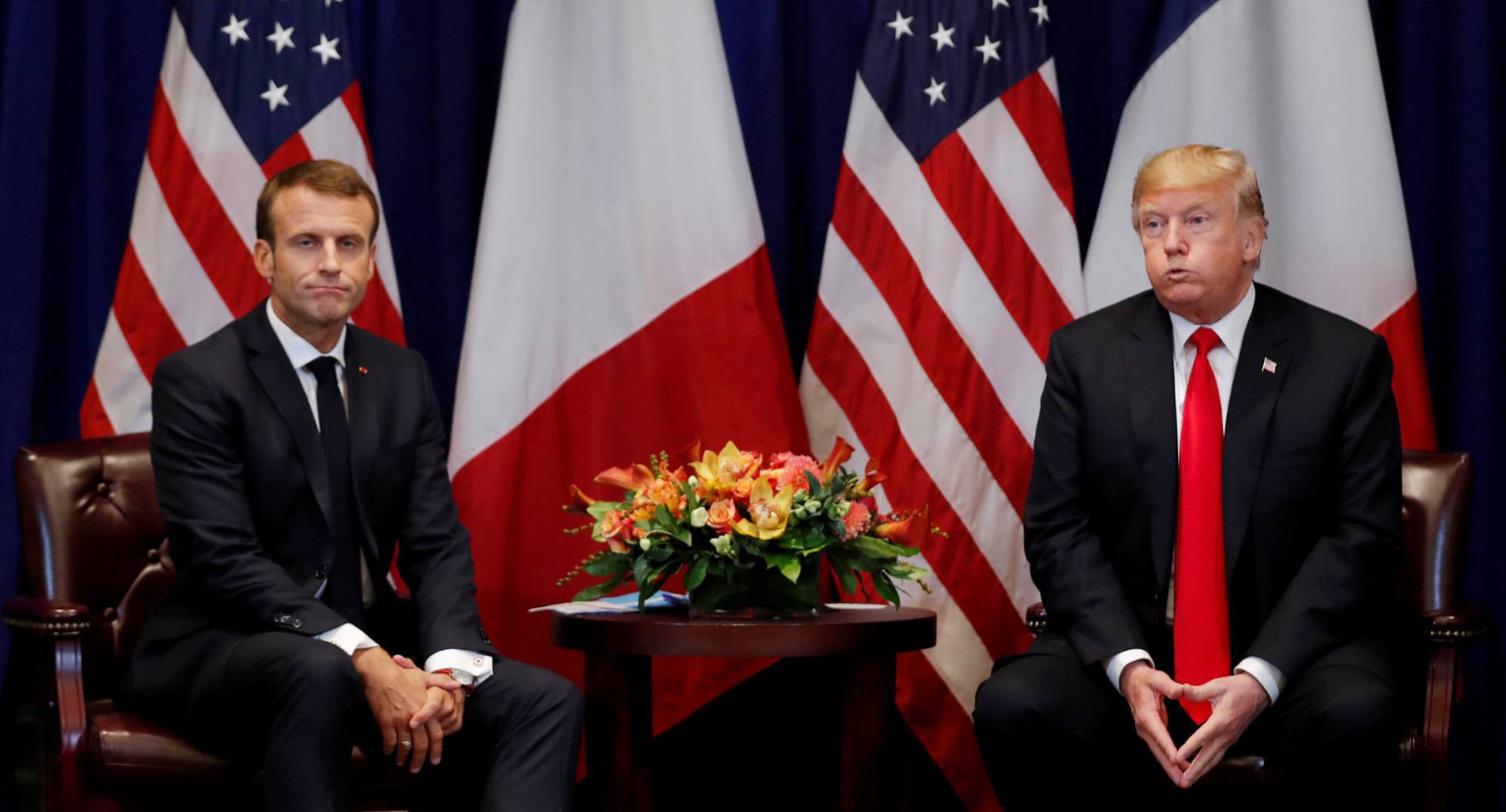
With these new advisers, Trump returned to Manhattan for his second great global event, where, beyond the usual speech before the General Assembly, he was to chair a meeting of the Security Council on Wednesday. As one would expect, in dealing with someone so unpredictable and irascible, there was no peace among his staff. This time, according to diplomatic correspondents, there was not so much fear for the dishes Trump could break, but more for the friendships he might engage in, as happens when an adolescent goes out alone for the night for the first time. On the list of his bilateral meetings are Britain’s Theresa May, France’s Emmanuel Macron, with whom Trump already spent time with Monday night, Israel’s Benjamin Netanyahu, Egypt’s Abdul Fattah al-Sisi, Japan’s Shinzo Abe and South Korea’s Moon Jae-in, but he could well interact, in an unpredictable way and with uncertain results, with Iran’s Hassan Rouhani. It is Trump’s preferred territory, that of bilateral relations, in which he can, at his whim, use the virtues of a deal-maker he believes he has.
Trump can’t be accused of breaking his promises, however foolish they might be. The threats are another thing. For his real estate and television host mentality, a good threat is always a prelude to a good agreement. Kim Jong Un is now a good subject, someone with whom he boasts making a treaty that is already bringing peace to the world, as he says with all his aplomb. Here is Trump’s assessment of the year between the two general assemblies: In 2017 we were on the brink of nuclear war, and now everything is wonderful on the Korean Peninsula; the belligerent parties of a conflict which ended in 1953 with only an armistice are about to finally sign a peace treaty.
To judge by what U.N. Secretary-General Antonio Guterres says, the best thing that Trump could do would be to stay on the sidelines. The three areas which most concern the member nations and the organization are migration, inequality in general and climate change. Trump is a declared enemy of immigrants, favors inequality and harassment, and does not believe in climate change. But what interests him, at the world’s great power fair which reunites more than 100 heads of state and of government for a week, is an excellent place for him to conduct his dealing between traders.
* Translator’s note: The Portuguese word used by the author in the original text is “impressionante” which can mean both “impressive” and “awful” in Portuguese. The translator questions whether the choice of that word with two distinctively different and contradictory meanings was deliberate.
Trump volta à Assembleia da ONU após um ano em que dinamitou o consenso global
Presidente dos EUA fala nesta terça-feira, com dois temas sobre a mesa: Coreia do Norte e Irã
Donald Trump gosta de uma negociação comercial, cara a cara, como fazia no Queens para comprar terrenos ou vender apartamentos. E assim está organizando as novas relações internacionais. Os organismos e instituições multilaterais o incomodam. Não lhe servem as regras do jogo que protegem os fracos, porque prefere impor as regras que lhe convêm para cada ocasião.
Há um ano, quando compareceu pela primeira vez às Nações Unidas para a sessão anual da sua Assembleia Geral, deixou tudo bem claro: só os Estados Unidos lhe importavam, a soberania das nações não está aí para ser compartilhada, cada um que se vire com a sua e que a defenda com a força que tiver. Nunca se ouviram palavras tão impertinentes, pronunciadas pelo representante não só de um dos países fundadores, mas sim pelo do país inspirador da organização, 70 anos atrás. Nunca haviam sido acompanhadas de tantos impropérios e ameaças: ao Irã e à Coreia do Norte. Aos Governos e às pessoas, e especialmente a Kim Jong-un, o jovem líder norte-coreano, designado como o homem-foguete com quem iria ajustar contas muito em breve, destruindo totalmente o seu país.
Um ano depois, em seu segundo comparecimento ao mesmíssimo fórum da ONU, Trump se apresenta com um balanço impressionante. Àquela altura já havia atropelado o acordo climático de Paris e os dois tratados comerciais internacionais com a Europa e com a área do Pacífico, mas desta vez chega com o acordo sobre o programa nuclear iraniano liquidado, a Embaixada dos EUA em Israel transferida para Jerusalém, os recursos para a Palestina eliminados, a participação na Unesco e no Conselho de Direitos humanos anulada, a contribuição às forças de manutenção da paz reduzida e guerras comerciais desatadas, especialmente com a China, numa ofensiva que ameaça a própria existência da Organização Mundial do Comércio. E, isso sim, com os insultos a Kim Jong-un totalmente esquecidos.
Agora são novos seus mais próximos assessores em matéria internacional. Em 2017, a Secretaria de Estado estava a cargo do cinzento Rex Tillerson, um abúlico empresário petroleiro dominado pelo presidente, e o conselheiro nacional de Segurança era Herbert McMaster, brilhante e prudente general que combinava a experiência guerreira com uma notável trajetória intelectual. Não eram duas pombas, mas os dois personagens que o substituíram são ainda mais falcões, e provavelmente mais submissos e confiáveis para um presidente tão caprichoso e volúvel: para o lugar de Tillerson, Trump trouxe John Bolton, que foi embaixador de Bush na ONU e já naquela época propunha eliminar 10 andares do edifício de Manhattan; para o de McMaster, o escolhido foi Mike Pompeo, diretamente saído da CIA e fidelíssimo partidário das paranoicas teorias conspiratórias do seu chefe.
Com estes novos assessores retornou Trump a Manhattan para seu segundo grande evento global, onde, além do discurso de praxe à Assembleia Geral, lhe cabe a presidência de uma reunião do Conselho de Segurança na quarta-feira. Como não poderia deixar de ser em se tratando de alguém tão imprevisível e irascível, não há tranquilidade em sua equipe. Desta vez, segundo dizem correspondentes diplomáticos, não se teme tanto pela louça que ele possa quebrar, e sim pelas amizades que possa travar, como acontece quando um adolescente sai à noite sozinho pela primeira vez. Na lista de suas reuniões bilaterais estão a britânica Theresa May, o francês Emmanuel Macron —com quem Trump já esteve na noite de segunda-feira—, o israelense Benjamin Netanyahu, o egípcio Abdul Fattah Al Sisi, o japonês Shinzo Abe e o sul-coreano Moon Jae-in, mas bem poderia penetrar de forma imprevista e com resultados incertos o iraniano Hassan Rohani. É o território preferido de Trump, o das relações bilaterais, nas quais pode utilizar ao seu capricho as virtudes de negociante que considera ter.
Trump não pode ser acusado de descumprir suas promessas, por mais insensatas que sejam. Outra coisa são as ameaças. Para sua mentalidade de especulador imobiliário e apresentador de concursos televisivos, uma boa ameaça é sempre o prelúdio de um bom acordo. Kim Jong-un é agora um bom sujeito, com quem selou um trato que já trouxe a paz ao mundo, conforme afirma com todo o aprumo. Eis o balanço que Trump faz do ano transcorrido entre ambas as assembleias gerais: em 2017 estávamos à beira da guerra nuclear, e agora tudo vai às maravilhas na península da Coreia, prestes a finalmente assinarem a paz entre as partes beligerantes daquele conflito que terminou em 1953 apenas com um armistício.
A julgar pelo que diz o secretário-geral da ONU, António Guterres, o melhor que Trump poderia fazer seria se manter à margem. Os três temas que mais preocupam os países membros e a organização são as migrações, a igualdade de gênero e a mudança climática. Trump é um inimigo declarado dos imigrantes, favorece a desigualdade e o assédio e não acredita na mudança climática. Mas lhe interessa, isso sim, a grande feira mundial do poder que reúne mais de uma centena de chefes de Estado e de Governo durante uma semana, num lugar excelente para seus tratos entre negociantes.
This post appeared on the front page as a direct link to the original article with the above link
.
While European leaders want to preserve the American security umbrella without subscribing to Trump’s ideological project, he demands that they adhere to a MAGA-fied global order yet offers little in return.
Stone ... argued that Hernández’s liberation would give renewed energy to the Honduran right wing, destabilize President Castro’s government, and strengthen what he believes to be Trump and the U.S.’ interests in the region.