
Beyond the Stars
China may well be the future of the United States, at least as far as America's economic and inflationary situation is concerned. If economic disparities exist between the two countries in terms of monetary and inflationary policy, it is China that has come through with proven successes in ways that could make it the leader for other countries.
At a time when economic statistics are at record levels, unemployment is falling, inflation is at its long-term optimum of 2%, already high business profits are heading even higher, the central bank is super accommodating, and plans for massive public investment are in the offing, what more could one hope for? Things are sure to reach the stars, but what lies beyond them?
This is the market's question to the American economy.
With no apparent answer, the market has stopped in its tracks. Trading sessions this past week have been marked by flips one way or another with no real progress in any direction.
The issue is not so much profits, which seem assured for the remaining three quarters of this year, but interest rates, which are linked to inflation. If the latter remain stable as the U.S. Federal Reserve claims they will, then they will not cause pain to the economy, but if they rise sharply then that will impinge on trade.
And so the central bankers have intervened to steady things. In an almost unanimous chorus, they have assured everyone that the Fed will ease lending for even longer to contain inflation, which is in danger of rising due to taxes, money supply congestion and continuing unemployment.
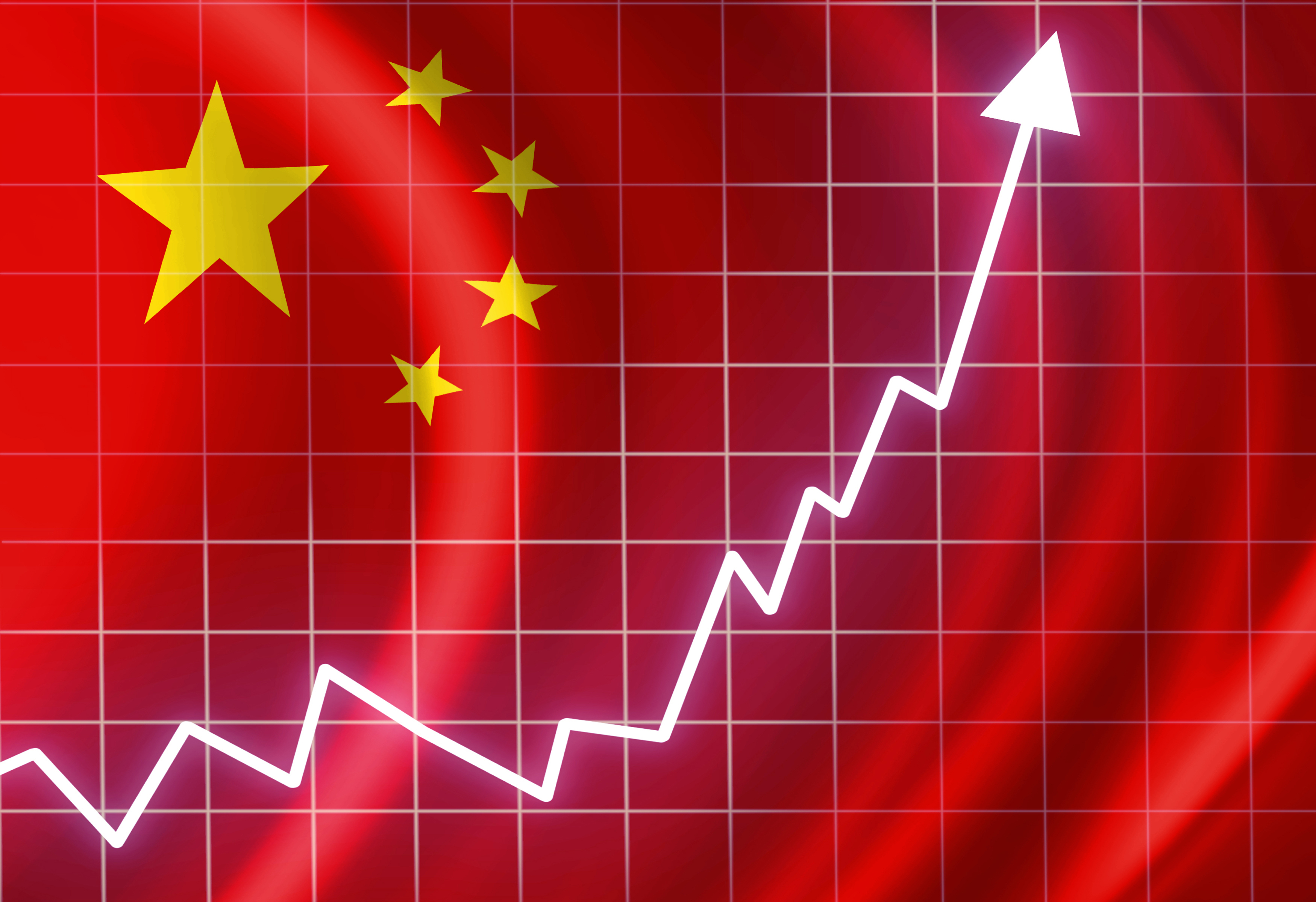
If we remain partly unconvinced, we can search for parallel situations in the past and examine their results. In this case, there is another economically starry country that provides an example, but it has five stars on its flag instead of 50: China. In recent years, it has demonstrated a path through inflation, recessions, recovery and normalization, at least for itself.
Let's look at inflation. In early 2020, China suffered an explosion of inflation up to 5% due to the relatively temporary blip in the price of pork, but not the kind sold by market stall vendors, but instead by electronic trading. Thereafter, inflation fell to below 1%. That settled the matter.
As for its general economy, China suffered a downturn in early 2020 along with the rest of the world, but rebounded after April. Since then, China's economy has maintained a brisk pace without overheating. Its monetary policy was slightly loose in 2020, then neutral, and is now slightly tight, all without any catastrophe. Last week, the return on lending rates reached a low point of 3%, a sign that China's lending market is perfectly calm. The American lending market, by contrast, is calm now but was turbulent earlier.
Thus, China may well be the future of the United States, at least as far as it concerns the economy and inflation. To be sure, there are large differences between the countries that limit a complete comparison. First, Chinese inflation was caused by the single factor of food supply and not multiple causes as may prove the case in America, although at the moment, one main factor behind American inflation is the cost of vehicles. If wages increase, however, as certain indices suggest they will, it will drastically change this situation. For another thing, China has stimulated its economy much less over the past year than America has. Finally, Chinese monetary policy is much tighter than America's, and of course its economic structure and demography are utterly different.
A path to normalization has been proven to work for China, and given certain adjustments it could become the way for other countries.
But what about the continent with 12 stars for 27 countries? Surprisingly, despite having the lowest inflation of any economic zone, its lending policy has tightened over recent weeks, with German 10-year rates dropping to -0.1% last week from -0.57% at the beginning of the year. Is this a sign that its journey to the stars is underway? At least it need not worry about what is beyond the stars when it has yet to reach them. Let's hope for a good lift off!
At a time when economic statistics are at record levels, unemployment is falling, inflation is at its long-term optimum of 2%, already high business profits are heading even higher, the central bank is super accommodating, and plans for massive public investment are in the offing, what more could one hope for? Things are sure to reach the stars, but what lies beyond them?
This is the market's question to the American economy.
With no apparent answer, the market has stopped in its tracks. Trading sessions this past week have been marked by flips one way or another with no real progress in any direction.
The issue is not so much profits, which seem assured for the remaining three quarters of this year, but interest rates, which are linked to inflation. If the latter remain stable as the U.S. Federal Reserve claims they will, then they will not cause pain to the economy, but if they rise sharply then that will impinge on trade.
And so the central bankers have intervened to steady things. In an almost unanimous chorus, they have assured everyone that the Fed will ease lending for even longer to contain inflation, which is in danger of rising due to taxes, money supply congestion and continuing unemployment.
If we remain partly unconvinced, we can search for parallel situations in the past and examine their results. In this case, there is another economically starry country that provides an example, but it has five stars on its flag instead of 50: China. In recent years, it has demonstrated a path through inflation, recessions, recovery and normalization, at least for itself.
Let's look at inflation. In early 2020, China suffered an explosion of inflation up to 5% due to the relatively temporary blip in the price of pork, but not the kind sold by market stall vendors, but instead by electronic trading. Thereafter, inflation fell to below 1%. That settled the matter.
As for its general economy, China suffered a downturn in early 2020 along with the rest of the world, but rebounded after April. Since then, China's economy has maintained a brisk pace without overheating. Its monetary policy was slightly loose in 2020, then neutral, and is now slightly tight, all without any catastrophe. Last week, the return on lending rates reached a low point of 3%, a sign that China's lending market is perfectly calm. The American lending market, by contrast, is calm now but was turbulent earlier.
Thus, China may well be the future of the United States, at least as far as it concerns the economy and inflation. To be sure, there are large differences between the countries that limit a complete comparison. First, Chinese inflation was caused by the single factor of food supply and not multiple causes as may prove the case in America, although at the moment, one main factor behind American inflation is the cost of vehicles. If wages increase, however, as certain indices suggest they will, it will drastically change this situation. For another thing, China has stimulated its economy much less over the past year than America has. Finally, Chinese monetary policy is much tighter than America's, and of course its economic structure and demography are utterly different.
A path to normalization has been proven to work for China, and given certain adjustments it could become the way for other countries.
But what about the continent with 12 stars for 27 countries? Surprisingly, despite having the lowest inflation of any economic zone, its lending policy has tightened over recent weeks, with German 10-year rates dropping to -0.1% last week from -0.57% at the beginning of the year. Is this a sign that its journey to the stars is underway? At least it need not worry about what is beyond the stars when it has yet to reach them. Let's hope for a good lift off!
Previous article
Next article