
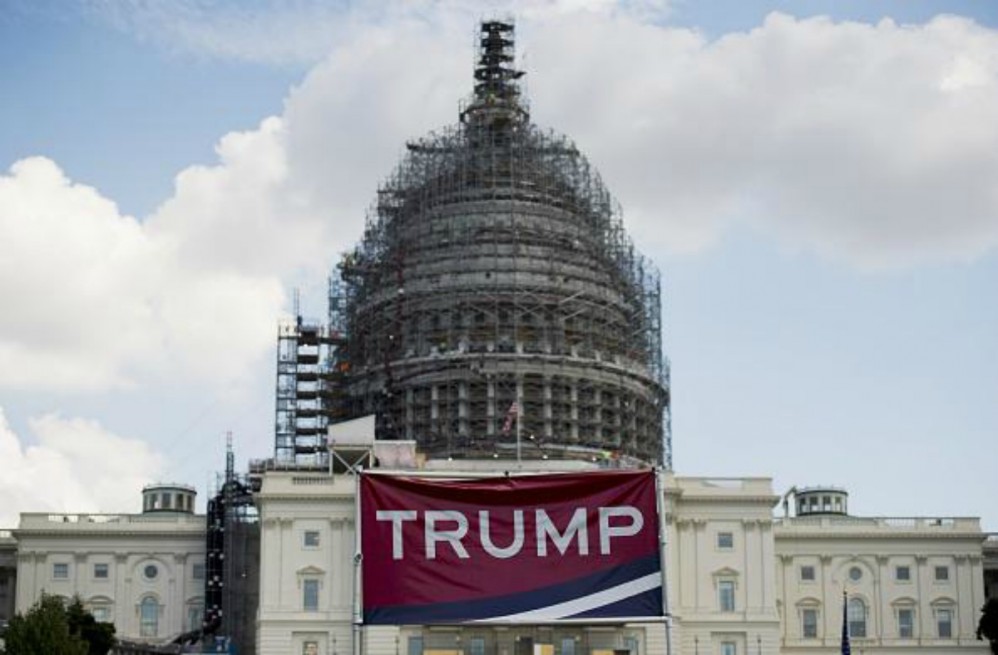
Washington
Trump and his party have a relationship based solely on their mutual interest in power.
No matter how much the correspondents and analysts insist, there is a mistake that is often repeated when talking about U.S. policy: The game of majorities between Congress and the president is not like that in Europe. A Republican president, let's say Donald Trump, certainly benefits from having a Congress with a Republican majority, but it's not a toll-free highway like in European democracies. The system of checks and balances, the different electoral periods — two-year terms in the House of Representatives, and six-year terms in the Senate, though not renewed at the same time — and the local character of American politics accountable to districts and states, means the voter never automatically falls according to partisan lines. Hence the importance of a president and his team having a deep understanding of how Washington works.
Neither Trump nor his team has such an understanding. And, in addition, they recklessly display this. The president's inability to overthrow Obama's health care law, approved and even watered-down by a Democrat president with Republican majorities in Congress, is proof of Trump's political inability. But not only that. Trump was the outsider candidate of the Republican Party, but he became the party nominee and then the president, against all predictions. His is a relationship of interest: Trump takes advantage of his position, and he and the Republicans reached heights of power they never dreamed of, against all odds. But neither the president controls the party, nor does the party have influence over the president. Their relationship will continue as long as it benefits them, and not a minute more.
But interest is not enough to pass an unpopular law (which threatens re-election) or to unify a Republican Party with too many souls. Faced with the firm opposition of a Democratic candidate, Trump will merely take out his agenda and learn to treat his own party with the weapon that he claims to hate: Washington. But to do nothing is not political enough — he can’t just tweet.
No matter how much the correspondents and analysts insist, there is a mistake that is often repeated when talking about U.S. policy: The game of majorities between Congress and the president is not like that in Europe. A Republican president, let's say Donald Trump, certainly benefits from having a Congress with a Republican majority, but it's not a toll-free highway like in European democracies. The system of checks and balances, the different electoral periods — two-year terms in the House of Representatives, and six-year terms in the Senate, though not renewed at the same time — and the local character of American politics accountable to districts and states, means the voter never automatically falls according to partisan lines. Hence the importance of a president and his team having a deep understanding of how Washington works.
Neither Trump nor his team has such an understanding. And, in addition, they recklessly display this. The president's inability to overthrow Obama's health care law, approved and even watered-down by a Democrat president with Republican majorities in Congress, is proof of Trump's political inability. But not only that. Trump was the outsider candidate of the Republican Party, but he became the party nominee and then the president, against all predictions. His is a relationship of interest: Trump takes advantage of his position, and he and the Republicans reached heights of power they never dreamed of, against all odds. But neither the president controls the party, nor does the party have influence over the president. Their relationship will continue as long as it benefits them, and not a minute more.
But interest is not enough to pass an unpopular law (which threatens re-election) or to unify a Republican Party with too many souls. Faced with the firm opposition of a Democratic candidate, Trump will merely take out his agenda and learn to treat his own party with the weapon that he claims to hate: Washington. But to do nothing is not political enough — he can’t just tweet.
Previous article
Next article