
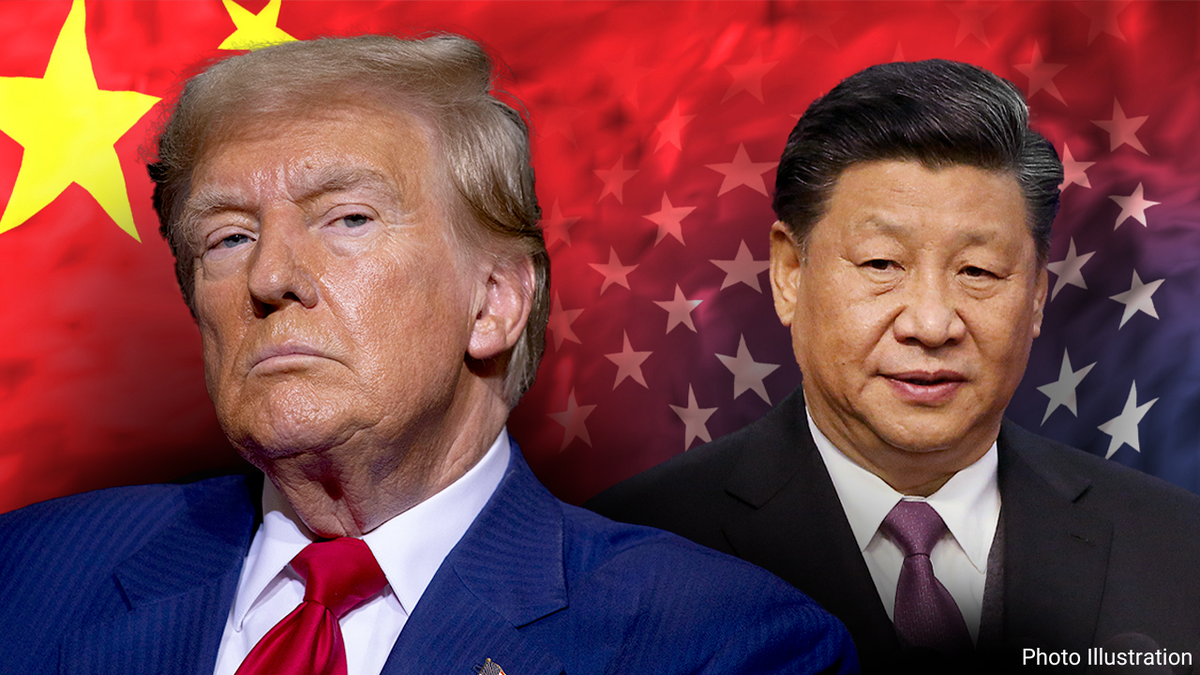
US National Security Strategy: Keeping Allies within the System and China without
Published in Oriental Daily News
(Malaysia) on 1 January 2026
by Collins Chong Yew Keat (link to
original)
The new U.S. National Security Strategy marks a decisive and strategic revival of “America First 2.0”: shrewder, sharper and more ideologically colored than Joe Biden’s 2022 version, and carrying greater real world impact and more robust assurances for the United States.
While some see this NSS as signaling the U.S.’ “global retrenchment,” arguing that it reduces its obligations to contain Russia and China and focuses more on U.S. neighbors and the Western Hemisphere, this does not align with the actual strategic configuration. The document in fact reflects a cool-headed and meticulously calculated picture, highly consistent with Trump’s overall strategic vision of “peace through strength” and “America First.”
This iteration of the NSS explicitly narrows the scope of U.S. obligations and focuses more on specific strategic battlegrounds; at the same time, it emphasizes economic strength and technological leadership as the core foundations of U.S. influence and power projection, while still fully acknowledging its unmatched hard power. The contraction in the definition of U.S. national interests reflects this fundamental shift. Past strategies — especially those since the Cold War — continually expanded the U.S. role and responsibilities across virtually every global issue, from climate change to democracy promotion, all seen as interconnected with U.S. security and interests. The 2025 NSS rejects this notion, instead outlining a clearer strategic ecosystem and peripheral logic: protecting the Western Hemisphere, consolidating economic and technological advantages (particularly vis-à-vis China), preventing external powers from dominating key energy regions, and strengthening homeland security through missile defense and tightened borders.
This represents a prioritization of core interests and fundamental threats, shedding the burden of globalism: The U.S. is no longer willing to continue as the world’s checkbook, sacrificing its own security without receiving the goodwill or support of other nations in return. The NSS makes clear that global domination is not a core U.S. objective, but this does not imply isolationism. Rather, it reflects a prioritizing of regions and a restructuring of core interests, placing the Indo-Pacific and the Western Hemisphere front and center.
At the ideological level, the current NSS also exhibits a distinct shift: emphasizing sovereignty, cultural identity and national confidence; rebuilding the foundations of American culture; upholding conservative and traditional institutions; and curbing the eroding effect of the tide of globalism on national sovereignty. Simultaneously, it criticizes “woke” policies from Europe to Canada, challenges established elite groups, and views unrestricted immigration as a new strategic threat. In the past, these issues would often be rationalized within the globalist narrative; now, they are redefined as destabilization risks and national security threats.
The U.S. has come to regard the expansion of foreign influence in the Western Hemisphere as a significant threat. Trump’s NSS advocates a strategic return comparable to the Monroe Doctrine combined with a Trumpian containment framework, aimed at preventing external powers from establishing deeper strategic footholds in Latin America and the Caribbean. Consequently, China’s investments in ports, telecommunications and energy infrastructure in those regions are redefined as direct national security threats, requiring new U.S. responses and countermeasures.
At the same time, the U.S. is sending a clear signal to its allies and partners: Security obligations must be shared, and Washington will no longer unconditionally foot the bill for other countries’ security. As deterrence costs rise and threats expand, allies who seek continued U.S. security guarantees must increase their defense spending and military capabilities, and align themselves with the U.S. economically and geostrategically. This redistribution of burdens is also aimed at alleviating pressure on U.S. military production and preventing excessive resource consumption in battlegrounds that do not involve core U.S. interests, Ukraine in particular. This strategic bargaining framework also applies to the Indo-Pacific: Only partners willing to invest in their own deterrence capabilities will be considered credible allies.
At the geo-economic level, economic power is the absolute core of the 2025 NSS. Trump views economic security and industrial strategy as central pillars of national security, stressing that security policy must serve the preservation of economic and technological superiority and demanding that partner countries coordinate strategically with the U.S. at the structural level. The NSS establishes tariffs, industrial reshoring, the restoration of energy dominance and supply-chain sovereignty as key tools for engaging in long-term competition with China and maintaining a structural power gap.
The NSS states that past engagement policies toward China have failed, and that China’s technological and economic ambitions have become the primary challenges to U.S. power. Future priorities will include tightening export controls on high-end technologies and semiconductors, restructuring key supply chains and reducing dependence on China; at the same time, the U.S. will seek to maintain its structural advantages in the Western Hemisphere and Indo-Pacific, but it will no longer attempt comprehensive dominance across all battlegrounds.
Expanding a Militarized Strategy
Although outside observers perceive this strategy as weakening American hard power, the NSS in fact further expands a militarized strategic posture. This includes advancing the space-based missile defense program (Golden Dome), expanding arms and munitions production capacity, enhancing forward rapid-deployment and denial capabilities, reducing protracted occupation-style warfare and shifting toward more efficient, short-cycle and precision deterrence operations, thus avoiding getting bogged down in “forever wars.”
China remains at the heart of the strategic focus, but it is increasingly framed within the context of competition for technological and economic leadership, while the U.S. maintains deterrence at sufficient levels to avoid military conflict. The U.S. will continue to strengthen its First Island Chain denial capabilities, deepen security cooperation with Japan, the Philippines, Australia and Taiwan, and put pressure on partner countries to reduce their structural dependence on China in matters of economic security. Southeast Asian countries’ hedging and balancing strategies have long been seen as a source of frustration for Washington. Now, the message the U.S. is sending to ASEAN is clear: Strategic choices must be made; oscillating between the two sides while still expecting U.S. security and economic resources is no longer acceptable.
Overall, the 2025 NSS deepens American focus on the Indo-Pacific, with China remaining the core competitor in the strategic landscape. The strategy marks the beginning of a tougher, more complex, more competitive era; it also constitutes a form of strategic rebalancing, allowing the U.S. to regain structural advantages in power distribution, interest prioritization and regional strategies. Its ultimate goal is to support a stable and orderly global environment with “peace through strength,” and to ensure that a strong and prosperous U.S. continues to serve as a core pillar of global stability, while maintaining a U.S.-led international system and a strategic power gap.
While some see this NSS as signaling the U.S.’ “global retrenchment,” arguing that it reduces its obligations to contain Russia and China and focuses more on U.S. neighbors and the Western Hemisphere, this does not align with the actual strategic configuration. The document in fact reflects a cool-headed and meticulously calculated picture, highly consistent with Trump’s overall strategic vision of “peace through strength” and “America First.”
This iteration of the NSS explicitly narrows the scope of U.S. obligations and focuses more on specific strategic battlegrounds; at the same time, it emphasizes economic strength and technological leadership as the core foundations of U.S. influence and power projection, while still fully acknowledging its unmatched hard power. The contraction in the definition of U.S. national interests reflects this fundamental shift. Past strategies — especially those since the Cold War — continually expanded the U.S. role and responsibilities across virtually every global issue, from climate change to democracy promotion, all seen as interconnected with U.S. security and interests. The 2025 NSS rejects this notion, instead outlining a clearer strategic ecosystem and peripheral logic: protecting the Western Hemisphere, consolidating economic and technological advantages (particularly vis-à-vis China), preventing external powers from dominating key energy regions, and strengthening homeland security through missile defense and tightened borders.
This represents a prioritization of core interests and fundamental threats, shedding the burden of globalism: The U.S. is no longer willing to continue as the world’s checkbook, sacrificing its own security without receiving the goodwill or support of other nations in return. The NSS makes clear that global domination is not a core U.S. objective, but this does not imply isolationism. Rather, it reflects a prioritizing of regions and a restructuring of core interests, placing the Indo-Pacific and the Western Hemisphere front and center.
At the ideological level, the current NSS also exhibits a distinct shift: emphasizing sovereignty, cultural identity and national confidence; rebuilding the foundations of American culture; upholding conservative and traditional institutions; and curbing the eroding effect of the tide of globalism on national sovereignty. Simultaneously, it criticizes “woke” policies from Europe to Canada, challenges established elite groups, and views unrestricted immigration as a new strategic threat. In the past, these issues would often be rationalized within the globalist narrative; now, they are redefined as destabilization risks and national security threats.
The U.S. has come to regard the expansion of foreign influence in the Western Hemisphere as a significant threat. Trump’s NSS advocates a strategic return comparable to the Monroe Doctrine combined with a Trumpian containment framework, aimed at preventing external powers from establishing deeper strategic footholds in Latin America and the Caribbean. Consequently, China’s investments in ports, telecommunications and energy infrastructure in those regions are redefined as direct national security threats, requiring new U.S. responses and countermeasures.
At the same time, the U.S. is sending a clear signal to its allies and partners: Security obligations must be shared, and Washington will no longer unconditionally foot the bill for other countries’ security. As deterrence costs rise and threats expand, allies who seek continued U.S. security guarantees must increase their defense spending and military capabilities, and align themselves with the U.S. economically and geostrategically. This redistribution of burdens is also aimed at alleviating pressure on U.S. military production and preventing excessive resource consumption in battlegrounds that do not involve core U.S. interests, Ukraine in particular. This strategic bargaining framework also applies to the Indo-Pacific: Only partners willing to invest in their own deterrence capabilities will be considered credible allies.
At the geo-economic level, economic power is the absolute core of the 2025 NSS. Trump views economic security and industrial strategy as central pillars of national security, stressing that security policy must serve the preservation of economic and technological superiority and demanding that partner countries coordinate strategically with the U.S. at the structural level. The NSS establishes tariffs, industrial reshoring, the restoration of energy dominance and supply-chain sovereignty as key tools for engaging in long-term competition with China and maintaining a structural power gap.
The NSS states that past engagement policies toward China have failed, and that China’s technological and economic ambitions have become the primary challenges to U.S. power. Future priorities will include tightening export controls on high-end technologies and semiconductors, restructuring key supply chains and reducing dependence on China; at the same time, the U.S. will seek to maintain its structural advantages in the Western Hemisphere and Indo-Pacific, but it will no longer attempt comprehensive dominance across all battlegrounds.
Expanding a Militarized Strategy
Although outside observers perceive this strategy as weakening American hard power, the NSS in fact further expands a militarized strategic posture. This includes advancing the space-based missile defense program (Golden Dome), expanding arms and munitions production capacity, enhancing forward rapid-deployment and denial capabilities, reducing protracted occupation-style warfare and shifting toward more efficient, short-cycle and precision deterrence operations, thus avoiding getting bogged down in “forever wars.”
China remains at the heart of the strategic focus, but it is increasingly framed within the context of competition for technological and economic leadership, while the U.S. maintains deterrence at sufficient levels to avoid military conflict. The U.S. will continue to strengthen its First Island Chain denial capabilities, deepen security cooperation with Japan, the Philippines, Australia and Taiwan, and put pressure on partner countries to reduce their structural dependence on China in matters of economic security. Southeast Asian countries’ hedging and balancing strategies have long been seen as a source of frustration for Washington. Now, the message the U.S. is sending to ASEAN is clear: Strategic choices must be made; oscillating between the two sides while still expecting U.S. security and economic resources is no longer acceptable.
Overall, the 2025 NSS deepens American focus on the Indo-Pacific, with China remaining the core competitor in the strategic landscape. The strategy marks the beginning of a tougher, more complex, more competitive era; it also constitutes a form of strategic rebalancing, allowing the U.S. to regain structural advantages in power distribution, interest prioritization and regional strategies. Its ultimate goal is to support a stable and orderly global environment with “peace through strength,” and to ensure that a strong and prosperous U.S. continues to serve as a core pillar of global stability, while maintaining a U.S.-led international system and a strategic power gap.
Previous article

Next article
