
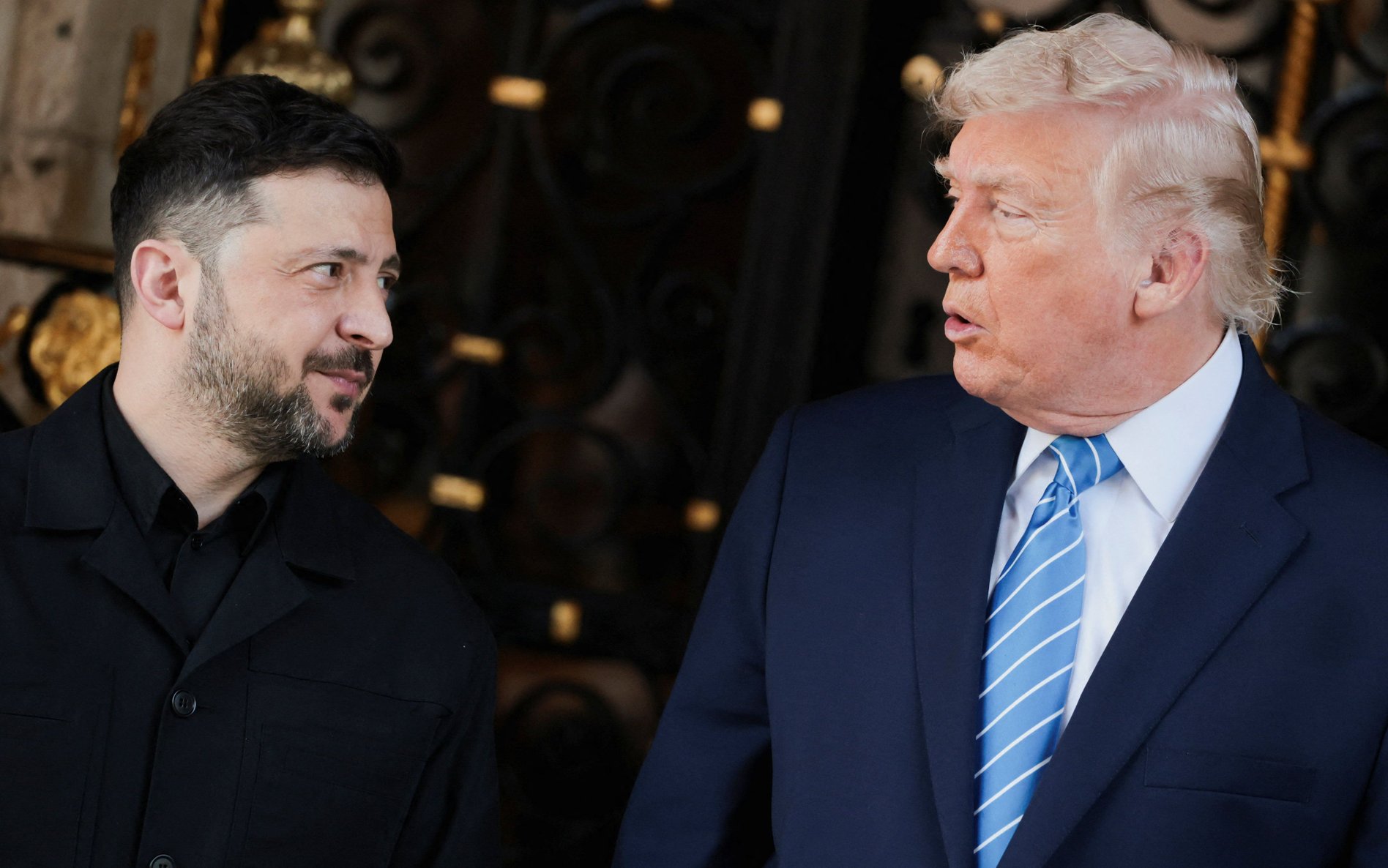
Boguslaw Chrabota: Mar-a-Lago Meeting Strengthens Ukraine and the West
Despite all the critics, mockers of Donald Trump and experts who know perfectly well that the war in Ukraine will continue for years to come, I believe that the meeting of the negotiating teams of the U.S. president and Volodymyr Zelenskyy is a step forward.
It’s true that Donald Trump behaved like a “spokesman for Putin” (his bizarre statement that "Putin wants to see Ukraine succeed"), but it is clear that in his understanding of the art of negotiation, he doesn't know how to act differently. Outside observers may find it hard to guess whether this is political naivety or rather the deliberate building of a conviction of goodwill on both sides, which is necessary for a final agreement.
I don't believe in the first scenario. Trump is too experienced. At the same time he probably overestimates his negotiating skills, but we have what we have, not what we want. My positive assessment of the Mar-a-Lago talks, however, is based on something else.
What Are the Positives for Ukraine and Europe from Zelenskyy's Talks with Trump at Mar-a-Lago?
First, it was a serious and fundamentally friendly conversation with Zelenskyy. Second, it's important that the statements issued by both sides after the meeting are quite consistent. While the 20-point peace plan is 90% approved, the issue of security guarantees, according to Zelenskyy, is already settled. This marks huge progress in the talks, confirmed by the information that the White House will seek the U.S. Senate's approval of security guarantees for Ukraine analogous to Article 5 of the North Atlantic Treaty Organization. Third, the talks also included selected European leaders who participated by phone. Besides the traditional trio of Germany, France and the U.K., the talks also included the presidents of Finland and Poland, the prime ministers of Italy and Norway, and the heads of the EU and NATO. This is a significant shift and a serious treatment of EU leaders as participants in the peace process.
Fourth, the meeting did not take place in a vacuum but as part of a cycle of consultations among Western partners. The next round involving delegations from European countries has been scheduled for January. Is that a small thing? Not at all. While the keys to peace in Ukraine are indeed deposited in the Kremlin and the ceasefire is Putin's sole decision, it can be said that the West — thanks to Trump, because he is the leader of the process and the host of meetings — is consolidating. It is understandable that this consolidation is difficult and will probably take a lot of time, but it is better than the thesis that Trump is playing on the same team as Putin. Although the latter, out of procedural caution, cannot be ruled out.
What Is the Effect of the Peace Talks on Poland?
For Poland, the participation of President Karol Nawrocki in these talks is significant. We have long demanded that our country be represented in them, and our prayers have been answered. We can assume that the Polish president will receive an invitation to continue the talks in January, and then things will get serious — Nawrocki will enter a completely different level in international relations, and it will be necessary to take his participation extremely seriously. This is a cardinal challenge for the Ministry of Foreign Affairs, which will have to actively participate in preparing him for this new role, as well as for the head of government, who must make efforts to put an end to petty one-upmanship, at least on this issue, for the sake of Poland.
It’s true that Donald Trump behaved like a “spokesman for Putin” (his bizarre statement that "Putin wants to see Ukraine succeed"), but it is clear that in his understanding of the art of negotiation, he doesn't know how to act differently. Outside observers may find it hard to guess whether this is political naivety or rather the deliberate building of a conviction of goodwill on both sides, which is necessary for a final agreement.
I don't believe in the first scenario. Trump is too experienced. At the same time he probably overestimates his negotiating skills, but we have what we have, not what we want. My positive assessment of the Mar-a-Lago talks, however, is based on something else.
What Are the Positives for Ukraine and Europe from Zelenskyy's Talks with Trump at Mar-a-Lago?
First, it was a serious and fundamentally friendly conversation with Zelenskyy. Second, it's important that the statements issued by both sides after the meeting are quite consistent. While the 20-point peace plan is 90% approved, the issue of security guarantees, according to Zelenskyy, is already settled. This marks huge progress in the talks, confirmed by the information that the White House will seek the U.S. Senate's approval of security guarantees for Ukraine analogous to Article 5 of the North Atlantic Treaty Organization. Third, the talks also included selected European leaders who participated by phone. Besides the traditional trio of Germany, France and the U.K., the talks also included the presidents of Finland and Poland, the prime ministers of Italy and Norway, and the heads of the EU and NATO. This is a significant shift and a serious treatment of EU leaders as participants in the peace process.
Fourth, the meeting did not take place in a vacuum but as part of a cycle of consultations among Western partners. The next round involving delegations from European countries has been scheduled for January. Is that a small thing? Not at all. While the keys to peace in Ukraine are indeed deposited in the Kremlin and the ceasefire is Putin's sole decision, it can be said that the West — thanks to Trump, because he is the leader of the process and the host of meetings — is consolidating. It is understandable that this consolidation is difficult and will probably take a lot of time, but it is better than the thesis that Trump is playing on the same team as Putin. Although the latter, out of procedural caution, cannot be ruled out.
What Is the Effect of the Peace Talks on Poland?
For Poland, the participation of President Karol Nawrocki in these talks is significant. We have long demanded that our country be represented in them, and our prayers have been answered. We can assume that the Polish president will receive an invitation to continue the talks in January, and then things will get serious — Nawrocki will enter a completely different level in international relations, and it will be necessary to take his participation extremely seriously. This is a cardinal challenge for the Ministry of Foreign Affairs, which will have to actively participate in preparing him for this new role, as well as for the head of government, who must make efforts to put an end to petty one-upmanship, at least on this issue, for the sake of Poland.
Previous article

Next article