The Empire Gone Mad
The genocide in Palestine, the bombing of Iran, the intensification of the blockade against Cuba, the invasion of Venezuela and the kidnapping of its president are the most searing events that herald a new phase in the ongoing war.
This is a global war; there is no corner of the planet that is not affected. In short, it involves all existing forms of war (economic, military, political, psychological, legal, etc.), as it has been defined by Erich Ludendorff. Endless, with unlimited objectives, it seeks not merely to subjugate the enemy to its own will, in line with classical war theory, but to annihilate it — even if this is almost impossible to achieve. It is fractal: it reproduces itself at all scales and dimensions of social life (Maurizio Lazzarato and Eric Alliez develop this notion in "Wars and Capital"). But it is, in the immediate and most basic sense, an imperial war.
Latin America and the Caribbean region play a key role in this conflict being waged by the U.S., the imperial hegemon.
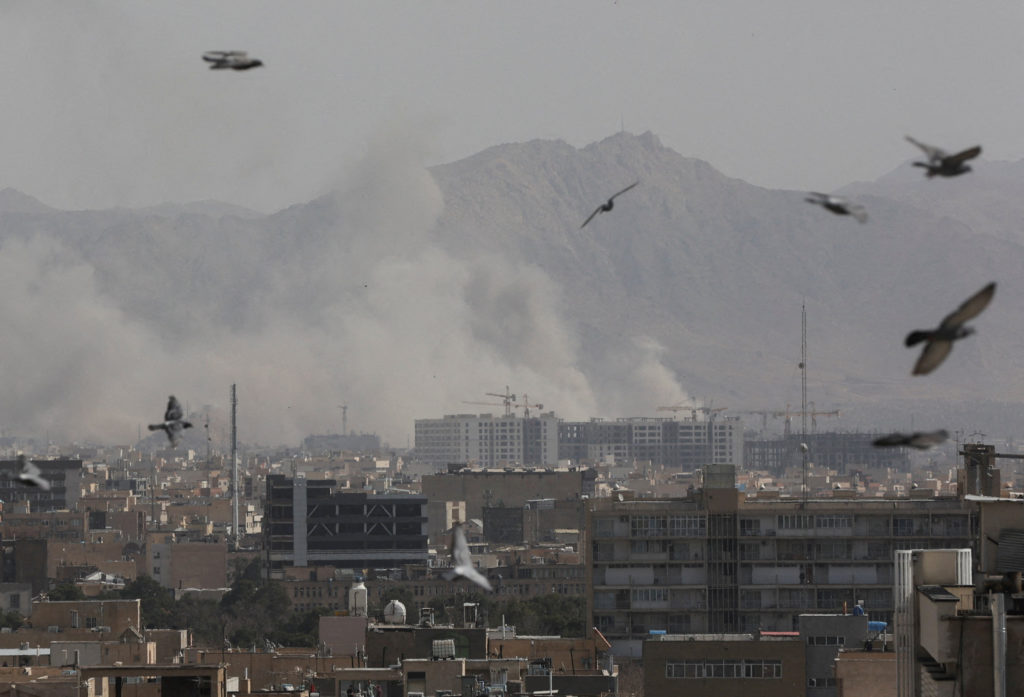
Today, the most dramatic hostilities are taking place in West Asia. For the advancement of Donald Trump and Benjamin Netanyahu's genocidal plans against Iran, Palestine and Yemen, our region must be in a state of submission, capable of providing resources to the monster of war and, at the same time, generating economic stability in the area.
The U.S. is spending, on average, $1 billion a day to attack Iran. At a time when military escalation is preventing stable energy supplies for the world, our region is joining the war as a supply platform. This reveals the principal motive behind the attacks on Venezuela: to guarantee a cheap, abundant and essentially exclusive supply of hydrocarbons in order to sustain warmongering plans in Asia and the wasteful U.S. domestic economy. The narrative of the fight against drug trafficking has collapsed. They needed to subdue Venezuela in order to proceed in the Persian Gulf.
The attacks against Cuba can also be better understood: The hope of rebellion, dignity and sovereignty represented by the island must be destroyed to ensure that people do not rise up against the empire.
“We have entered a stage of global war, of global and permanent threat,” Hugo Chávez explained on June 24, 2007. “New forms of war, aggression and coups d'état are emerging, hard, soft, quick-acting, slow-acting, colorful or colorless. It is the strategy of death against the world.”
When Chávez uttered those words, he was the president of Venezuela and the leader of a revolution that had defeated a coup d'état, an oil strike and other hostilities promoted by the U.S. At that time, the Bolivarian revolution had declared itself anti-imperialist and was charting its course toward socialism. It revitalized the Organization of Petroleum Exporting Countries; launched, together with Cuba, the Bolivarian Alternative for the Americas; and promoted Petrocaribe, among multiple initiatives to build a multipolar world — a basic condition for the survival of that revolution and a world at peace.
His ability to analyze history led Chávez to offer, in that same speech, a salient definition: “Capitalism, Lenin said, has a higher stage, imperialism; and that higher stage has, in turn, an even higher stage: the mad empire.”
Chávez continued to lead until the day of his death on Mar. 5, 2013, exactly 13 years ago. Nicolás Maduro subsequently took up his legacy as leader. Today, he is imprisoned in the United States, with a trial to begin in a few weeks.
Revitalizing Chávez's anti-imperialist thinking is vital for the region in challenging the role it has been assigned by the mad empire.
Germán Sánchez Otero, a key figure in the interweaving of the Cuban and Venezuelan revolutions, has written a must-read text, "Chávez's Anti-Imperialist Legacy." The piece represents a historical synthesis of the Bolivarian revolution since its confrontation with the U.S., and its unyielding anti-imperialist character, in order to remain a revolution.
The survival of humanity requires multiple ways of confronting the empire gone mad. In the speech quoted above, Chávez made some key points: “waging a war of resistance every day … political, economic, communicative social resistance ... because the empire also took care to train its puppies in all these countries. They are here, and we cannot underestimate their strength.”
Our region has a leading role to play in stopping this global, total, endless, fractal and imperial war. As long as “a very powerful country wants to dominate us all,” Chávez continued, stressing that “peace will be impossible, because there is dignity in the world.”
*Philosopher, coordinator of the selected works of Fernando Martínez Heredia (entitled “Thinking in the Time of Revolution”)
This is a global war; there is no corner of the planet that is not affected. In short, it involves all existing forms of war (economic, military, political, psychological, legal, etc.), as it has been defined by Erich Ludendorff. Endless, with unlimited objectives, it seeks not merely to subjugate the enemy to its own will, in line with classical war theory, but to annihilate it — even if this is almost impossible to achieve. It is fractal: it reproduces itself at all scales and dimensions of social life (Maurizio Lazzarato and Eric Alliez develop this notion in "Wars and Capital"). But it is, in the immediate and most basic sense, an imperial war.
Latin America and the Caribbean region play a key role in this conflict being waged by the U.S., the imperial hegemon.
Today, the most dramatic hostilities are taking place in West Asia. For the advancement of Donald Trump and Benjamin Netanyahu's genocidal plans against Iran, Palestine and Yemen, our region must be in a state of submission, capable of providing resources to the monster of war and, at the same time, generating economic stability in the area.
The U.S. is spending, on average, $1 billion a day to attack Iran. At a time when military escalation is preventing stable energy supplies for the world, our region is joining the war as a supply platform. This reveals the principal motive behind the attacks on Venezuela: to guarantee a cheap, abundant and essentially exclusive supply of hydrocarbons in order to sustain warmongering plans in Asia and the wasteful U.S. domestic economy. The narrative of the fight against drug trafficking has collapsed. They needed to subdue Venezuela in order to proceed in the Persian Gulf.
The attacks against Cuba can also be better understood: The hope of rebellion, dignity and sovereignty represented by the island must be destroyed to ensure that people do not rise up against the empire.
“We have entered a stage of global war, of global and permanent threat,” Hugo Chávez explained on June 24, 2007. “New forms of war, aggression and coups d'état are emerging, hard, soft, quick-acting, slow-acting, colorful or colorless. It is the strategy of death against the world.”
When Chávez uttered those words, he was the president of Venezuela and the leader of a revolution that had defeated a coup d'état, an oil strike and other hostilities promoted by the U.S. At that time, the Bolivarian revolution had declared itself anti-imperialist and was charting its course toward socialism. It revitalized the Organization of Petroleum Exporting Countries; launched, together with Cuba, the Bolivarian Alternative for the Americas; and promoted Petrocaribe, among multiple initiatives to build a multipolar world — a basic condition for the survival of that revolution and a world at peace.
His ability to analyze history led Chávez to offer, in that same speech, a salient definition: “Capitalism, Lenin said, has a higher stage, imperialism; and that higher stage has, in turn, an even higher stage: the mad empire.”
Chávez continued to lead until the day of his death on Mar. 5, 2013, exactly 13 years ago. Nicolás Maduro subsequently took up his legacy as leader. Today, he is imprisoned in the United States, with a trial to begin in a few weeks.
Revitalizing Chávez's anti-imperialist thinking is vital for the region in challenging the role it has been assigned by the mad empire.
Germán Sánchez Otero, a key figure in the interweaving of the Cuban and Venezuelan revolutions, has written a must-read text, "Chávez's Anti-Imperialist Legacy." The piece represents a historical synthesis of the Bolivarian revolution since its confrontation with the U.S., and its unyielding anti-imperialist character, in order to remain a revolution.
The survival of humanity requires multiple ways of confronting the empire gone mad. In the speech quoted above, Chávez made some key points: “waging a war of resistance every day … political, economic, communicative social resistance ... because the empire also took care to train its puppies in all these countries. They are here, and we cannot underestimate their strength.”
Our region has a leading role to play in stopping this global, total, endless, fractal and imperial war. As long as “a very powerful country wants to dominate us all,” Chávez continued, stressing that “peace will be impossible, because there is dignity in the world.”
*Philosopher, coordinator of the selected works of Fernando Martínez Heredia (entitled “Thinking in the Time of Revolution”)
Previous article