

The Price of Words
The geopolitical crisis engineered in Washington will not be short-lived.
On the shores of the Grand Barachois island, stretching between Langlade and Grande Miquelon just off the coast of Canada, semi-wild horses roam free. Hardy and stocky, their gallops pound the isthmus on this side of the world as sneering seals look on. This confetti-like territory, rough but majestic, lies a cable’s length away from the coast of Newfoundland, but 2,670 miles away from the French capital that governs it. Isolated from the world and frozen in time … until recently.
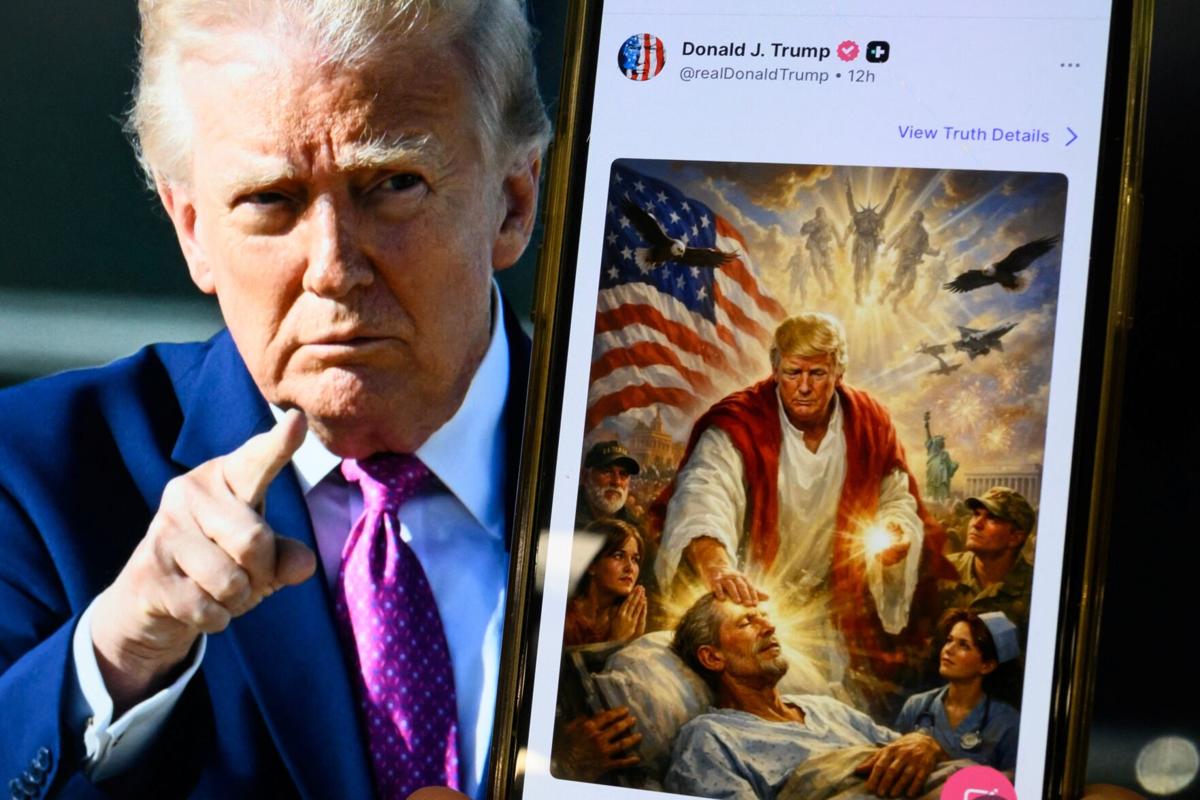
Because this small French archipelago recently appeared on the front page of newspapers in France, after the U.S. president imagined it as his own in a Truth Social post, folding it into a territory stretching from the Caribbean Sea to the Arctic ocean, absorbing Canada and Greenland into the United States in the same breath.
It wouldn’t be the first time that the French overseas territory of Saint Pierre and Miquelon has become a point of contention at the heart of the Monroe Doctrine. In 1941, after Admiral Emile Muselier had seized control of the islands, the American secretary of state condemned the “so-called Free French naval forces,” bullying Canada into doing whatever was necessary to return the archipelago to Vichy France. In a similar fashion, this is not the first time that the United States has threatened Canada. History is riddled with moments of existential threat, and that is undoubtedly why there is a scenario such as the one described by Prime Minister Mark Carney in the New York Times.
But the U.S. president’s map posts – even if they result from the geographical frenzies of a narcissist, drunk off the cowardice of his party, of the paralysis of the checks and balances of the West – have loomed heavy. All this in the wake of regime change in Venezuela and recurrent threats to the sovereignty of the United States’ territorial neighbors.
It’s what has turned this string of islands into a geopolitical stage, hosting the first official visit by a Canadian prime minister and the fifth by a French president in 75 years. All the more so since it is a strategic territory for Europe’s satellite positioning system and the independent guidance of European systems, as it is home to the only Galileo sensor in North America. Its position is crucial but vulnerable, as the territory relies on submarine cables from Newfoundland for its communications and has paid the price.
Meeting together on this “rock,” as the locals call it, Carney and Emmanuel Macron came to confirm that the geopolitical crisis engineered in Washington will not be short-lived. After Davos, after Strasbourg, electrified by the words of a Canadian prime minister whose options oscillated between a form of vassalization and the quest for a new coalition, the allies, who had originally tried to turn their backs, are now realizing that the winds of change will not magically dissipate in 2028. The world has drifted far from the shores of previous decades, and geopolitical textbooks are continuously being rewritten.
The Economist’s cover story this week on the end of American hegemony in the Middle East is proof of this, confirming Robert Fisk’s thesis that all empires are inevitably damaged in this “great war for civilization.” Likewise, Xi Jinping’s reception at the White House marked by pageantry, accompanied by his warnings regarding Taiwan, illustrate this seismic shift. Meanwhile, China is said to be in possession of “sensitive” F-35 parts, seized in Hong Kong as they were being sent to the United States for repairs. The same goes for the U.S. president’s official invitation to the man in the Kremlin to the G-20 summit in Miami – which he has not personally attended since 2022.
On the other side of the Atlantic, the hybrid war led by Russia intensifies. In a 2025 report, the International Institute for Strategic Studies mapped out the attacks led by Russia since 2018 against vital European infrastructure, including in the areas of communications, energy, health, industry, military, transport and water management. Methods employed include assassinations, espionage, weaponization of migration, GPS jamming, vandalism, and terrorism, carried out not only by agents, but also by intermediaries who are sometimes entirely unaware of who is funding them. Added to this are operations involving manipulation, disinformation, and cyberattacks. In a 2026 report, the institute documents drone sightings near key European infrastructure sites over the last two years. The threat is real.
Just ask the Germans, who discovered a drone loaded with explosives at Leipzig airport last month. Or the Italian fighter jet that shot down a drone hovering over Lithuania 10 days ago, while this week the Polish air force intercepted a Russian military helicopter in its airspace.
As the Polish government attributes the fire at a Starlink satellite station to Russia as an act of sabotage, it described the latest incident as “a test,” a prelude to more substantial actions. This interpretation is shared by the Danish secret services, who, in a report published on Thursday, foresee Russia’s attacks intensifying and raise the possibility of an attack on one of the NATO members. They conclude that Russia, attempting to distract Europe from Ukraine, is testing whether Article 5 of the NATO Charter would actually be invoked. That provision, which holds that any attack on one ally is an attack on all members, is the cornerstone of the transatlantic alliance. Today, however, that principle is being weakened both in Europe – the Slovak prime minister having announced that he challenges the principle – and as a result of Washington’s disengagement.
On the eve of the U.S. midterm elections, the foreseeable reversal of the balance in Congress could brew even fiercer storms. The president may retreat to the only sandbox that could afford him room to maneuver – that is, foreign policy – as he becomes increasingly unstable, unpredictable, and more eager to maximize the two years he has left in power. “To the victor belonged the spoils,” he declared before the United Nations General Assembly. Words that will resonate long after his departure, from the Chungyang Range to the Carpathian Mountains.
On the shores of the Grand Barachois island, stretching between Langlade and Grande Miquelon just off the coast of Canada, semi-wild horses roam free. Hardy and stocky, their gallops pound the isthmus on this side of the world as sneering seals look on. This confetti-like territory, rough but majestic, lies a cable’s length away from the coast of Newfoundland, but 2,670 miles away from the French capital that governs it. Isolated from the world and frozen in time … until recently.
Because this small French archipelago recently appeared on the front page of newspapers in France, after the U.S. president imagined it as his own in a Truth Social post, folding it into a territory stretching from the Caribbean Sea to the Arctic ocean, absorbing Canada and Greenland into the United States in the same breath.
It wouldn’t be the first time that the French overseas territory of Saint Pierre and Miquelon has become a point of contention at the heart of the Monroe Doctrine. In 1941, after Admiral Emile Muselier had seized control of the islands, the American secretary of state condemned the “so-called Free French naval forces,” bullying Canada into doing whatever was necessary to return the archipelago to Vichy France. In a similar fashion, this is not the first time that the United States has threatened Canada. History is riddled with moments of existential threat, and that is undoubtedly why there is a scenario such as the one described by Prime Minister Mark Carney in the New York Times.
But the U.S. president’s map posts – even if they result from the geographical frenzies of a narcissist, drunk off the cowardice of his party, of the paralysis of the checks and balances of the West – have loomed heavy. All this in the wake of regime change in Venezuela and recurrent threats to the sovereignty of the United States’ territorial neighbors.
It’s what has turned this string of islands into a geopolitical stage, hosting the first official visit by a Canadian prime minister and the fifth by a French president in 75 years. All the more so since it is a strategic territory for Europe’s satellite positioning system and the independent guidance of European systems, as it is home to the only Galileo sensor in North America. Its position is crucial but vulnerable, as the territory relies on submarine cables from Newfoundland for its communications and has paid the price.
Meeting together on this “rock,” as the locals call it, Carney and Emmanuel Macron came to confirm that the geopolitical crisis engineered in Washington will not be short-lived. After Davos, after Strasbourg, electrified by the words of a Canadian prime minister whose options oscillated between a form of vassalization and the quest for a new coalition, the allies, who had originally tried to turn their backs, are now realizing that the winds of change will not magically dissipate in 2028. The world has drifted far from the shores of previous decades, and geopolitical textbooks are continuously being rewritten.
The Economist’s cover story this week on the end of American hegemony in the Middle East is proof of this, confirming Robert Fisk’s thesis that all empires are inevitably damaged in this “great war for civilization.” Likewise, Xi Jinping’s reception at the White House marked by pageantry, accompanied by his warnings regarding Taiwan, illustrate this seismic shift. Meanwhile, China is said to be in possession of “sensitive” F-35 parts, seized in Hong Kong as they were being sent to the United States for repairs. The same goes for the U.S. president’s official invitation to the man in the Kremlin to the G-20 summit in Miami – which he has not personally attended since 2022.
On the other side of the Atlantic, the hybrid war led by Russia intensifies. In a 2025 report, the International Institute for Strategic Studies mapped out the attacks led by Russia since 2018 against vital European infrastructure, including in the areas of communications, energy, health, industry, military, transport and water management. Methods employed include assassinations, espionage, weaponization of migration, GPS jamming, vandalism, and terrorism, carried out not only by agents, but also by intermediaries who are sometimes entirely unaware of who is funding them. Added to this are operations involving manipulation, disinformation, and cyberattacks. In a 2026 report, the institute documents drone sightings near key European infrastructure sites over the last two years. The threat is real.
Just ask the Germans, who discovered a drone loaded with explosives at Leipzig airport last month. Or the Italian fighter jet that shot down a drone hovering over Lithuania 10 days ago, while this week the Polish air force intercepted a Russian military helicopter in its airspace.
As the Polish government attributes the fire at a Starlink satellite station to Russia as an act of sabotage, it described the latest incident as “a test,” a prelude to more substantial actions. This interpretation is shared by the Danish secret services, who, in a report published on Thursday, foresee Russia’s attacks intensifying and raise the possibility of an attack on one of the NATO members. They conclude that Russia, attempting to distract Europe from Ukraine, is testing whether Article 5 of the NATO Charter would actually be invoked. That provision, which holds that any attack on one ally is an attack on all members, is the cornerstone of the transatlantic alliance. Today, however, that principle is being weakened both in Europe – the Slovak prime minister having announced that he challenges the principle – and as a result of Washington’s disengagement.
On the eve of the U.S. midterm elections, the foreseeable reversal of the balance in Congress could brew even fiercer storms. The president may retreat to the only sandbox that could afford him room to maneuver – that is, foreign policy – as he becomes increasingly unstable, unpredictable, and more eager to maximize the two years he has left in power. “To the victor belonged the spoils,” he declared before the United Nations General Assembly. Words that will resonate long after his departure, from the Chungyang Range to the Carpathian Mountains.
Previous article
Next article