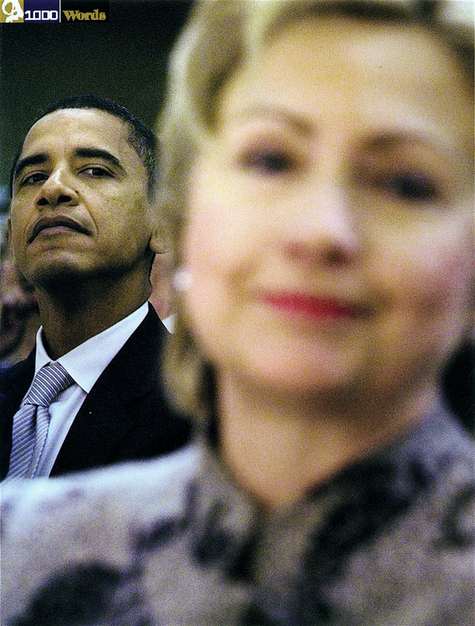
Barack Obama Promises the United States Will Participate in Climate Negotiations
Barack Obama will not be present at the International Climate Conference in Poznan, Poland on December 1st, but the President-elect of the United States intends to radically change American policy on climate change.
Mr. Obama used the international summit held on Tuesday, November 18 in Beverly Hills, California, which was dedicated to this theme, to affirm, for the first time since his election, the United States change of heart to now energetically participate in international climate negotiations.
Supported by Arnold Schwarzenegger, the governor of California whos dedicated to the environmental cause, this summit welcomed Barack Obamas declarations. Since 2006, the state of California has fought against global warming through the adoption of a law to reduce polluting emissions in the spirit of the Kyoto Protocol, which George Bush refused to ratify.
Without stepping in for the Bush administration, which still has business at the Poznan conference, the Democrats will follow the conference very closely. I asked the members of Congress who will be present at the conference as observers to report what they learn to me, added Mr. Obama.
Barack Obama implicitly distanced himself from John McCains running mate Sarah Palins, remarks. Over the course of the campaign, she doubted the human causes of global warming. Waiting is no longer an option. Denial is not an acceptable response. The stakes are too high, the consequences too serious, he said.
A new cycle of climate negotiations began in Bali in 2007 and will end in Copenhagen in 2009. The Poznan meetings, which will bring together nearly 10,000 participants from 170 countries, will test countries desire to bring new enthusiasm to the international politics for the fight against global warming.
Mr. Obama used the international summit held on Tuesday, November 18 in Beverly Hills, California, which was dedicated to this theme, to affirm, for the first time since his election, the United States change of heart to now energetically participate in international climate negotiations.
Supported by Arnold Schwarzenegger, the governor of California whos dedicated to the environmental cause, this summit welcomed Barack Obamas declarations. Since 2006, the state of California has fought against global warming through the adoption of a law to reduce polluting emissions in the spirit of the Kyoto Protocol, which George Bush refused to ratify.
Without stepping in for the Bush administration, which still has business at the Poznan conference, the Democrats will follow the conference very closely. I asked the members of Congress who will be present at the conference as observers to report what they learn to me, added Mr. Obama.
Barack Obama implicitly distanced himself from John McCains running mate Sarah Palins, remarks. Over the course of the campaign, she doubted the human causes of global warming. Waiting is no longer an option. Denial is not an acceptable response. The stakes are too high, the consequences too serious, he said.
A new cycle of climate negotiations began in Bali in 2007 and will end in Copenhagen in 2009. The Poznan meetings, which will bring together nearly 10,000 participants from 170 countries, will test countries desire to bring new enthusiasm to the international politics for the fight against global warming.
Next article