The Latino Wall
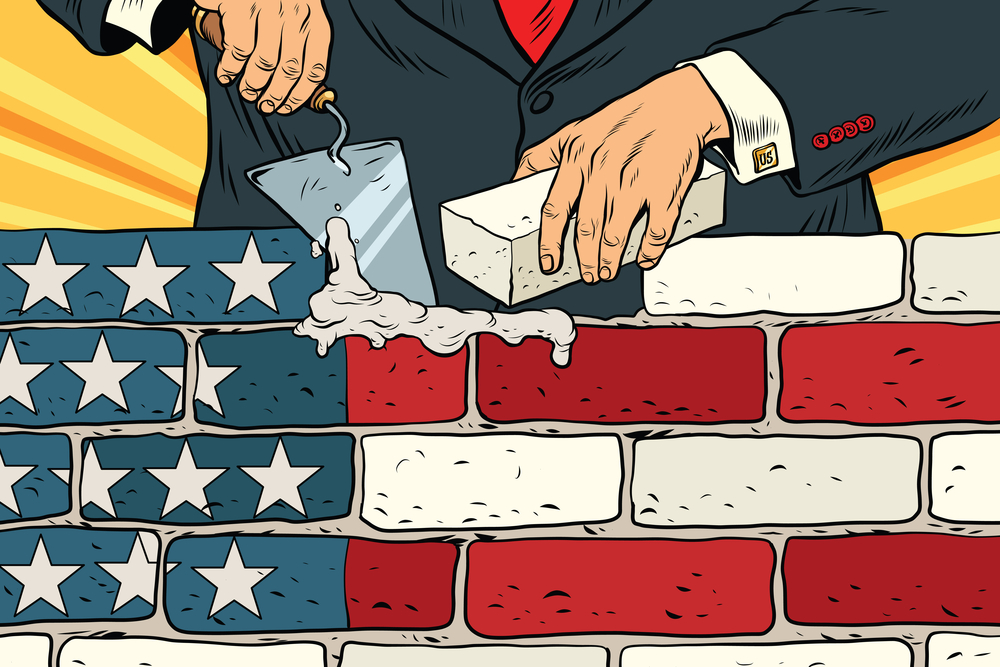
At the end of 2018, a migrant caravan crossed the long strip of land that unites the two Americas. Many felt that defeat awaited the migrants at the end of their journey in the form of an obstacle that has yet to manifest: the wall that Donald Trump wanted to construct from San Diego County, California to Cameron, Texas. In order to achieve his aim, Trump has just declared a national state of emergency across the United States.
We hear so much about Republican policies that it is tempting to assume that all Americans support them. However, the truth is that the main drive to restrict immigration from the south does not come from within the U.S., where Latinos remain a minority. In reality, anti-immigrant sentiment and U.S. activity on the border have arrived in Washington by means of the current president. The strip of land by the border measures over 1200 miles long and is characterized as being Latino, voting for the Democrats and clearly in favor of immigration. The new Congress, which convened on January 3, is an accurate portrayal of the differences in voters’ opinions.
Mestizo Legislation
The result for the Democrats on the border was excellent, as they ended up winning eight out of the nine electoral districts that send representatives to Congress in Washington. Democrat nominee Gina Ortiz Jones, a Filipino-American and Iraq War veteran, lost the last district by a very tight margin two weeks after a vote recount was ordered.
Moreover, out of the eight newly elected members of Congress from the border, seven are of Latino origin. They have joined the growing number of Latino congressman and congresswomen in both the House of Representatives and the Senate.
The Latino identity itself is unclear and undefined. If someone associates with this identity, it is often a result of personal characteristics that are difficult to classify, even for the person in question. There is data from the Pew Research Center which shows that though families may associate less and less with a Latino identity, on the other hand, how individuals relate to this identity is less clear. It is also worth noting that the mestizo and Latino identities are closely linked in the U.S. It is useful to try to understand people’s relationship with the Latino identity to better understand how it has recently become so important to so many. However, despite this being a recent phenomenon, the U.S. has been just as Latino as Anglo-Saxon throughout its history. Although changing, the Latino population is still not sufficiently represented in Congress. This means the Latino population has a little way to go yet in terms of securing adequate political representation.
Behind this slow but steady change, there, of course, lie shifts in thinking patterns and social trends on the border that also reach the rest of the U.S. Indeed, the Latino population doubled every 20 years in the final half of the last century.
A Border Closer to the Other Side
It will surprise no one that there is a notable Latino population in the 21 counties that make up the northern side of the border. It is particularly striking how large this population actually is. On average, 70 percent are indeed Latino. Let us not forget, however, that in some places this figure is so high because the border is much further south today than it was five or six generations ago.
Throughout all of the counties on the border, Trump suffered many defeats on the day he won the presidential election. He suffered these defeats despite his policies aimed at boosting security on the border. On the other hand, maybe he suffered defeats in these areas precisely because of the very large proportion of inhabitants who clearly have a positive attitude towards those on the other side of the border. Those against the wall would possibly prefer a reality where the U.S.-Mexico border were less rigid and more porous. In fact, as a general rule, those of Latino origin maintain a more pro-immigration stance than their non-Latino white counterparts. This divide of opinion is clearest on the subject of the border wall.
The fact that the border is home to significant traffic does not seem to deter those in favor of a less restrictive immigration model. It is important to highlight the reality of how many people migrate to the U.S. For example, the figures from 2018, which show how many people crossed the border, do not solely represent the arrival of migrants. In reality, many people cross the border on a daily basis but are not migrating. Both sides of the border habitually interact with each other. Like the 70 percent of the population that is Latino in U.S. border counties, those that frequently cross between both countries are aware how neighbors on both sides depend on each other.
It should be noted that the scope of this phenomenon still has not been reflected in elections. Whether because of age, nationality or electoral registration laws, which discriminate against Latinos and African-Americans, there exists a gap between the number of people in the aforementioned groups that have the right to vote and non-Latino white people that have the same right. As this gap closes, the electoral power of people of Latino origin will strengthen. Maybe the balance of power will even tip in their favor.
The Growing Power of the Latino Community
In 2012, after the defeat of Mitt Romney by Barack Obama, a group of Republican strategists drafted a report that documented the progress of their party up to 2015. In the report, they pointed out the population’s general preference for diversity. They were aware that the Republican Party was not very diverse, not to mention overly conservative, and so decided this had to change. Although in the 2016 elections, the Latino population voted overwhelmingly for the Democrats (66-28 according to surveys), Trump’s eventual victory seemed to cast doubts on the strategists’ reasoning. This is how the most nationalist wing of the party saw things, anyway. The truth is that the facts speak for themselves. Clinton ended up losing by a slim margin because she was defeated in three states, which turned the result upside-down. These states were Wisconsin, Michigan and Pennsylvania. There are numerous ways to dissect what happened but one, which is not insignificant, is the argument that Trump won because of the white vote in areas where industrial decline has left the old working class behind, waiting for the arrival of someone who promises to bring back the good old days.
This argument does not, however, account for the new working class disproportionately made up of immigrants of Latino origin or their children. It is important to consider the voting practices of the wealthy, middle-class Latinos who are increasingly found up and down the country. They too can be found in the four key states that Clinton lost.
There is the beginning of a path for the Latino community to see itself represented in the White House. It would not take much to change the political representation in the four key states. In fact, only 100,000 votes would be needed. In only a few years, Latinos in Michigan and Wisconsin at least will continue to grow in power.
Meanwhile in Florida, Texas and Arizona, the Latino population has grown by 50 percent in the last two decades. It has grown by such an extent that Latinos are now a pivotal force in politics. These three states, one on the ocean and the other two inland, will make life hard for the Republican Party in the future. All three states are necessary, or at least important, for the Republicans to gain a majority. Arizona saw the victory of the Democrats in the Senate elections this year. Florida and Texas have been close to witnessing the same thing. In one decade, perhaps, all three will be Democratic states, thanks, in part, to changing demographic landscapes.
Trump’s wall is being built slowly. It can be seen as a representation of his policies. However, there is a wave of change and diversity that is gaining momentum on the border. More caravans are approaching the border, and more migrants are trying to enter the U.S. The migrants are being pushed back and treated unfairly, but they are destined to join the other tides of migrants that arrived from the south, the east and the west before them to make up what is today the United States. A land built, ultimately, on migration.
We hear so much about Republican policies that it is tempting to assume that all Americans support them. However, the truth is that the main drive to restrict immigration from the south does not come from within the U.S., where Latinos remain a minority. In reality, anti-immigrant sentiment and U.S. activity on the border have arrived in Washington by means of the current president. The strip of land by the border measures over 1200 miles long and is characterized as being Latino, voting for the Democrats and clearly in favor of immigration. The new Congress, which convened on January 3, is an accurate portrayal of the differences in voters’ opinions.
Mestizo Legislation
The result for the Democrats on the border was excellent, as they ended up winning eight out of the nine electoral districts that send representatives to Congress in Washington. Democrat nominee Gina Ortiz Jones, a Filipino-American and Iraq War veteran, lost the last district by a very tight margin two weeks after a vote recount was ordered.
Moreover, out of the eight newly elected members of Congress from the border, seven are of Latino origin. They have joined the growing number of Latino congressman and congresswomen in both the House of Representatives and the Senate.
The Latino identity itself is unclear and undefined. If someone associates with this identity, it is often a result of personal characteristics that are difficult to classify, even for the person in question. There is data from the Pew Research Center which shows that though families may associate less and less with a Latino identity, on the other hand, how individuals relate to this identity is less clear. It is also worth noting that the mestizo and Latino identities are closely linked in the U.S. It is useful to try to understand people’s relationship with the Latino identity to better understand how it has recently become so important to so many. However, despite this being a recent phenomenon, the U.S. has been just as Latino as Anglo-Saxon throughout its history. Although changing, the Latino population is still not sufficiently represented in Congress. This means the Latino population has a little way to go yet in terms of securing adequate political representation.
Behind this slow but steady change, there, of course, lie shifts in thinking patterns and social trends on the border that also reach the rest of the U.S. Indeed, the Latino population doubled every 20 years in the final half of the last century.
A Border Closer to the Other Side
It will surprise no one that there is a notable Latino population in the 21 counties that make up the northern side of the border. It is particularly striking how large this population actually is. On average, 70 percent are indeed Latino. Let us not forget, however, that in some places this figure is so high because the border is much further south today than it was five or six generations ago.
Throughout all of the counties on the border, Trump suffered many defeats on the day he won the presidential election. He suffered these defeats despite his policies aimed at boosting security on the border. On the other hand, maybe he suffered defeats in these areas precisely because of the very large proportion of inhabitants who clearly have a positive attitude towards those on the other side of the border. Those against the wall would possibly prefer a reality where the U.S.-Mexico border were less rigid and more porous. In fact, as a general rule, those of Latino origin maintain a more pro-immigration stance than their non-Latino white counterparts. This divide of opinion is clearest on the subject of the border wall.
The fact that the border is home to significant traffic does not seem to deter those in favor of a less restrictive immigration model. It is important to highlight the reality of how many people migrate to the U.S. For example, the figures from 2018, which show how many people crossed the border, do not solely represent the arrival of migrants. In reality, many people cross the border on a daily basis but are not migrating. Both sides of the border habitually interact with each other. Like the 70 percent of the population that is Latino in U.S. border counties, those that frequently cross between both countries are aware how neighbors on both sides depend on each other.
It should be noted that the scope of this phenomenon still has not been reflected in elections. Whether because of age, nationality or electoral registration laws, which discriminate against Latinos and African-Americans, there exists a gap between the number of people in the aforementioned groups that have the right to vote and non-Latino white people that have the same right. As this gap closes, the electoral power of people of Latino origin will strengthen. Maybe the balance of power will even tip in their favor.
The Growing Power of the Latino Community
In 2012, after the defeat of Mitt Romney by Barack Obama, a group of Republican strategists drafted a report that documented the progress of their party up to 2015. In the report, they pointed out the population’s general preference for diversity. They were aware that the Republican Party was not very diverse, not to mention overly conservative, and so decided this had to change. Although in the 2016 elections, the Latino population voted overwhelmingly for the Democrats (66-28 according to surveys), Trump’s eventual victory seemed to cast doubts on the strategists’ reasoning. This is how the most nationalist wing of the party saw things, anyway. The truth is that the facts speak for themselves. Clinton ended up losing by a slim margin because she was defeated in three states, which turned the result upside-down. These states were Wisconsin, Michigan and Pennsylvania. There are numerous ways to dissect what happened but one, which is not insignificant, is the argument that Trump won because of the white vote in areas where industrial decline has left the old working class behind, waiting for the arrival of someone who promises to bring back the good old days.
This argument does not, however, account for the new working class disproportionately made up of immigrants of Latino origin or their children. It is important to consider the voting practices of the wealthy, middle-class Latinos who are increasingly found up and down the country. They too can be found in the four key states that Clinton lost.
There is the beginning of a path for the Latino community to see itself represented in the White House. It would not take much to change the political representation in the four key states. In fact, only 100,000 votes would be needed. In only a few years, Latinos in Michigan and Wisconsin at least will continue to grow in power.
Meanwhile in Florida, Texas and Arizona, the Latino population has grown by 50 percent in the last two decades. It has grown by such an extent that Latinos are now a pivotal force in politics. These three states, one on the ocean and the other two inland, will make life hard for the Republican Party in the future. All three states are necessary, or at least important, for the Republicans to gain a majority. Arizona saw the victory of the Democrats in the Senate elections this year. Florida and Texas have been close to witnessing the same thing. In one decade, perhaps, all three will be Democratic states, thanks, in part, to changing demographic landscapes.
Trump’s wall is being built slowly. It can be seen as a representation of his policies. However, there is a wave of change and diversity that is gaining momentum on the border. More caravans are approaching the border, and more migrants are trying to enter the U.S. The migrants are being pushed back and treated unfairly, but they are destined to join the other tides of migrants that arrived from the south, the east and the west before them to make up what is today the United States. A land built, ultimately, on migration.
Previous article

Next article