
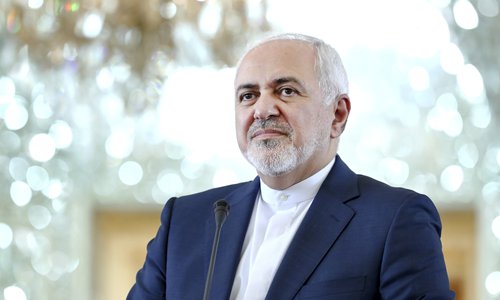
Will Zarif’s Surprise G-7 Visit Help Resolve Row?
Iran has been striving to overcome the crisis in its relations with the US. Although the Islamic Republic has taken some tough steps, such as shooting down a US military drone in June and seizing a British tanker in July, or ratcheting up the rhetoric against the US, Tehran doesn't want to break down its ties with Washington.
Iran is more concerned about how to get US sanctions lifted, as they have caused a series of problems within the country. So, in addition to taking a tough line against the US, Iran is also seeking help from the international community.
The two countries are locked in a stalemate. The US could continue its maximum pressure campaign, but it is not likely to launch a war against Iran. In the meantime, Iran cannot afford to be stuck in such a stagnant situation much longer. As such, third party forces are extremely important and could play an even bigger role in the future.
During sideline talks at the G7 summit in France on Sunday, Iranian Foreign Minister Mohammad Javad Zarif held "constructive" talks with French Foreign Minister Jean-Yves Le Drian and French President Emmanuel Macron and gave a joint briefing to German and British officials, the BBC reported on Monday.
Right after his brief visit to France, Zarif came to China and held talks with Chinese State Councilor and Foreign Minister Wang Yi on Monday. We can see that Tehran also wants to know where China stands in regard to the Iranian nuclear issue.
It is hard for France, the United Kingdom or Germany to unilaterally confront the US on the Iran issue. Thus, a joint move by countries that have differing views from the US would be more effective in dealing with US sanctions and help Iran out of the dilemma.
Although some analysts said Zarif's visit to France was more symbolic than pragmatic, I believe it's very important for Iran. It is a game on which international attention is focused. Any positive attitude toward Iran would to some extent encourage the country.
The Iranian nuclear issue has reflected a growing divergence within the West and that on some international issues, the trend of Europe becoming a more independent diplomatic entity is strengthening, which is significant.
If the Iranian issue is ultimately solved but not in the way the US prefers, this could be a trailblazer that changes the current format in which various countries, especially European countries, follow the lead of the US on important international issues.
The Iran-US tensions are not static. Other countries' moves could affect the US. It was a surprise for the US to see Zarif on the sidelines of the G7 summit. But Washington didn't display strong dissatisfaction.
US President Donald Trump has been putting more focus on his reelection campaign, but US domestic politics and economy are not favorable to his campaign. International diplomacy won't get him more votes. So, Trump is not likely to spend more resources on the Iranian nuclear issue.
Wang Yi said in his meeting with Zarif that the Iranian side should receive reasonable returns as the country continued to implement the nuclear deal. He noted that China as a responsible country is willing to continue to implement the deal and play a constructive role in easing the tensions in the Gulf region.
Now that Wang has expressed support for all efforts conducive to maintaining the Iran nuclear deal, China should consider strengthening talks with countries like France to improve collaboration on the issue. The signatories to JCPOA, except the US, should not part ways but rather work in concert with each other to promote consultations and figure a pragmatic way out.
Zarif traveled to Japan to meet his Japanese counterpart Kono Taro on Tuesday. Japan is a close ally of the US and it has a good relationship with Iran. Japanese Prime Minister Shinzo Abe visited Iran in June, hoping to ease tensions between Tehran and Washington.
In July, the US called for a maritime coalition to protect shipping in the Persian Gulf, but Japan is reluctant to join.
Tokyo wants neither to offend Washington nor to ruin relations with the Middle Eastern country. Not joining the US-led coalition is not an easy move for Japan, but under US pressure, Japan will not actively provide more assistance to Iran, although it will not follow every order of the US.
More and more countries are aware that Trump's maximum pressure campaign against Tehran is not sustainable.
Iran is more concerned about how to get US sanctions lifted, as they have caused a series of problems within the country. So, in addition to taking a tough line against the US, Iran is also seeking help from the international community.
The two countries are locked in a stalemate. The US could continue its maximum pressure campaign, but it is not likely to launch a war against Iran. In the meantime, Iran cannot afford to be stuck in such a stagnant situation much longer. As such, third party forces are extremely important and could play an even bigger role in the future.
During sideline talks at the G7 summit in France on Sunday, Iranian Foreign Minister Mohammad Javad Zarif held "constructive" talks with French Foreign Minister Jean-Yves Le Drian and French President Emmanuel Macron and gave a joint briefing to German and British officials, the BBC reported on Monday.
Right after his brief visit to France, Zarif came to China and held talks with Chinese State Councilor and Foreign Minister Wang Yi on Monday. We can see that Tehran also wants to know where China stands in regard to the Iranian nuclear issue.
It is hard for France, the United Kingdom or Germany to unilaterally confront the US on the Iran issue. Thus, a joint move by countries that have differing views from the US would be more effective in dealing with US sanctions and help Iran out of the dilemma.
Although some analysts said Zarif's visit to France was more symbolic than pragmatic, I believe it's very important for Iran. It is a game on which international attention is focused. Any positive attitude toward Iran would to some extent encourage the country.
The Iranian nuclear issue has reflected a growing divergence within the West and that on some international issues, the trend of Europe becoming a more independent diplomatic entity is strengthening, which is significant.
If the Iranian issue is ultimately solved but not in the way the US prefers, this could be a trailblazer that changes the current format in which various countries, especially European countries, follow the lead of the US on important international issues.
The Iran-US tensions are not static. Other countries' moves could affect the US. It was a surprise for the US to see Zarif on the sidelines of the G7 summit. But Washington didn't display strong dissatisfaction.
US President Donald Trump has been putting more focus on his reelection campaign, but US domestic politics and economy are not favorable to his campaign. International diplomacy won't get him more votes. So, Trump is not likely to spend more resources on the Iranian nuclear issue.
Wang Yi said in his meeting with Zarif that the Iranian side should receive reasonable returns as the country continued to implement the nuclear deal. He noted that China as a responsible country is willing to continue to implement the deal and play a constructive role in easing the tensions in the Gulf region.
Now that Wang has expressed support for all efforts conducive to maintaining the Iran nuclear deal, China should consider strengthening talks with countries like France to improve collaboration on the issue. The signatories to JCPOA, except the US, should not part ways but rather work in concert with each other to promote consultations and figure a pragmatic way out.
Zarif traveled to Japan to meet his Japanese counterpart Kono Taro on Tuesday. Japan is a close ally of the US and it has a good relationship with Iran. Japanese Prime Minister Shinzo Abe visited Iran in June, hoping to ease tensions between Tehran and Washington.
In July, the US called for a maritime coalition to protect shipping in the Persian Gulf, but Japan is reluctant to join.
Tokyo wants neither to offend Washington nor to ruin relations with the Middle Eastern country. Not joining the US-led coalition is not an easy move for Japan, but under US pressure, Japan will not actively provide more assistance to Iran, although it will not follow every order of the US.
More and more countries are aware that Trump's maximum pressure campaign against Tehran is not sustainable.
Previous article
Next article
