The Busan Summit between Trump and Xi: A Truce of Necessity, Not Reconciliation
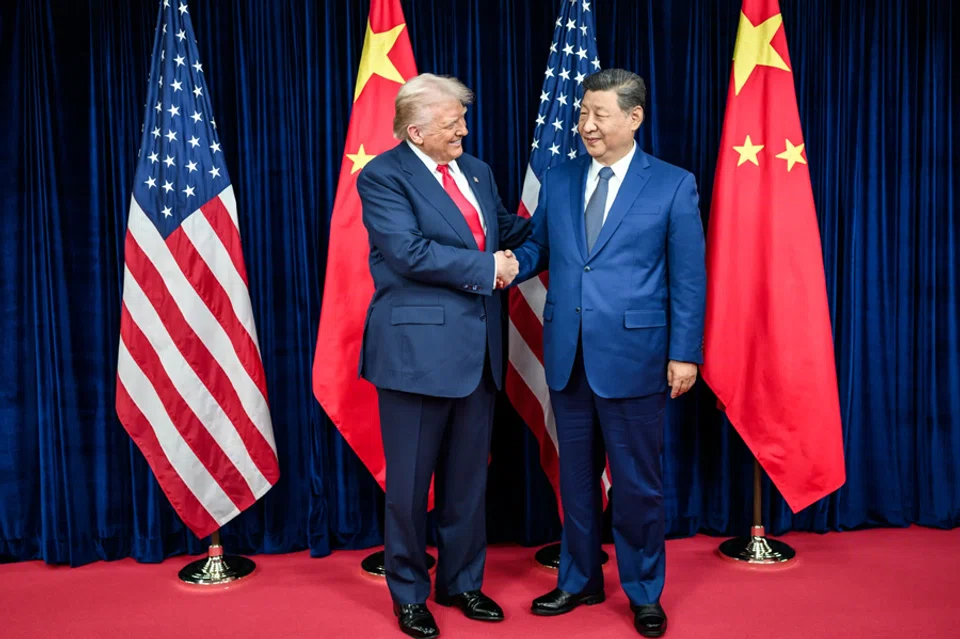
It appears that the meeting between President Donald Trump and his Chinese counterpart Xi Jinping in Busan* was not merely a matter of protocol, but rather a moment to test the delicate balance between economic necessities and strategic influence. For years, Washington and Beijing have been locked in a gray zone of neither war nor peace, exchanging sanctions, tariffs and tense statements, then returning from time to time to endless negotiations.
The recent summit served to reinforce this pattern rather than break it. We cannot consider the results to be a real breakthrough, but rather a temporary ceasefire in a trade war that has exhausted both sides. Despite its tough rhetoric, the U.S. is facing a slowdown in industrial sectors that rely on Chinese components, while China is dealing with domestic pressures in the labor market, declining growth rates and challenges in restructuring its economy after years of reliance on exports. Therefore, the truce appears to be a natural result of a mutual need to catch a breath, rather than the fruit of any new strategic understanding.
The reduction of tariffs and the resumption of some agricultural and industrial exchanges are signs of detente, but they do not reflect a fundamental change in the philosophy of the conflict between the two powers. The relationship between Washington and Beijing has moved beyond economics to something deeper: a race for technology, for influence in the Pacific and Indian Oceans and for the formulation of the rules of the international system itself. Therefore, any limited economic rapprochement will not change the essence of the competition over who will take the lead in a world beyond American unipolarity.
On one hand, Trump, who is more of a deal-maker than someone with any political ideology, is betting on the summit as proof he can bring China back to the negotiation table on American terms. On the other hand, Xi, who faces increasing domestic pressure to project an image of strong leadership, seeks to present the meeting as proof of China's equal standing with America. Therefore, the event has turned into a stage for a double discourse: conciliatory rhetoric in front of the cameras and competition behind the scenes.
The current truce, then, does not mark the end of an era, but rather a calculated management of tension. Both sides realize that a complete break would be costly, but that extensive concessions would be similarly expensive. Therefore, U.S-China relations remain governed by a delicate balance of deterrence and cooperation, with economic interests serving as a safety valve to prevent an explosion, without eliminating the ongoing geopolitical competition.
In this sense, the Busan summit is not the beginning of a new era, but rather another chapter in the cold realism between Washington and Beijing — a realism with no room for diplomatic romance, but only for calculations of power.
*Editor's note: The October 30, 2025 Busan summit, held in South Korea, concerned the US-China trade war.
The recent summit served to reinforce this pattern rather than break it. We cannot consider the results to be a real breakthrough, but rather a temporary ceasefire in a trade war that has exhausted both sides. Despite its tough rhetoric, the U.S. is facing a slowdown in industrial sectors that rely on Chinese components, while China is dealing with domestic pressures in the labor market, declining growth rates and challenges in restructuring its economy after years of reliance on exports. Therefore, the truce appears to be a natural result of a mutual need to catch a breath, rather than the fruit of any new strategic understanding.
The reduction of tariffs and the resumption of some agricultural and industrial exchanges are signs of detente, but they do not reflect a fundamental change in the philosophy of the conflict between the two powers. The relationship between Washington and Beijing has moved beyond economics to something deeper: a race for technology, for influence in the Pacific and Indian Oceans and for the formulation of the rules of the international system itself. Therefore, any limited economic rapprochement will not change the essence of the competition over who will take the lead in a world beyond American unipolarity.
On one hand, Trump, who is more of a deal-maker than someone with any political ideology, is betting on the summit as proof he can bring China back to the negotiation table on American terms. On the other hand, Xi, who faces increasing domestic pressure to project an image of strong leadership, seeks to present the meeting as proof of China's equal standing with America. Therefore, the event has turned into a stage for a double discourse: conciliatory rhetoric in front of the cameras and competition behind the scenes.
The current truce, then, does not mark the end of an era, but rather a calculated management of tension. Both sides realize that a complete break would be costly, but that extensive concessions would be similarly expensive. Therefore, U.S-China relations remain governed by a delicate balance of deterrence and cooperation, with economic interests serving as a safety valve to prevent an explosion, without eliminating the ongoing geopolitical competition.
In this sense, the Busan summit is not the beginning of a new era, but rather another chapter in the cold realism between Washington and Beijing — a realism with no room for diplomatic romance, but only for calculations of power.
*Editor's note: The October 30, 2025 Busan summit, held in South Korea, concerned the US-China trade war.
Previous article
Next article