
Taiwan’s Gradual Hollowing Out as It Goes All In on the US
Published in The United Daily News
(Taiwan) on 18 December 2025
by Huang Chi-yuan (link to
original)
Controversial remarks from Japanese Prime Minister Sanae Takaichi have led to heightened tensions in Chinese Japanese relations, the government’s hopes of reaping political benefits instead backfiring. Japanese media reported Donald Trump as warning Takaichi, “Don’t interfere in the Taiwan issue,”* while Takaichi has stated that she understands and respects the fact that “Taiwan is an inseparable part of China.” For his part, Taiwanese President Lai Ching-te has publicly asserted that “there is no need to change the Republic of China’s name,” all of which indicates that it is Trump who is the key figure behind the scenes.
President Lai recently wrote an article in The Washington Post and gave an interview to The New York Times, in which he demonstrated his allegiance to Trump, as well as his commitment to making his voice heard in the international media and to boosting his visibility. The problem is that both of these media outlets have a poor relationship with Trump, so President Lai’s active manipulation of Beijing’s 2027 military unification narrative in order to pass his national defense budget has instead stoked unnecessary public anxiety.
Taiwan should learn from South Korea. On the tensions between China and Japan sparked by Japan's “contingency doctrine,” South Korean President Lee Jae Myung invoked a Korean proverb: “When people fight, break them up; when doing business, bring them together,” adding that “taking sides will only exacerbate the conflict.” He stressed that ending the confrontation between the Koreas is a task entrusted to leaders by the times, and that unification was the only way forward for the Korean Peninsula, so it had to be done peacefully. Lee also stated that South Korea’s successful repelling of Yoon Suk Yeol’s illegal martial law last year made it worthy of the Nobel Peace Prize.
Recently, President Trump unveiled his National Security Strategy, which abandons democratic values and prioritizes self-interest. The document emphasized Taiwan’s dominance in the global semiconductor supply chain and identified Taiwan as a key point in the U.S. Indo-Pacific defense network. If potential adversaries were to control this key shipping route, the document warned, it would be a serious threat to U.S. national interests. The New York Times bluntly stated that Taiwan’s importance has been reduced to little more than semiconductors and shipping routes.
The document reveals the core of American strategic thinking: Trump sees the U.S. and China as the world’s dominant powers and will rebalance economic relations between them in the future. Although the document singles out mainland China as the “greatest geopolitical challenge,”* its wording is cautious. Treasury Secretary Scott Bessent even adjusted the text relating to China to avoid provoking Beijing, indicating that Trump is creating favorable conditions for future deals.
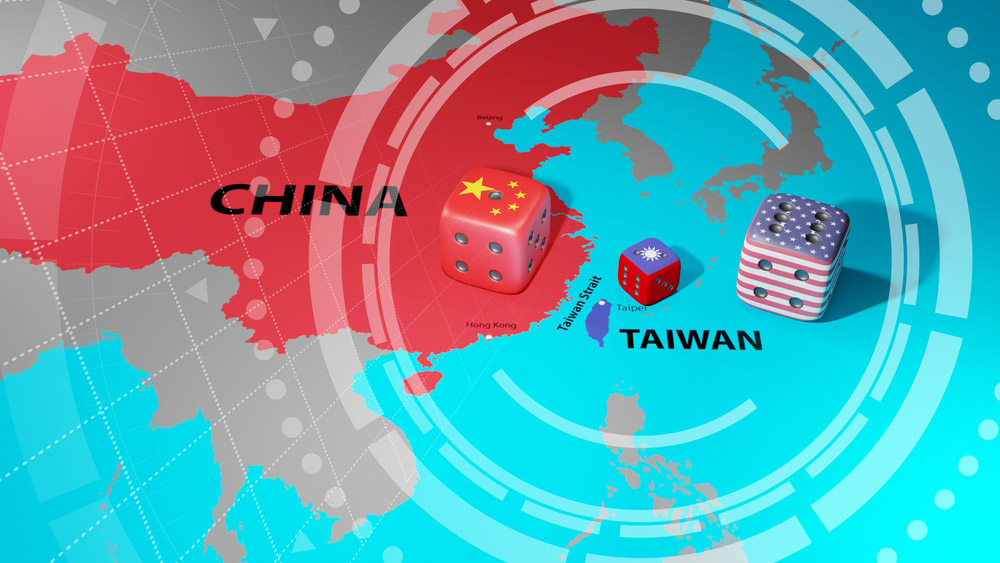
Taiwan has no way of deciding its own destiny; its future will be determined by the two powers that are the U.S. and China. Judging from the Taiwanese government’s recent across-the-board concessions in defense and trade negotiations with the U.S., we would rather hand Taiwan over to the U.S. at any cost than reconcile with mainland China. Toward the end of the Ming Dynasty, and out of both self-preservation and a desire for revenge, General Wu Sangui led the Manchu forces through the Shanhai Pass into China, defeating rebel leader Li Zicheng and aiding in the unification of China under the Qing dynasty. What does the future hold for Taiwan, now that it is breaking away from China and aligning itself with the U.S.?
Trump will not appreciate Taiwan’s stance. Instead, he will only look down on it even more. He will tell Xi Jinping: “You can have Taiwan, but I want the semiconductors and AI; that’s all I care about.” The most valuable part of Taiwan is effectively being ceded to the U.S.— not just investment capital, talent, technology and training, but also its entire ecosystem. Trump will not hesitate to exert pressure on Taiwan: With Nvidia and OpenAI posting explosive growth, demanding that Taiwan invest $400 billion in the U.S. would merely be laying the groundwork.
In the future, most of Taiwan’s economic output will be generated in the U.S., just as Taiwanese businesses flocked to China 30 years ago. This will be a major boon for the information and communications technology industry, but it will be deeply detrimental to traditional industries, the service sector, and small and medium-sized enterprises, which account for the majority of Taiwan’s workforce. Now, even the food and beverage industry has started expanding into the American market. From a purely geopolitical perspective, there is nothing wrong with investing in the U.S., but from the perspective of national resource allocation, it is clearly problematic.
Once the U.S. and China reach a deal, Taiwan’s status will change. If it has not changed thus far, it is because Trump has not yet gotten what he wants, and Taiwan is still of some short-term use. Around 1997, a significant number of Hong Kong residents emigrated overseas, and similarly, many Taiwanese elites will emigrate to the U.S. in the future. Anger is useless — it is awareness that is crucial. Taiwanese people outside of the ICT industry need to understand who can truly improve their future livelihoods.
What does the Taiwanese government’s recent banning of the Chinese lifestyle app Xiaohongshu (commonly known as RedNote) signify? Trump has been reluctant to ban TikTok due to its national popularity in the U.S. Recently, China’s Labubu [a popular cultural mascot] put in an appearance at a Thanksgiving parade in New York, becoming a symbol of Chinese cultural exports to the U.S. By shutting out China, Taiwan will only isolate itself from the world, and the U.S. is definitely not the solution.
The author is founder and chairman of the Taiwan M&A and Private Equity Council (MAPECT).
Editor’s note: These quotes, accurately translated, could not be independently verified.
President Lai recently wrote an article in The Washington Post and gave an interview to The New York Times, in which he demonstrated his allegiance to Trump, as well as his commitment to making his voice heard in the international media and to boosting his visibility. The problem is that both of these media outlets have a poor relationship with Trump, so President Lai’s active manipulation of Beijing’s 2027 military unification narrative in order to pass his national defense budget has instead stoked unnecessary public anxiety.
Taiwan should learn from South Korea. On the tensions between China and Japan sparked by Japan's “contingency doctrine,” South Korean President Lee Jae Myung invoked a Korean proverb: “When people fight, break them up; when doing business, bring them together,” adding that “taking sides will only exacerbate the conflict.” He stressed that ending the confrontation between the Koreas is a task entrusted to leaders by the times, and that unification was the only way forward for the Korean Peninsula, so it had to be done peacefully. Lee also stated that South Korea’s successful repelling of Yoon Suk Yeol’s illegal martial law last year made it worthy of the Nobel Peace Prize.
Recently, President Trump unveiled his National Security Strategy, which abandons democratic values and prioritizes self-interest. The document emphasized Taiwan’s dominance in the global semiconductor supply chain and identified Taiwan as a key point in the U.S. Indo-Pacific defense network. If potential adversaries were to control this key shipping route, the document warned, it would be a serious threat to U.S. national interests. The New York Times bluntly stated that Taiwan’s importance has been reduced to little more than semiconductors and shipping routes.
The document reveals the core of American strategic thinking: Trump sees the U.S. and China as the world’s dominant powers and will rebalance economic relations between them in the future. Although the document singles out mainland China as the “greatest geopolitical challenge,”* its wording is cautious. Treasury Secretary Scott Bessent even adjusted the text relating to China to avoid provoking Beijing, indicating that Trump is creating favorable conditions for future deals.
Taiwan has no way of deciding its own destiny; its future will be determined by the two powers that are the U.S. and China. Judging from the Taiwanese government’s recent across-the-board concessions in defense and trade negotiations with the U.S., we would rather hand Taiwan over to the U.S. at any cost than reconcile with mainland China. Toward the end of the Ming Dynasty, and out of both self-preservation and a desire for revenge, General Wu Sangui led the Manchu forces through the Shanhai Pass into China, defeating rebel leader Li Zicheng and aiding in the unification of China under the Qing dynasty. What does the future hold for Taiwan, now that it is breaking away from China and aligning itself with the U.S.?
Trump will not appreciate Taiwan’s stance. Instead, he will only look down on it even more. He will tell Xi Jinping: “You can have Taiwan, but I want the semiconductors and AI; that’s all I care about.” The most valuable part of Taiwan is effectively being ceded to the U.S.— not just investment capital, talent, technology and training, but also its entire ecosystem. Trump will not hesitate to exert pressure on Taiwan: With Nvidia and OpenAI posting explosive growth, demanding that Taiwan invest $400 billion in the U.S. would merely be laying the groundwork.
In the future, most of Taiwan’s economic output will be generated in the U.S., just as Taiwanese businesses flocked to China 30 years ago. This will be a major boon for the information and communications technology industry, but it will be deeply detrimental to traditional industries, the service sector, and small and medium-sized enterprises, which account for the majority of Taiwan’s workforce. Now, even the food and beverage industry has started expanding into the American market. From a purely geopolitical perspective, there is nothing wrong with investing in the U.S., but from the perspective of national resource allocation, it is clearly problematic.
Once the U.S. and China reach a deal, Taiwan’s status will change. If it has not changed thus far, it is because Trump has not yet gotten what he wants, and Taiwan is still of some short-term use. Around 1997, a significant number of Hong Kong residents emigrated overseas, and similarly, many Taiwanese elites will emigrate to the U.S. in the future. Anger is useless — it is awareness that is crucial. Taiwanese people outside of the ICT industry need to understand who can truly improve their future livelihoods.
What does the Taiwanese government’s recent banning of the Chinese lifestyle app Xiaohongshu (commonly known as RedNote) signify? Trump has been reluctant to ban TikTok due to its national popularity in the U.S. Recently, China’s Labubu [a popular cultural mascot] put in an appearance at a Thanksgiving parade in New York, becoming a symbol of Chinese cultural exports to the U.S. By shutting out China, Taiwan will only isolate itself from the world, and the U.S. is definitely not the solution.
The author is founder and chairman of the Taiwan M&A and Private Equity Council (MAPECT).
Editor’s note: These quotes, accurately translated, could not be independently verified.
Previous article
Next article