
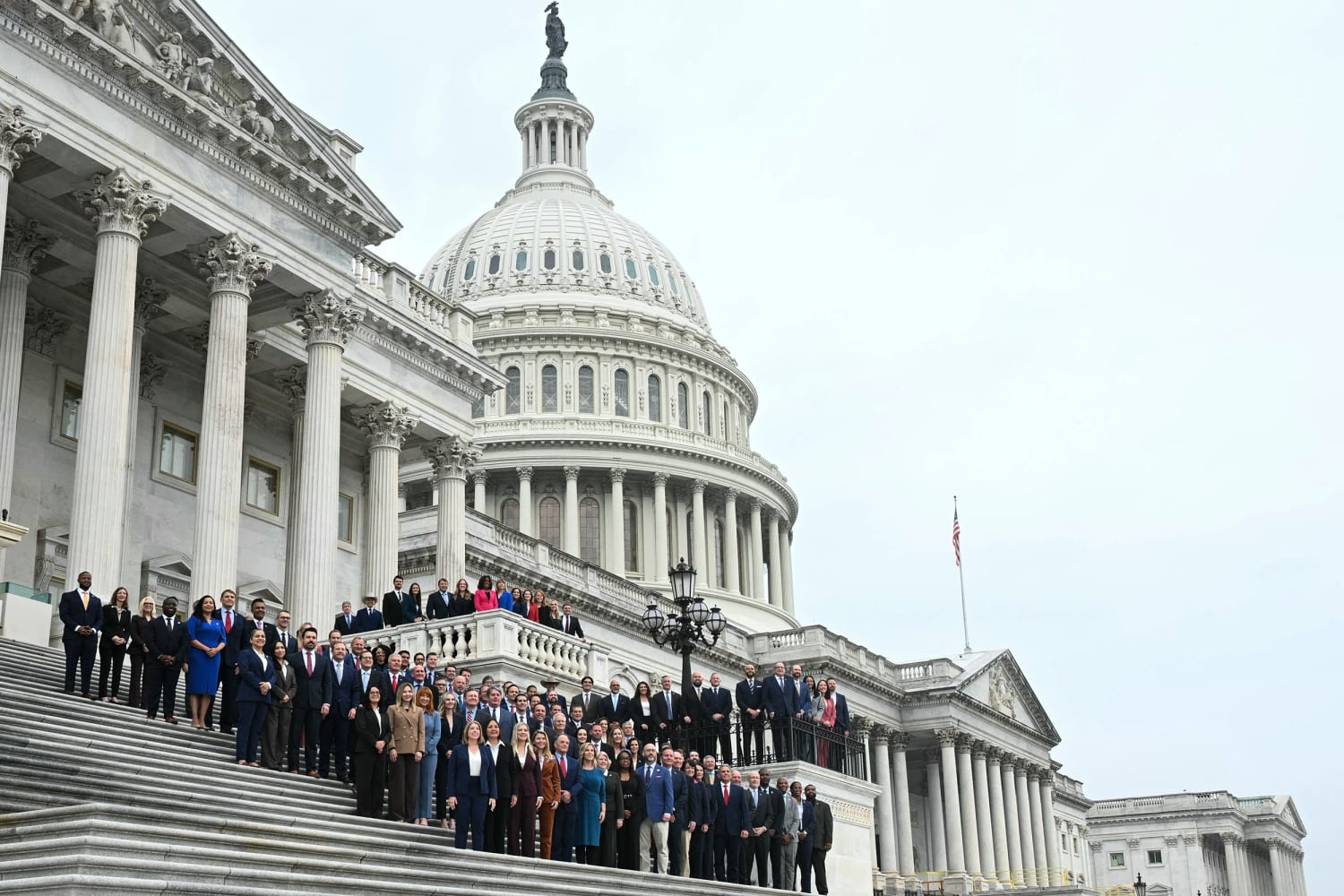
A New Phase Begins in the United States*
With Trump defeated, Republicans and Democrats are already looking ahead to the 2028 presidential election.
We have experienced a happy day for democracy in America and, by extension, around the world. The midterm elections saw high turnout, preceded by equally high participation in mail-in voting. The vote count proceeded peacefully and without incident. There were no armored vehicles at polling places. No candidate, whether victorious or defeated, was arrested or forced to flee into exile. The would-be autocrat was soundly rebuked by voters, who delivered a resounding rejection of his policies and of him personally.
The funeral for the world’s oldest liberal democracy — which turned 250 in 2026 — proved premature. The narratives about creeping fascism, the militarization of America and its transformation into a police state were grotesque caricatures. The same was true about the myth of a tech dictatorship run by a handful of oligarchs. Elon Musk and his associates squandered billions without influencing voters, just like 2016, when the business world was firmly behind Hillary Clinton, and her campaign was far better funded than Donald Trump’s.
It is right to enjoy this celebration of democracy without getting carried away. The voters’ verdict was an unequivocal condemnation of Trump’s governing record — though not necessarily a ringing endorsement of a Democratic project, since the victors belong to a diverse political family whose members have very different profiles. United against Trump. United against the atmosphere of corruption surrounding his inner circle. United against the rising cost of living and excessive inequality. But when it comes to specific policies, divisions prevail. The most high-profile ballot measure, a wealth tax on the rich, divided the left in its California stronghold: Democratic Gov. Gavin Newsom opposed it, and voters rejected the measure. The United States remains a presidential republic. Trump will retain executive power for another two years and two months. He will work with the outgoing Republican-controlled Congress until January. He will now have to find his own way to be a lame duck, which many presidents before him have had to accept—generally by turning to foreign policy and negotiating compromises while wielding veto power (which is a constitutional prerogative, not a coup).
Meanwhile, the 2028 presidential race is now underway in both parties. Republicans must begin coming to terms with the loss of their leader, whose decline could also bring down several anointed successors. For Democrats, the greatest danger is becoming intoxicated by victory and squandering it. The easiest strategy for the right over the next two years will be to blame the new Democratic majority for all the problems that cost Trump support up to this point, starting with the rising cost of living. The radical left—including the Democratic Socialists of America, a rising faction that was rewarded at the polls—is pushing an agenda that includes extreme measures such as abolishing the U.S. Border Patrol, which could quickly turn public opinion against it. It would be a mistake to extrapolate political cycles into long-term trends; proclaiming the dawn of “new eras” often proves premature.
Europeans can celebrate and consider themselves among the winners in this election, too, provided they don’t delude themselves into thinking that everything will go back to “the way it was” once Trumpism comes to an end. Today’s Democratic Party is not the globalist, Atlanticist party of Bill and Hillary Clinton and Barack Obama. Some tariffs are unpopular and have cost Trump votes; others appeal to the left, which openly embraces certain forms of protectionism. Younger generations of progressive politicians often have Latin American (Alexandria Ocasio-Cortez), Asian (Zohran Mamdani) or Arab (Abdul El-Sayed) roots. They have no deep ties to Europe. They may be all the more distrustful of the Old Continent because election trends are diverging: the United States is turning left, while Germany, France and Spain are moving in the opposite direction.
The economic impact of this election remains uncertain. Historically, businesses and investors have favored gridlock, institutional deadlock in which the White House and Congress are controlled by different parties. That was because policy paralysis reduced the risk of tax hikes or spikes in the public deficit, left the government at a standstill and allowed the market economy to run on autopilot. But markets did not expect such an overwhelming Democratic majority in Congress. Moreover, if Trump wants to reinvent himself as a master of compromise during his final two years in office, the easiest common ground between the populist right and the radical left may well be a willingness to spend freely.
As for the artificial intelligence revolution (which contributed to the loss of Republican votes in certain regions), perhaps it would be better if data centers were built on the moon, as Musk suggests. Or in China. Yes, because the next reality check is just around the corner; in just two weeks, the weakened president of an America that remains immensely powerful will meet Xi Jinping and Vladimir Putin at the Asia-Pacific Economic Cooperation summit in Shenzhen, China.
*Editor’s note: This article is available in its original Italian with a paid subscription.
Previous article
