Missing Obama
Barack Obama with his health care reform did more for social cohesion than any American leader since Johnson’s era.
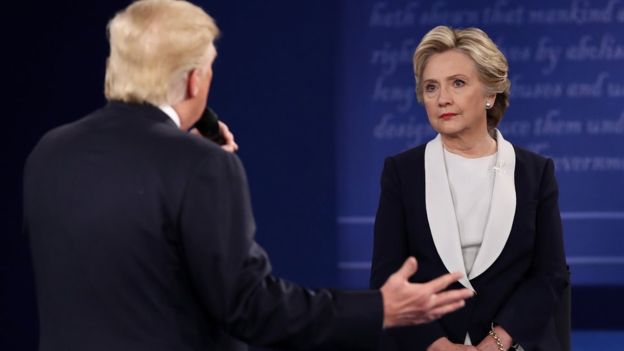
As Donald Trump goes infinitely mad, Barack Obama, the current American president, has awakened a longing that grows exponentially and which is being passed on to the executor of his legacy, Hillary Clinton.
His domestic achievements will be missed. The first African-American president didn’t manage to mend the multiple fractures in his country’s society. But he started the process with his expansive economic politics with which he “harvested” the recovery of the economic crisis, and with health care reform, which did more for social cohesion than any other American leader since Lyndon Johnson.
The moral beauty of his speeches will be missed, like the one in Hanover on April 25 this year when he raised hope for Europeans, reminding them that the European Union “is one of the greatest economic and political achievements in modern history.” Or the one at Cairo University on the now-distant April 6, 2009, when going against the current, he emphasized that America and Islam shared common principles of justice, progress, tolerance and peoples’ dignity.
But above all, there is appreciation for a dignified foreign policy – a policy that has planted a promising seed for the future in matters such as the end of Iran’s imperial militarism, Cuba and climate change.
He didn’t get everything right during his two terms; far from it. Obama proved himself erratic in Syria, ambiguous in Libya and disconcerted by Putin’s Russia.
He did manage to avoid the kind of irreversible decisions made by George W. Bush, the ones that are only good to make things worse. His caution was based on three imperatives, as Vicente Palacio dissects in his book, “Despues de Obama: Estados Unidos en Tierra de Nadie” (“After Obama: The United States in No Man’s Land,” not yet published in Brazil). Those three imperatives are leadership on various international issues “from outside,” a “singular” vision of American hegemony not limited to hard power and the return to a pragmatic multilateralism.
This combination doesn’t fit into any of the four great American foreign policy traditions: Jefferson’s isolationism, Hamilton’s global trade primacy, Jackson’s militarism or Wilson’s liberal internationalism. It assumes, perhaps in a heterodox way, some of the best contributions of several of them. That is why Obama’s foreign policy was eventually unpredictable. But it was never capricious, aggressive, arbitrary or impulsive – Trump’s disturbing trademark.
As Donald Trump goes infinitely mad, Barack Obama, the current American president, has awakened a longing that grows exponentially and which is being passed on to the executor of his legacy, Hillary Clinton.
His domestic achievements will be missed. The first African-American president didn’t manage to mend the multiple fractures in his country’s society. But he started the process with his expansive economic politics with which he “harvested” the recovery of the economic crisis, and with health care reform, which did more for social cohesion than any other American leader since Lyndon Johnson.
The moral beauty of his speeches will be missed, like the one in Hanover on April 25 this year when he raised hope for Europeans, reminding them that the European Union “is one of the greatest economic and political achievements in modern history.” Or the one at Cairo University on the now-distant April 6, 2009, when going against the current, he emphasized that America and Islam shared common principles of justice, progress, tolerance and peoples’ dignity.
But above all, there is appreciation for a dignified foreign policy – a policy that has planted a promising seed for the future in matters such as the end of Iran’s imperial militarism, Cuba and climate change.
He didn’t get everything right during his two terms; far from it. Obama proved himself erratic in Syria, ambiguous in Libya and disconcerted by Putin’s Russia.
He did manage to avoid the kind of irreversible decisions made by George W. Bush, the ones that are only good to make things worse. His caution was based on three imperatives, as Vicente Palacio dissects in his book, “Despues de Obama: Estados Unidos en Tierra de Nadie” (“After Obama: The United States in No Man’s Land,” not yet published in Brazil). Those three imperatives are leadership on various international issues “from outside,” a “singular” vision of American hegemony not limited to hard power and the return to a pragmatic multilateralism.
This combination doesn’t fit into any of the four great American foreign policy traditions: Jefferson’s isolationism, Hamilton’s global trade primacy, Jackson’s militarism or Wilson’s liberal internationalism. It assumes, perhaps in a heterodox way, some of the best contributions of several of them. That is why Obama’s foreign policy was eventually unpredictable. But it was never capricious, aggressive, arbitrary or impulsive – Trump’s disturbing trademark.
Previous article