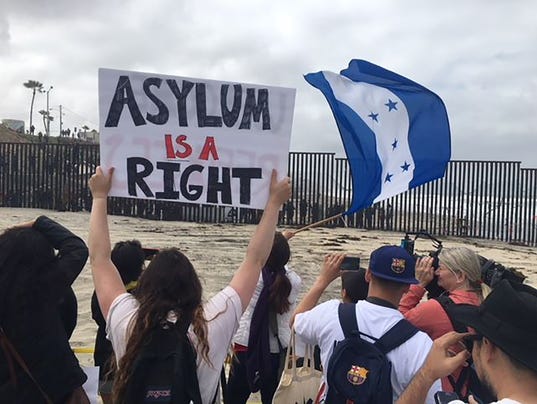
The so-called Northern Triangle of Central America is comprised of Guatemala, El Salvador, and Honduras. People from these three countries are the main group bearing down on the southern United States border. According to the Pew Research Center based in Washington, D.C., illegal Mexican immigration to the U.S. has decreased in the last few years, while it has increased for people migrating from the Northern Triangle. The main reason for such high numbers of migrants is extreme criminal violence that has become embedded in their communities.
Many people from Guatemala, El Salvador and Honduras who cross the United States border are not technically immigrants entering the U.S. illegally, then, but people who have lived under threat in their home countries. These are potential humanitarian refugees. The right to asylum is the main variable in this drama.
El llamado “triángulo norte” centroamericano: Guatemala, El Salvador y Honduras, es ahora quien presiona más la frontera sur de Estados Unidos. Refiere el Pew Research Center, de Washington, que la migración ilegal mexicana ha disminuido en los últimos años, mientras que ha aumentado la proveniente de aquella tríada. La razón es la violencia criminal, que ha llegado ahí a un punto tal que se ha convertido en la causa por la que muchos huyen hacia el norte. Muchos salvadoreños, guatemaltecos y hondureños que cruzan la frontera estadounidense no son así emigrantes ilegales propiamente dichos, sino gente que alega estar amenazada en su país de origen, potenciales refugiados humanitarios. El derecho de asilo es la variable principal de ese drama.
This post appeared on the front page as a direct link to the original article with the above link
.
A summit that would normally send a reassuring message ... faces total uncertainty thanks to the weakness of the United States. The only person to blame for this is Trump.
During the Cold War, the United States occupied the apex of this triangular dynamic, pitting China and the USSR against each other. Today, it is Beijing that occupies that apex.
The Beijing summit did not produce a major agreement between the great powers on the region, but it firmly established that Middle Eastern crises are now deeply tied to the great-power dialogue.
During the Cold War, the United States occupied the apex of this triangular dynamic, pitting China and the USSR against each other. Today, it is Beijing that occupies that apex.
A summit that would normally send a reassuring message ... faces total uncertainty thanks to the weakness of the United States. The only person to blame for this is Trump.
Stone ... argued that Hernández’s liberation would give renewed energy to the Honduran right wing, destabilize President Castro’s government, and strengthen what he believes to be Trump and the U.S.’ interests in the region.