
Of Patriots and Patriotism
Published in El Heraldo de Mexico
(Mexico) on 25 April 2022
by José Carreño Figueras (link to
original)
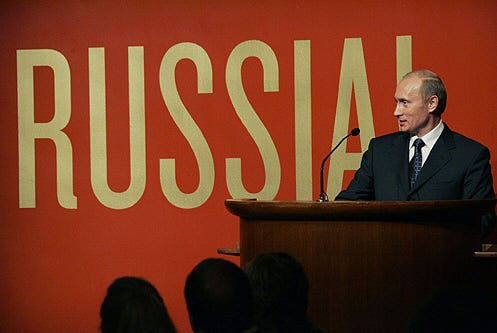
Vladimir Putin is conveying the intention to restore his country’s glory, represented as much by the military power of the Soviet Union as by the aspirations of czarist Russia.
In theory, increasing economic, cultural and social interconnection as a result of globalism will create new conditions and perhaps a more beneficial era for humanity.
In practice, however, it has created a new era of winners and losers, among countries and within societies. You could say that globalism is not what the world thought, or hoped, it would be.
One consequence is the resurgence of resentment, the growing fears and nostalgia for a past that never really existed.
We’ve seen it in the United States with Donald Trump, and we see it with Russian President Vladimir Putin. In their own way, both men are symbols of patriotism, or nationalism, which, in practice, we might consider toxic and which, from the outset, have had authoritarian overtones.
Putin is certainly a patriot, as writer Steven Lee Myers told me during a conversation about his book "The New Tsar," published in Spanish by Editorial Planeta. This conveys his intention to restore the glory of Russia, represented as much by the military power of the Soviet Union as by the aspirations of czarist Russia.
It isn’t necessarily bad, but it implies direct or indirect domination over the decisions of neighboring countries in the name of this new nationalism and their security.
You cannot explain he invasion of Ukraine without this formula. Putin invoked the dangers of a presumed Nazification of Kyiv and the possibility that Ukraine would join NATO.
But NATO has spent years on the Russian Border, in Poland as well as in the Baltic states, and indeed, in Turkey.
Then Putin claimed it was time to rescue Russian minorities by waging a separatist war in two "people's republics" in eastern Ukraine.
It would be difficult to coexist with a neighbor who uses the idea of patriotism to subjugate independence and human rights to size and military capability.
Mexicans faced something similar during the Trump administration. Trump presented himself as an American patriot who, under the banner of "Make America Great Again," exploited the dissatisfaction of a sector of the country by attributing social and economic conditions to globalization.
Threating to close borders, warning about using economic sanctions to exert pressure on their neighboring country, and using and abusing the notion of an “invasion” of migrants were crucial to Trump's claims, and formed an important part of the Republican political doctrine.
You can also find this idea in Joe Biden’s less strident proposal to condition access to America’s market on the percentage of American content goods contain.
Patriotism is a great concept, but should be practiced with caution.
In theory, increasing economic, cultural and social interconnection as a result of globalism will create new conditions and perhaps a more beneficial era for humanity.
In practice, however, it has created a new era of winners and losers, among countries and within societies. You could say that globalism is not what the world thought, or hoped, it would be.
One consequence is the resurgence of resentment, the growing fears and nostalgia for a past that never really existed.
We’ve seen it in the United States with Donald Trump, and we see it with Russian President Vladimir Putin. In their own way, both men are symbols of patriotism, or nationalism, which, in practice, we might consider toxic and which, from the outset, have had authoritarian overtones.
Putin is certainly a patriot, as writer Steven Lee Myers told me during a conversation about his book "The New Tsar," published in Spanish by Editorial Planeta. This conveys his intention to restore the glory of Russia, represented as much by the military power of the Soviet Union as by the aspirations of czarist Russia.
It isn’t necessarily bad, but it implies direct or indirect domination over the decisions of neighboring countries in the name of this new nationalism and their security.
You cannot explain he invasion of Ukraine without this formula. Putin invoked the dangers of a presumed Nazification of Kyiv and the possibility that Ukraine would join NATO.
But NATO has spent years on the Russian Border, in Poland as well as in the Baltic states, and indeed, in Turkey.
Then Putin claimed it was time to rescue Russian minorities by waging a separatist war in two "people's republics" in eastern Ukraine.
It would be difficult to coexist with a neighbor who uses the idea of patriotism to subjugate independence and human rights to size and military capability.
Mexicans faced something similar during the Trump administration. Trump presented himself as an American patriot who, under the banner of "Make America Great Again," exploited the dissatisfaction of a sector of the country by attributing social and economic conditions to globalization.
Threating to close borders, warning about using economic sanctions to exert pressure on their neighboring country, and using and abusing the notion of an “invasion” of migrants were crucial to Trump's claims, and formed an important part of the Republican political doctrine.
You can also find this idea in Joe Biden’s less strident proposal to condition access to America’s market on the percentage of American content goods contain.
Patriotism is a great concept, but should be practiced with caution.
Previous article
Next article
