
Against Putin’s Will?
Published in Frankfurter Allgemeine Zeitung
(Germany) on 30 December 2025
by Nikolas Busse (link to
original)
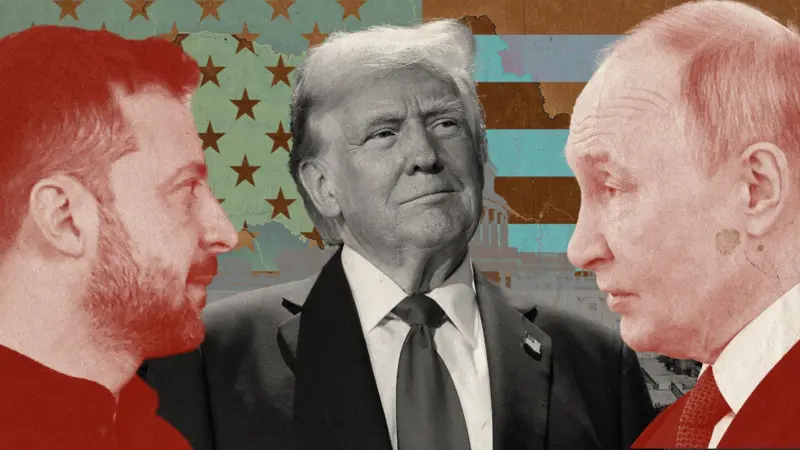
If Trump were to give Ukraine a security guarantee like NATO’s Article 5, it would be a surprising twist. He is counting on the Europeans, who are facing a tough question.
The security guarantees that Volodymyr Zelenskyy is demanding from Donald Trump would, in fact, be the key to ending the fighting, which could also last for some time. The stabilization of Eastern Europe is only possible if Russia is sufficiently deterred.
That is a lesson from the Cold War, which too many have forgotten, particularly in Germany. The Soviet Union was not kept in check by the policy of détente, but by NATO troops.
Contracts with the Kremlin
In 2026, it will not be possible to reproduce that one-for-one; global politics have changed too much. But conciliation is more likely to fuel Vladimir Putin’s expansionist politics, and one definitely can’t rely on contracts made with the Kremlin.
If Trump were to accept a guarantee for Ukraine equivalent to Article 5 of NATO, however, that would be a surprising twist. After all, he already finds it difficult enough within the alliance. The haggling over the duration of the guarantee that is apparently occurring between him and Zelenskyy speaks volumes.
Trump’s reference to the Europeans suggests where the path is more likely headed: toward a guarantee that essentially would be supported by the British-French coalition of the willing, with the U.S. in the background at best. Would those in Europe’s capitals, let alone in Berlin, really be willing to do it? Making it happen would, as of now, go against Putin’s will.
The security guarantees that Volodymyr Zelenskyy is demanding from Donald Trump would, in fact, be the key to ending the fighting, which could also last for some time. The stabilization of Eastern Europe is only possible if Russia is sufficiently deterred.
That is a lesson from the Cold War, which too many have forgotten, particularly in Germany. The Soviet Union was not kept in check by the policy of détente, but by NATO troops.
Contracts with the Kremlin
In 2026, it will not be possible to reproduce that one-for-one; global politics have changed too much. But conciliation is more likely to fuel Vladimir Putin’s expansionist politics, and one definitely can’t rely on contracts made with the Kremlin.
If Trump were to accept a guarantee for Ukraine equivalent to Article 5 of NATO, however, that would be a surprising twist. After all, he already finds it difficult enough within the alliance. The haggling over the duration of the guarantee that is apparently occurring between him and Zelenskyy speaks volumes.
Trump’s reference to the Europeans suggests where the path is more likely headed: toward a guarantee that essentially would be supported by the British-French coalition of the willing, with the U.S. in the background at best. Would those in Europe’s capitals, let alone in Berlin, really be willing to do it? Making it happen would, as of now, go against Putin’s will.
Previous article
Next article