
OPD 4 August 2022, edited by Michelle Bisson

Pelosi’s Visit to Taiwan Shows the Need To Avoid Raising Tensions
U.S. Speaker of the House of Representatives Nancy Pelosi has visited Taiwan and met with President Tsai Ing-wen. The occasion marks the first time in 25 years that the third in line to the president has traveled to Taiwan.
China has been strongly opposed to Pelosi's visit, calling repeatedly for it to be canceled. It was announced that, starting today, the Chinese military would begin conducting large-scale exercises at six locations at sea and in the airspace surrounding Taiwan.
The U.S. military had already deployed a carrier strike group in the Philippine Sea.
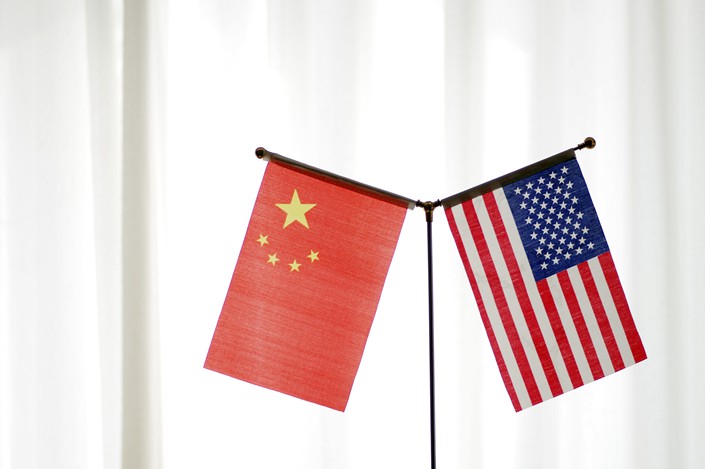
Any escalation of tensions between the U.S. and China presents the possibility of an accident leading to conflict. Both sides must refrain from taking unreasonable action.
Pelosi's visit to Taiwan lies within the context of America's restrained response to Russia's invasion of Ukraine. There is widespread concern in Taiwan that, if they were similarly in need, the U.S. would not intervene.
Pelosi, known as a hardliner against China, said in a meeting with Tsai, “Our delegation came to Taiwan to make unequivocally clear we will not abandon Taiwan.”
There is no indication that President Joe Biden took a strong stance and urged Pelosi to cancel the visit. There is also bipartisan support of Taiwan and opposition to China's increasing persecution of Hong Kong citizens and the ethnic Tibetan and Uighur populations within Congress.
The Xi Jinping administration should be acutely aware that its tactic of using force to suppress criticism of the government over human rights only leads to more widespread support for Taiwan within the United States.
However, the U.S. has continued to maintain its “One-China policy,” which does not dispute China's claim that mainland China and Taiwan are indivisible. President Biden confirmed there were no changes to this position in a telephone call last week.
Pelosi's Taiwan visit shortly after has caused President Xi to lose face.
For China, this is a politically sensitive period, as President Xi will be seeking an unprecedented third term at the Congress of the Communist Party this fall. His hard-line stance against the U.S. may also be a demonstration for domestic purposes.
Japan's security is also tied up in Taiwan's status. The U.S. should be cautious in its approach to ensure there is no further escalation of tensions.
In addition, China's position also should not be overlooked, given its apparent willingness to unify China and Taiwan by force. There is surely no possibility of what China calls a “peaceful unification.” There is understandable alarm among the international community.
The U.S. and China are coming from different positions when it comes to the “One-China policy.” While the U.S. respects Taiwan's freedom, China sees this stance as meddling with its own internal affairs.
Both the U.S. and Chinese governments need to maintain openness to dialogue and meet in person as soon as possible to avoid confrontation.
Japan has expressed its concerns to China that a number of the Chinese military's exercises are taking place in Japan's exclusive economic zone. Both countries need to commit to diplomatic efforts to ensure relations do not worsen.
China has been strongly opposed to Pelosi's visit, calling repeatedly for it to be canceled. It was announced that, starting today, the Chinese military would begin conducting large-scale exercises at six locations at sea and in the airspace surrounding Taiwan.
The U.S. military had already deployed a carrier strike group in the Philippine Sea.
Any escalation of tensions between the U.S. and China presents the possibility of an accident leading to conflict. Both sides must refrain from taking unreasonable action.
Pelosi's visit to Taiwan lies within the context of America's restrained response to Russia's invasion of Ukraine. There is widespread concern in Taiwan that, if they were similarly in need, the U.S. would not intervene.
Pelosi, known as a hardliner against China, said in a meeting with Tsai, “Our delegation came to Taiwan to make unequivocally clear we will not abandon Taiwan.”
There is no indication that President Joe Biden took a strong stance and urged Pelosi to cancel the visit. There is also bipartisan support of Taiwan and opposition to China's increasing persecution of Hong Kong citizens and the ethnic Tibetan and Uighur populations within Congress.
The Xi Jinping administration should be acutely aware that its tactic of using force to suppress criticism of the government over human rights only leads to more widespread support for Taiwan within the United States.
However, the U.S. has continued to maintain its “One-China policy,” which does not dispute China's claim that mainland China and Taiwan are indivisible. President Biden confirmed there were no changes to this position in a telephone call last week.
Pelosi's Taiwan visit shortly after has caused President Xi to lose face.
For China, this is a politically sensitive period, as President Xi will be seeking an unprecedented third term at the Congress of the Communist Party this fall. His hard-line stance against the U.S. may also be a demonstration for domestic purposes.
Japan's security is also tied up in Taiwan's status. The U.S. should be cautious in its approach to ensure there is no further escalation of tensions.
In addition, China's position also should not be overlooked, given its apparent willingness to unify China and Taiwan by force. There is surely no possibility of what China calls a “peaceful unification.” There is understandable alarm among the international community.
The U.S. and China are coming from different positions when it comes to the “One-China policy.” While the U.S. respects Taiwan's freedom, China sees this stance as meddling with its own internal affairs.
Both the U.S. and Chinese governments need to maintain openness to dialogue and meet in person as soon as possible to avoid confrontation.
Japan has expressed its concerns to China that a number of the Chinese military's exercises are taking place in Japan's exclusive economic zone. Both countries need to commit to diplomatic efforts to ensure relations do not worsen.
Previous article
Next article