For Now, Delcy: Donald Trump
Politics is usually defined as "the art of the possible," but in reality it is also the territory of the improbable. Often, what seemed unthinkable ends up happening, while yesterday's certainties fade in a matter of days.
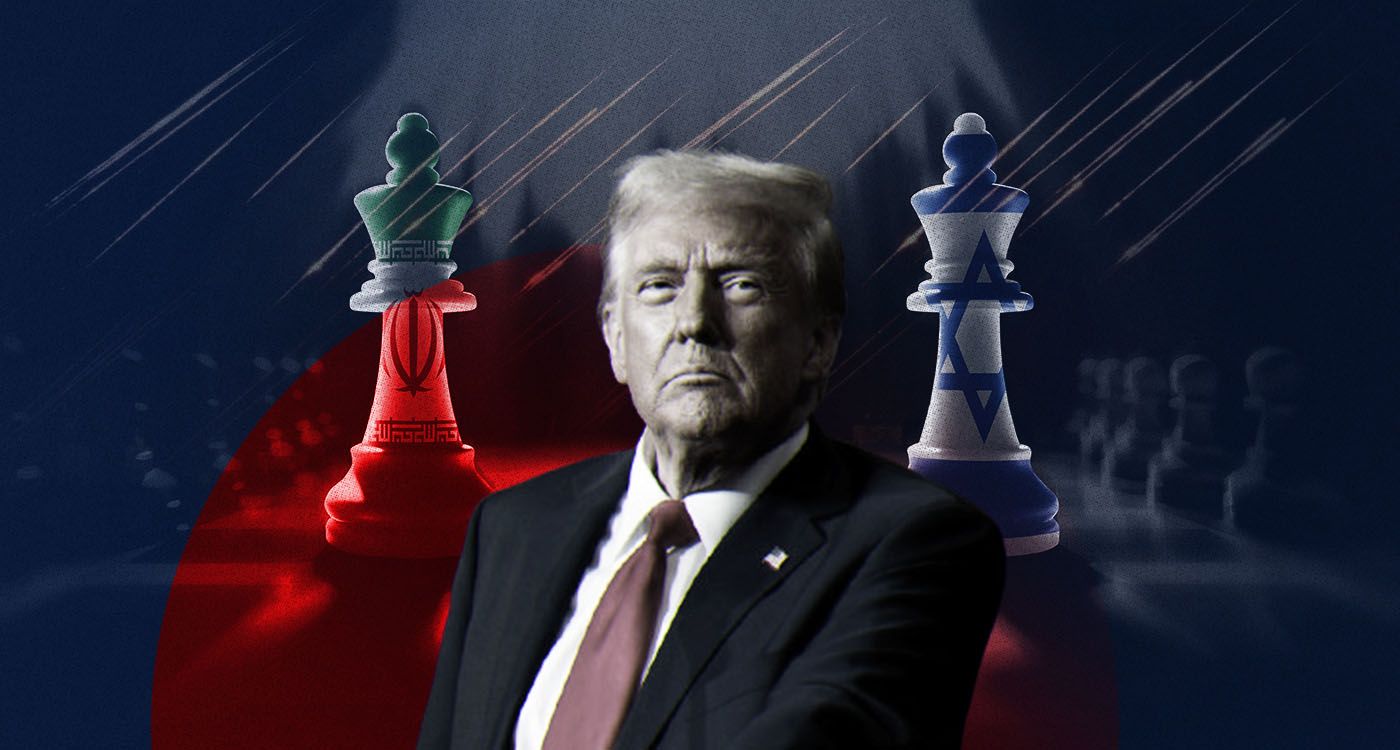
We tend to think that what is visible in politics is of most importance — when in reality, as in chess, most critical maneuvering happens out of sight. That's exactly what seems to be happening with Venezuela.
On Jan. 3, the game abruptly changed. The United States captured Nicolás Maduro and his wife, Cilia Flores, initiating a political scenario that few could have imagined. From that moment on, a figure emerged who until recently seemed impossible as an interlocutor: Delcy Eloína Rodríguez. Her interim role, according to different official communications, has been twice ratified: first, by President Donald Trump during the Shield of the Americas summit, held on March 7 in Miami; and second, in a letter sent by the State Department's Assistant Secretary for Western Hemisphere Affairs Michael G. Kozak to the U.S. Attorney for the Southern District of New York Jay Clayton.
That communication stated unambiguously: "The United States recognizes Delcy Rodríguez as the only head of state capable of acting on behalf of Venezuela."
Yes, Delcy Rodríguez. The same person who for years was sanctioned by Washington; the same person who was part of the toughest core of the Chavista and Madurista regime; the same person whose name, until very recently, was immediately rejected in the corridors of American power.
And yet today she is presented as the only authority to act on behalf of Venezuela and to sign off on agreements or decisions emanating from the Oval Office of the White House.
The logic behind this decision seems clear: Kozak’s letter asserts that normalization will facilitate joint efforts to promote stability, support economic recovery and move toward eventual political reconciliation in Venezuela. But that normalization has a price — and it's an enormous price.
For more than two decades, Chavismo built its political project on an aggressive policy of expropriations, confiscations and contractual ruptures. Foreign companies were expelled, land was taken and international agreements were ignored.
The phrases were engraved in the collective memory of the country: "Exprop," "Close the door and give me the keys," "We do not recognize that agreement.” For years, it was revolutionary rhetoric; today, it translates into billions of dollars in international claims.
The debt accumulated by Venezuela, between financial commitments, international litigation and compensation for expropriations, could exceed $190 billion.
Someone will have to start responding to that bill, and it is Rodríguez who will have to pay; her speeches and political positions will not be enough. It will be necessary to renegotiate debts, face international arbitration and restore the confidence of investors who for years considered the country one of the most hostile environments in the world for doing business.
For millions of Venezuelans who have suffered persecution, exile, political imprisonment and a devastating humanitarian crisis, the new geopolitical reality has delivered a bitter conclusion: In international politics, pragmatism usually carries greater weight than memory. All the dead, the prisoners, the exiles and the marches seem to be of less importance than the barrels of oil that still rest under Venezuelan soil.
It is an uncomfortable truth, but not new, because Rodríguez is currently the continuity of failure and destruction; the difference is that realistically and in short order, she will have to toe the line.
We tend to think that what is visible in politics is of most importance — when in reality, as in chess, most critical maneuvering happens out of sight. That's exactly what seems to be happening with Venezuela.
On Jan. 3, the game abruptly changed. The United States captured Nicolás Maduro and his wife, Cilia Flores, initiating a political scenario that few could have imagined. From that moment on, a figure emerged who until recently seemed impossible as an interlocutor: Delcy Eloína Rodríguez. Her interim role, according to different official communications, has been twice ratified: first, by President Donald Trump during the Shield of the Americas summit, held on March 7 in Miami; and second, in a letter sent by the State Department's Assistant Secretary for Western Hemisphere Affairs Michael G. Kozak to the U.S. Attorney for the Southern District of New York Jay Clayton.
That communication stated unambiguously: "The United States recognizes Delcy Rodríguez as the only head of state capable of acting on behalf of Venezuela."
Yes, Delcy Rodríguez. The same person who for years was sanctioned by Washington; the same person who was part of the toughest core of the Chavista and Madurista regime; the same person whose name, until very recently, was immediately rejected in the corridors of American power.
And yet today she is presented as the only authority to act on behalf of Venezuela and to sign off on agreements or decisions emanating from the Oval Office of the White House.
The logic behind this decision seems clear: Kozak’s letter asserts that normalization will facilitate joint efforts to promote stability, support economic recovery and move toward eventual political reconciliation in Venezuela. But that normalization has a price — and it's an enormous price.
For more than two decades, Chavismo built its political project on an aggressive policy of expropriations, confiscations and contractual ruptures. Foreign companies were expelled, land was taken and international agreements were ignored.
The phrases were engraved in the collective memory of the country: "Exprop," "Close the door and give me the keys," "We do not recognize that agreement.” For years, it was revolutionary rhetoric; today, it translates into billions of dollars in international claims.
The debt accumulated by Venezuela, between financial commitments, international litigation and compensation for expropriations, could exceed $190 billion.
Someone will have to start responding to that bill, and it is Rodríguez who will have to pay; her speeches and political positions will not be enough. It will be necessary to renegotiate debts, face international arbitration and restore the confidence of investors who for years considered the country one of the most hostile environments in the world for doing business.
For millions of Venezuelans who have suffered persecution, exile, political imprisonment and a devastating humanitarian crisis, the new geopolitical reality has delivered a bitter conclusion: In international politics, pragmatism usually carries greater weight than memory. All the dead, the prisoners, the exiles and the marches seem to be of less importance than the barrels of oil that still rest under Venezuelan soil.
It is an uncomfortable truth, but not new, because Rodríguez is currently the continuity of failure and destruction; the difference is that realistically and in short order, she will have to toe the line.
Previous article

Next article