
Trump Is Preparing To Put the Gulf War on Ice
A one-page document is intended to outline the state of affairs — somewhere between open and latent war — and outline a path to negotiations.
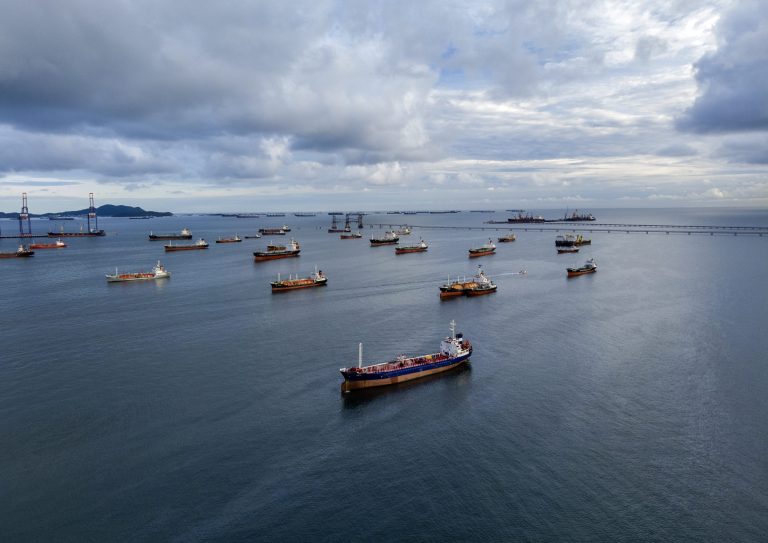
The 20,000 sailors waiting in the Strait of Hormuz will have to wait longer: On Monday, U.S. President Donald Trump announced "Operation Project Freedom" to clear the way so the stranded ships can pass through the strait in the Persian Gulf. At a press briefing on Tuesday, an energetic Secretary of State Marco Rubio stated, "This is a criminal act, and someone needs to do something about it. Something needs to be done. It's completely illegal, completely illegitimate, and completely unacceptable. And that's why the United States military is guiding stranded commercial ships safely through the strait and is working to restore freedom of navigation and putting an end to these efforts to hold the global economy hostage." However, a few hours later, Trump ordered a "pause" on the operation.
As always, there are two versions of this: The U.S. president has put increased pressure on Iran to show that he is ready to crack down, and Iran is showing signs of giving in. Or, on Tuesday, the U.S. president realized that the new actions would lead directly to the ceasefire breaking down and the war being revived — and so pressed the stop button because he wants out of this war, which he completely underestimated.
In both versions, Pakistan and the other countries that want to end this war played a part in Trump's decision. On Wednesday, Axios reported that an agreement on a document — a "Memorandum of Understanding" between Washington and Tehran — could be imminent. The document is said to outline the basic framework for a path forward in negotiations. Confirmation came from Islamabad, which, as mediator, is committed to optimism.
The document should only be one page long — essentially, a formalization of the current state of affairs, which lies somewhere between an open and latent war. The potential for escalation remains but should be kept in check for the foreseeable future. At the very least, the document would provide the gradual opening of the Strait of Hormuz — for international shipping by Iran, and Iranian shipping by the U.S., but that remains to be seen.
Irony of History
Iran's nuclear program, Trump's often-cited justification for the war, is also addressed in the document: a moratorium on uranium enrichment in exchange for the release of frozen Iranian funds. This formula has been on the table since the first Islamabad talks and has nothing to do with Trump's earlier announcements of wanting to wipe out the Iranian nuclear program. It is almost like a twist of fate that, following the enrichment pause of currently unknown duration, Iran will likely once again be allowed to enrich uranium as stipulated in the 2015 Vienna nuclear deal, from which Trump withdrew in 2018.
But it has yet to come to that. Most experts believe it is wrong to assume that Iran will make fundamental concessions in negotiations and grant Trump a political victory. The mullah regime, now in the hands of the military, appears determined to rewrite the rules for governing security — or insecurity — in the gulf.
Trump doesn't have the staying power to maintain pressure on Tehran — and the global economy certainly doesn't either. An authoritarian regime such as Iran can impose heavy burdens on its people, which it keeps in check through terror, without the system collapsing. There's also a pragmatic camp in Tehran that wants to come out of this crisis with a still-functioning state. However, if the ideologues prevail, there will be no "deal," but at most a frozen conflict. And before long, a new war.
The 20,000 sailors waiting in the Strait of Hormuz will have to wait longer: On Monday, U.S. President Donald Trump announced "Operation Project Freedom" to clear the way so the stranded ships can pass through the strait in the Persian Gulf. At a press briefing on Tuesday, an energetic Secretary of State Marco Rubio stated, "This is a criminal act, and someone needs to do something about it. Something needs to be done. It's completely illegal, completely illegitimate, and completely unacceptable. And that's why the United States military is guiding stranded commercial ships safely through the strait and is working to restore freedom of navigation and putting an end to these efforts to hold the global economy hostage." However, a few hours later, Trump ordered a "pause" on the operation.
As always, there are two versions of this: The U.S. president has put increased pressure on Iran to show that he is ready to crack down, and Iran is showing signs of giving in. Or, on Tuesday, the U.S. president realized that the new actions would lead directly to the ceasefire breaking down and the war being revived — and so pressed the stop button because he wants out of this war, which he completely underestimated.
In both versions, Pakistan and the other countries that want to end this war played a part in Trump's decision. On Wednesday, Axios reported that an agreement on a document — a "Memorandum of Understanding" between Washington and Tehran — could be imminent. The document is said to outline the basic framework for a path forward in negotiations. Confirmation came from Islamabad, which, as mediator, is committed to optimism.
The document should only be one page long — essentially, a formalization of the current state of affairs, which lies somewhere between an open and latent war. The potential for escalation remains but should be kept in check for the foreseeable future. At the very least, the document would provide the gradual opening of the Strait of Hormuz — for international shipping by Iran, and Iranian shipping by the U.S., but that remains to be seen.
Irony of History
Iran's nuclear program, Trump's often-cited justification for the war, is also addressed in the document: a moratorium on uranium enrichment in exchange for the release of frozen Iranian funds. This formula has been on the table since the first Islamabad talks and has nothing to do with Trump's earlier announcements of wanting to wipe out the Iranian nuclear program. It is almost like a twist of fate that, following the enrichment pause of currently unknown duration, Iran will likely once again be allowed to enrich uranium as stipulated in the 2015 Vienna nuclear deal, from which Trump withdrew in 2018.
But it has yet to come to that. Most experts believe it is wrong to assume that Iran will make fundamental concessions in negotiations and grant Trump a political victory. The mullah regime, now in the hands of the military, appears determined to rewrite the rules for governing security — or insecurity — in the gulf.
Trump doesn't have the staying power to maintain pressure on Tehran — and the global economy certainly doesn't either. An authoritarian regime such as Iran can impose heavy burdens on its people, which it keeps in check through terror, without the system collapsing. There's also a pragmatic camp in Tehran that wants to come out of this crisis with a still-functioning state. However, if the ideologues prevail, there will be no "deal," but at most a frozen conflict. And before long, a new war.
Previous article
Next article
