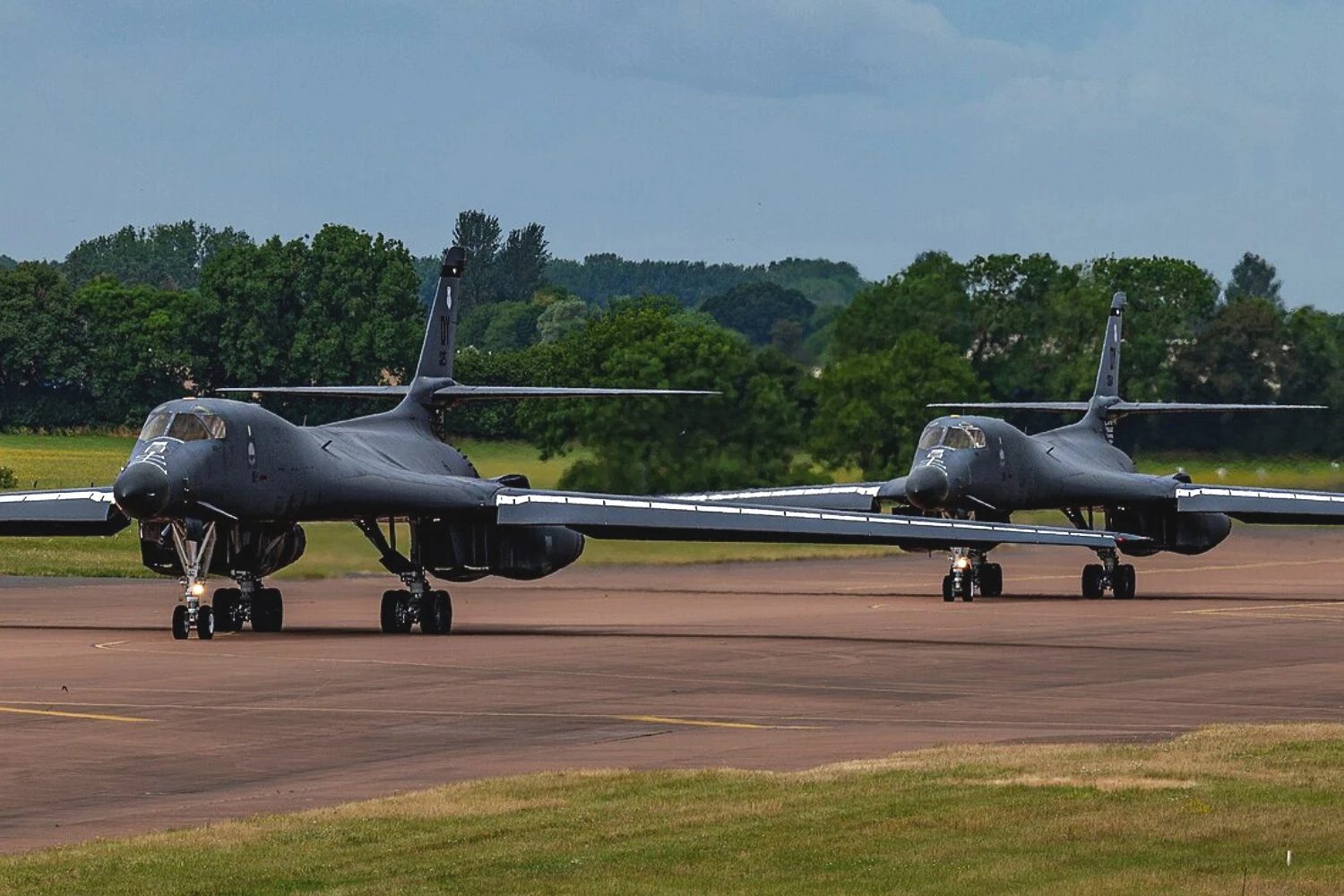
The withdrawal of U.S. B-1 bombers from the United Kingdom shows how little it takes to put NATO’s preeminent military power on the defensive.
This, too, is a form of asymmetric warfare: America, the global power, has had to withdraw its bombers from a British airbase, apparently because it was no longer sufficiently safe for the aircraft to remain there. Since Iran has been linked to a foiled plot to attack the base, Tehran may have chalked up a small tactical win in its continued struggle with Donald Trump. The redeployment of the bombers back to the United States will extend flight times for missions to the Gulf.
A Routine Also Rehearsed in Moscow
However, the incident’s psychological impact is likely to be far more significant. Yet again, Trump is having to pull back, and yet again, America is being made to look weak. Seemingly, all it takes to force a NATO member onto the defensive — and in this case, even the alliance’s nuclear-armed hegemon — is dispatching six people to target a single airfield. That’s the bitter lesson of the Fairford affair. The Russians are well versed in this particular script too, as August’s attempted drone attack at Leipzig Airport in eastern Germany showed.
Trump is responsible for getting himself into this position, but it’s the entire West that is bearing the cost. The president has laid bare America’s weaknesses in a manner only George W. Bush could rival in recent times. On top of the political fatigue reflected in the opinion polls, now comes military exhaustion too, ranging from ammunition shortages to bases going out of service. It all undermines the very American deterrence upon which European and Asian security still rests.
Wieder sieht Amerika schwach aus
Der Abzug von amerikanischen Bombern aus Großbritannien zeigt, wie wenig es braucht, um die Bündnisvormacht der NATO in die Defensive zu drängen.
Auch das ist eine Form der asymmetrischen Kriegsführung: Die Weltmacht Amerika muss Bomber von einem britischen Luftwaffenstützpunkt abziehen, weil sie dort offenbar nicht mehr ausreichend sicher sind. Da vermutet wird, dass Iran hinter einem vereitelten Anschlagsplan auf den Stützpunkt steckt, hätte Teheran einen kleinen taktischen Erfolg im Ringen mit Trump zu verzeichnen. Die Rückverlegung der Bomber in die Vereinigten Staaten verlängert die Flugzeit an den Golf.
Das Drehbuch kennt man auch in Moskau
Weit wichtiger dürfte allerdings die psychologische Wirkung des Vorgangs sein. Wieder muss Trump zurückweichen, wieder sieht Amerika schwach aus. Man kann ein NATO-Mitglied, hier sogar die nuklear bewaffnete Bündnisvormacht, in die Defensive drängen, indem man einen einzigen Flughafen mit sechs Leuten ins Visier nimmt, das ist die bittere Botschaft von Fairford. Dieses Drehbuch kennt man auch in Moskau, siehe Leipziger Flughafen.
Trump hat sich selbst in diese Lage gebracht, aber den Schaden hat der gesamte Westen. Der Präsident hat die Schwächen Amerikas sichtbar gemacht wie zuletzt nur George W. Bush. Zur politischen Ermattung, Stichwort Umfragen, kommt nun auch die militärische von Munitionsmangel bis zu ausfallenden Stützpunkten. Das untergräbt die amerikanische Abschreckung, auf der die Sicherheit in Europa wie in Asien immer noch beruht.
This post appeared on the front page as a direct link to the original article with the above link
.
[W]thout inflation and high gasoline prices ... Trump and his cabinet of brutally unqualified sycophants and the cowardly Republican Party would not have been punished so severely.
[W]thout inflation and high gasoline prices ... Trump and his cabinet of brutally unqualified sycophants and the cowardly Republican Party would not have been punished so severely.