
‘The EU Cannot Replace the US’
President Trump’s decision about Jerusalem contradicts the special responsibility that the U.S. has, says Norbert Röttgen, Chairman of the Bundestag's Committee on Foreign Affairs.
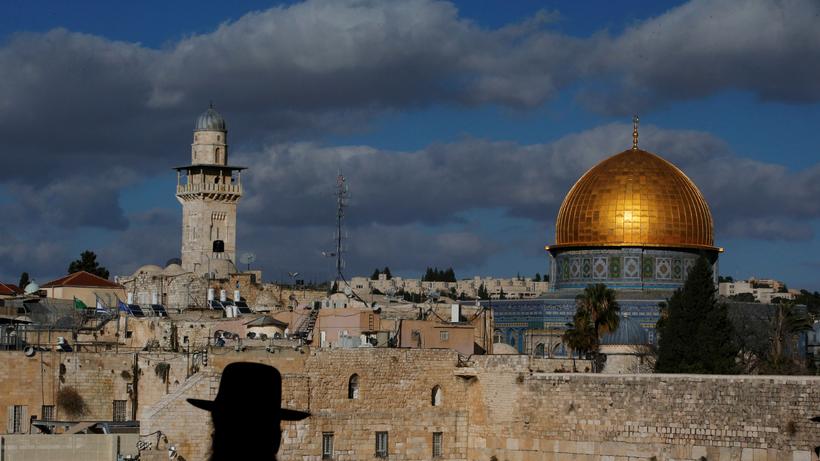
ZEIT ONLINE: With his announcement to move the U.S. Embassy from Tel Aviv to Jerusalem, President Donald Trump has broken a decades-long consensus. All embassies up to now have been located in Tel Aviv, not in Jerusalem. Trump wants to recognize Jerusalem as Israel’s capital, the greatest possible affront to the Palestinians. The radical Islamic Hamas party in Gaza has called for a rebellion against Israel. What is the German position on the Trump decision?
Norbert Röttgen: Germany explicitly does not agree with this step taken by President Trump. Like all other European countries, and there is a unified European position, we believe that this will further strain the already faltering peace process, and that it damages the credibility of the U.S. to even set this process in motion again.
We here in Europe fear that the decision will add fuel to the fire, and that it will possibly result in causing a violent reaction by the Palestinians. Up to now, the Palestinians have fortunately reacted carefully with a call for a general strike.
ZEIT ONLINE: How do you personally assess Trump’s statements?
Röttgen: Trump expressly stated that the recognition of Jerusalem as Israel’s capital is not connected to a decision concerning the territorial borders of Israel, that all of this should be reserved for the negotiation process. The territorial organization of a two-state solution is therefore also still open in his view. That, at least, is good.
ZEIT ONLINE: Doesn’t it primarily come down to the decision about the capital for the Palestinians and the Arab world?
Röttgen: I don’t believe that. The Palestinian side, especially, probably sees both of these parts very clearly. That is, on the one hand, there is the absolutely unacceptable decision making Jerusalem Israel’s capital. On the other hand, it will also have registered in Ramallah that Trump left the date of the move itself completely open. Above all, the Palestinians will have registered the fact that the U.S. government stands by a two-state solution and that Trump expressly classified all yet-to-be-determined territorial questions as open. As negative as the first part is, the second part of Trump’s statement qualifies the first.
ZEIT ONLINE: Has the role of the U.S. as an intermediary in the complicated peace process suffered?
Röttgen: By all means. The Jerusalem decision will be interpreted among the Palestinians as an unjustified and injurious taking of sides. The U.S. has damaged itself in the role of an honest intermediary.
ZEIT ONLINE: After Trump’s decision, should Berlin and Brussels now increasingly try to act as neutral mediators in the Israeli-Palestinian conflict? And if yes, how?
Röttgen: In my estimation, the U.S. cannot be replaced in this role. This makes the behavior of Washington all the more regrettable and all the more contradicts the special responsibility that the U.S. has. The Europeans have always been involved in the Middle East, but I believe we must be realistic. Europe will not be able to compensate for the loss of authority that the U.S. has inflicted upon itself here. The EU cannot replace the U.S. as a superpower and guarantor of security, above all for Israel.
ZEIT ONLINE: Turkish President Erdoğan says the Jerusalem decision is a red line for Muslims. Erdoğan appears to want to heat up a confrontation with the U.S. and the West in general. Is Trump endangering the already tense relationship between Turkey and Germany?
Röttgen: No, probably not. Erdoğan is trying to use the additional tensions in the Middle East that developed via Trump’s decisions for himself. Erdoğan is now selling himself in Turkey and the region as an advocate for the Muslims.
ZEIT ONLINE: In your eyes, does the two-state solution still have a chance?
Röttgen: In any scenario, there is no responsible alternative. Therefore, there is only this chance and the responsibility and obligation for all involved to work on this opportunity.
ZEIT ONLINE: With his announcement to move the U.S. Embassy from Tel Aviv to Jerusalem, President Donald Trump has broken a decades-long consensus. All embassies up to now have been located in Tel Aviv, not in Jerusalem. Trump wants to recognize Jerusalem as Israel’s capital, the greatest possible affront to the Palestinians. The radical Islamic Hamas party in Gaza has called for a rebellion against Israel. What is the German position on the Trump decision?
Norbert Röttgen: Germany explicitly does not agree with this step taken by President Trump. Like all other European countries, and there is a unified European position, we believe that this will further strain the already faltering peace process, and that it damages the credibility of the U.S. to even set this process in motion again.
We here in Europe fear that the decision will add fuel to the fire, and that it will possibly result in causing a violent reaction by the Palestinians. Up to now, the Palestinians have fortunately reacted carefully with a call for a general strike.
ZEIT ONLINE: How do you personally assess Trump’s statements?
Röttgen: Trump expressly stated that the recognition of Jerusalem as Israel’s capital is not connected to a decision concerning the territorial borders of Israel, that all of this should be reserved for the negotiation process. The territorial organization of a two-state solution is therefore also still open in his view. That, at least, is good.
ZEIT ONLINE: Doesn’t it primarily come down to the decision about the capital for the Palestinians and the Arab world?
Röttgen: I don’t believe that. The Palestinian side, especially, probably sees both of these parts very clearly. That is, on the one hand, there is the absolutely unacceptable decision making Jerusalem Israel’s capital. On the other hand, it will also have registered in Ramallah that Trump left the date of the move itself completely open. Above all, the Palestinians will have registered the fact that the U.S. government stands by a two-state solution and that Trump expressly classified all yet-to-be-determined territorial questions as open. As negative as the first part is, the second part of Trump’s statement qualifies the first.
ZEIT ONLINE: Has the role of the U.S. as an intermediary in the complicated peace process suffered?
Röttgen: By all means. The Jerusalem decision will be interpreted among the Palestinians as an unjustified and injurious taking of sides. The U.S. has damaged itself in the role of an honest intermediary.
ZEIT ONLINE: After Trump’s decision, should Berlin and Brussels now increasingly try to act as neutral mediators in the Israeli-Palestinian conflict? And if yes, how?
Röttgen: In my estimation, the U.S. cannot be replaced in this role. This makes the behavior of Washington all the more regrettable and all the more contradicts the special responsibility that the U.S. has. The Europeans have always been involved in the Middle East, but I believe we must be realistic. Europe will not be able to compensate for the loss of authority that the U.S. has inflicted upon itself here. The EU cannot replace the U.S. as a superpower and guarantor of security, above all for Israel.
ZEIT ONLINE: Turkish President Erdoğan says the Jerusalem decision is a red line for Muslims. Erdoğan appears to want to heat up a confrontation with the U.S. and the West in general. Is Trump endangering the already tense relationship between Turkey and Germany?
Röttgen: No, probably not. Erdoğan is trying to use the additional tensions in the Middle East that developed via Trump’s decisions for himself. Erdoğan is now selling himself in Turkey and the region as an advocate for the Muslims.
ZEIT ONLINE: In your eyes, does the two-state solution still have a chance?
Röttgen: In any scenario, there is no responsible alternative. Therefore, there is only this chance and the responsibility and obligation for all involved to work on this opportunity.
Previous article
Next article