The Law of the Jungle in Trump’s World
This year we will see what happens when the country that wrote international law decides that it no longer wants to respect it.
The year 2026 is going to be crucial. The biggest source of global instability won’t be in China, Russia, Iran or even the approximately 60 conflicts shaking the planet, the highest number since World War II. The main source will be the U.S. This is the fundamental idea that can be deduced from Eurasia Group’s report on the biggest risk for 2026: The most powerful country in the world, the same one that constructed and led post-war world order, is dismantling it in line with the wishes of the most determined — and the most capable — president to change the U.S. role in the world in all of modern history.
Last weekend, we got to see a preview. After months of growing pressures — sanctions, an immense naval deployment, a complete oil blockade — U.S. special forces captured the authoritarian leader of Venezuela, Nicolás Maduro, in Caracas and flew him up to New York to face a series of criminal charges. The intervention, which managed to overthrow the dictator and bring him to justice without any American casualties, was President Donald Trump’s cleanest military victory on the international stage.
Trump already named his strategy for the Western hemisphere: the Donroe Doctrine. It’s his version of the claim made by President James Monroe in the 19th century that the U.S. had to take care of the Americas — except, while Monroe limited himself to warning European powers to stay out of the American continent, Trump is using military and economic pressures and is being guided by personal vendettas in order to subject the region to his will. And he’s only just begun.
This isn’t the isolationism promised by “America First.” Trump’s government is not becoming increasingly disinterested in Israel and the Gulf states — quite the contrary. Trump’s haste to attack Iran last year and his will to meddle in European politics aren’t exactly proof that the country is going to close itself off. Neither is the idea of “spheres of influences” consistent. Trump isn’t dividing the world with rival powers, each in its own territory. Washington just sent Taiwan the biggest arms package to date, and their government’s position on the Indo-Pacific countries doesn’t show that it has any desire to relinquish Asia to China.
Trump’s foreign policy doesn’t follow the traditional core ideas of allies versus rivals, democracies versus autocracies and strategic competency versus cooperation. His calculations are simpler. If the other party has something he wants, the question is: Is it capable of counteracting and causing him damage? If the answer is yes, he will negotiate to reach a deal.
Trump wanted to dethrone Maduro and, whatever he did, the Venezuelan president couldn’t have avoided it. He didn’t have any allies ready to act, an army capable of retaliating or any cards to play that would interest Trump. So they got rid of him. What does it matter if the entire structure of the Venezuelan regimes remains intact, or if any possible transition to a stable democratic government is going to be complicated and controversial, or if it all depends, for the most part, on how well (or poorly) Venezuela itself manages it.
Personally, Trump thinks it’s a great idea for Venezuela to continued to be governed by the same repressive regime, as long as it does what he wants (and he preferred that option to the opposition taking over government). He gives the impression that the “or else” threat is already taking effect, as Trump announced that the new Venezuelan authorities will “turn over” 30–50 million barrels of oil to the U.S., and that, in his own words, it would be “controlled by me, as President of the United States of America.” If he consolidates his success — what he considers success — in Venezuela, it will encourage him to repeat the strategy in other countries like Cuba, Colombia, Nicaragua, Mexico or Greenland.
On the other end of the spectrum is China. Last year, when China increased tariffs, Beijing responded by imposing restrictions on the exports of rare earths and critical minerals, which are essential ingredients for a large variety of military and consumer products in the 21st century. Once that vulnerability was exposed, Trump had no other solution than to back down. Now it has been proposed that they maintain the détente and reach an agreement at any cost.
We are not dealing with some great strategy, but rather the law of the jungle: unilateral power that Trump exerts where he thinks he can get his own way, without any concern for rules, bureaucratic processes, alliance structures or multilateral institutions that in another time gave him legitimacy. As problems in other areas worsen, such as the anger from voters about the loss of purchasing power, the threat of defeat in the next midterm elections and the decrease in commercial weight, and as Trump’s urgency to consolidate his legacy increases, the president will be increasingly willing to take risks with regard to security, where he remains almost unencumbered. The western hemisphere is an environment well-equipped with dams where the U.S. has an asymmetric influence that no one can counter, and Trump can gain easy victories with minimum resistance and low costs. But his strategy is not limited to the countries close to the U.S.
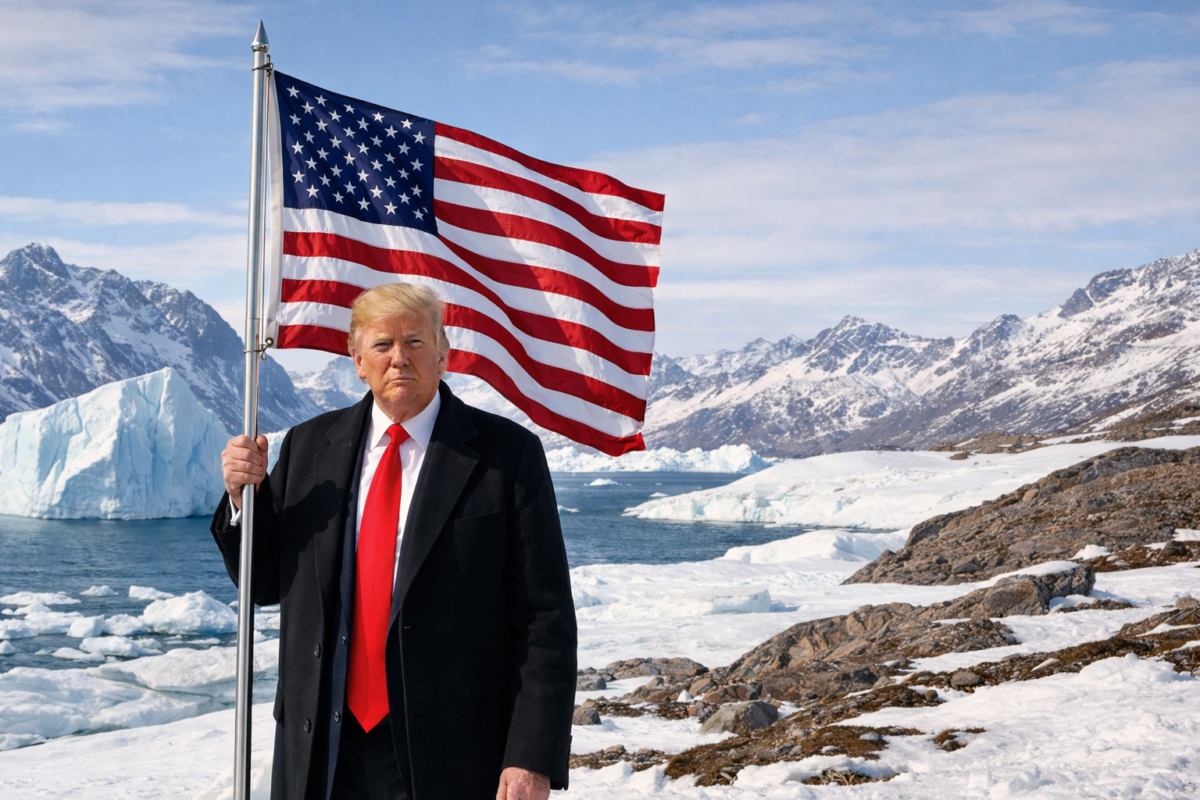
In case there was any doubt, the U.S. government’s threats to Greenland make it clear that the U.S. also has its eye on Europe. The continent’s three largest economies are starting the year with weak and unpopular governments, besieged by internal populists, with Russia at their doorsteps and the Washington government’s unequivocal support of the far right, which would further fragment the continent. If Europeans don’t find a way to gain weight and immediately and credibly impose the costs that concern Trump, they are going to suffer the same pressures that he is exerting on the American continent.
For most countries, retaliating against the unpredictable, untrustworthy and dangerous United States has been an urgent geopolitical task. Some will fail; in Europe’s case, it might be too late to adapt. Others will succeed: China already occupies a very strong position and is content with letting its rival dig its own grave in order to win after failure to appear. Xi Jinping can afford to play the long game. He will remain in power long after the end of Trump’s term in 2029.
The damage that all this poses to the power of the U.S. will persist beyond this presidency. Alliances, cooperation agreements and credibility aren’t just nice things to have; they are factors that strengthen Washington and provide it with an influence that military and economic power themselves cannot sustain. Trump is destroying that legacy, treating it like an inconvenience rather than an advantage, governing like U.S. power is out of time and thinking that he can change the world through force without any lasting consequences. But the alliances that he is destroying will not be rebuilt right away when the next president takes office. Credibility takes a generation to rebuild, if it can be rebuilt.
In short, yes, 2026 is a crucial year. Not because we know how this is all going to end, but because we are going to start to see what happens when the country that wrote the rules decides it no longer wants to follow them.
The year 2026 is going to be crucial. The biggest source of global instability won’t be in China, Russia, Iran or even the approximately 60 conflicts shaking the planet, the highest number since World War II. The main source will be the U.S. This is the fundamental idea that can be deduced from Eurasia Group’s report on the biggest risk for 2026: The most powerful country in the world, the same one that constructed and led post-war world order, is dismantling it in line with the wishes of the most determined — and the most capable — president to change the U.S. role in the world in all of modern history.
Last weekend, we got to see a preview. After months of growing pressures — sanctions, an immense naval deployment, a complete oil blockade — U.S. special forces captured the authoritarian leader of Venezuela, Nicolás Maduro, in Caracas and flew him up to New York to face a series of criminal charges. The intervention, which managed to overthrow the dictator and bring him to justice without any American casualties, was President Donald Trump’s cleanest military victory on the international stage.
Trump already named his strategy for the Western hemisphere: the Donroe Doctrine. It’s his version of the claim made by President James Monroe in the 19th century that the U.S. had to take care of the Americas — except, while Monroe limited himself to warning European powers to stay out of the American continent, Trump is using military and economic pressures and is being guided by personal vendettas in order to subject the region to his will. And he’s only just begun.
This isn’t the isolationism promised by “America First.” Trump’s government is not becoming increasingly disinterested in Israel and the Gulf states — quite the contrary. Trump’s haste to attack Iran last year and his will to meddle in European politics aren’t exactly proof that the country is going to close itself off. Neither is the idea of “spheres of influences” consistent. Trump isn’t dividing the world with rival powers, each in its own territory. Washington just sent Taiwan the biggest arms package to date, and their government’s position on the Indo-Pacific countries doesn’t show that it has any desire to relinquish Asia to China.
Trump’s foreign policy doesn’t follow the traditional core ideas of allies versus rivals, democracies versus autocracies and strategic competency versus cooperation. His calculations are simpler. If the other party has something he wants, the question is: Is it capable of counteracting and causing him damage? If the answer is yes, he will negotiate to reach a deal.
Trump wanted to dethrone Maduro and, whatever he did, the Venezuelan president couldn’t have avoided it. He didn’t have any allies ready to act, an army capable of retaliating or any cards to play that would interest Trump. So they got rid of him. What does it matter if the entire structure of the Venezuelan regimes remains intact, or if any possible transition to a stable democratic government is going to be complicated and controversial, or if it all depends, for the most part, on how well (or poorly) Venezuela itself manages it.
Personally, Trump thinks it’s a great idea for Venezuela to continued to be governed by the same repressive regime, as long as it does what he wants (and he preferred that option to the opposition taking over government). He gives the impression that the “or else” threat is already taking effect, as Trump announced that the new Venezuelan authorities will “turn over” 30–50 million barrels of oil to the U.S., and that, in his own words, it would be “controlled by me, as President of the United States of America.” If he consolidates his success — what he considers success — in Venezuela, it will encourage him to repeat the strategy in other countries like Cuba, Colombia, Nicaragua, Mexico or Greenland.
On the other end of the spectrum is China. Last year, when China increased tariffs, Beijing responded by imposing restrictions on the exports of rare earths and critical minerals, which are essential ingredients for a large variety of military and consumer products in the 21st century. Once that vulnerability was exposed, Trump had no other solution than to back down. Now it has been proposed that they maintain the détente and reach an agreement at any cost.
We are not dealing with some great strategy, but rather the law of the jungle: unilateral power that Trump exerts where he thinks he can get his own way, without any concern for rules, bureaucratic processes, alliance structures or multilateral institutions that in another time gave him legitimacy. As problems in other areas worsen, such as the anger from voters about the loss of purchasing power, the threat of defeat in the next midterm elections and the decrease in commercial weight, and as Trump’s urgency to consolidate his legacy increases, the president will be increasingly willing to take risks with regard to security, where he remains almost unencumbered. The western hemisphere is an environment well-equipped with dams where the U.S. has an asymmetric influence that no one can counter, and Trump can gain easy victories with minimum resistance and low costs. But his strategy is not limited to the countries close to the U.S.
In case there was any doubt, the U.S. government’s threats to Greenland make it clear that the U.S. also has its eye on Europe. The continent’s three largest economies are starting the year with weak and unpopular governments, besieged by internal populists, with Russia at their doorsteps and the Washington government’s unequivocal support of the far right, which would further fragment the continent. If Europeans don’t find a way to gain weight and immediately and credibly impose the costs that concern Trump, they are going to suffer the same pressures that he is exerting on the American continent.
For most countries, retaliating against the unpredictable, untrustworthy and dangerous United States has been an urgent geopolitical task. Some will fail; in Europe’s case, it might be too late to adapt. Others will succeed: China already occupies a very strong position and is content with letting its rival dig its own grave in order to win after failure to appear. Xi Jinping can afford to play the long game. He will remain in power long after the end of Trump’s term in 2029.
The damage that all this poses to the power of the U.S. will persist beyond this presidency. Alliances, cooperation agreements and credibility aren’t just nice things to have; they are factors that strengthen Washington and provide it with an influence that military and economic power themselves cannot sustain. Trump is destroying that legacy, treating it like an inconvenience rather than an advantage, governing like U.S. power is out of time and thinking that he can change the world through force without any lasting consequences. But the alliances that he is destroying will not be rebuilt right away when the next president takes office. Credibility takes a generation to rebuild, if it can be rebuilt.
In short, yes, 2026 is a crucial year. Not because we know how this is all going to end, but because we are going to start to see what happens when the country that wrote the rules decides it no longer wants to follow them.
Previous article
Next article