
Jerzy Haszczyński: European Observers of Donald Trump’s Board of Peace — and a Bulgarian Surprise
The original version of the Board of Peace, related to the Gaza Strip, is gaining interest in some EU countries, with some even willing to send troops. But Donald Trump's board, which rivals the U.N., is meeting with great resistance in Europe.
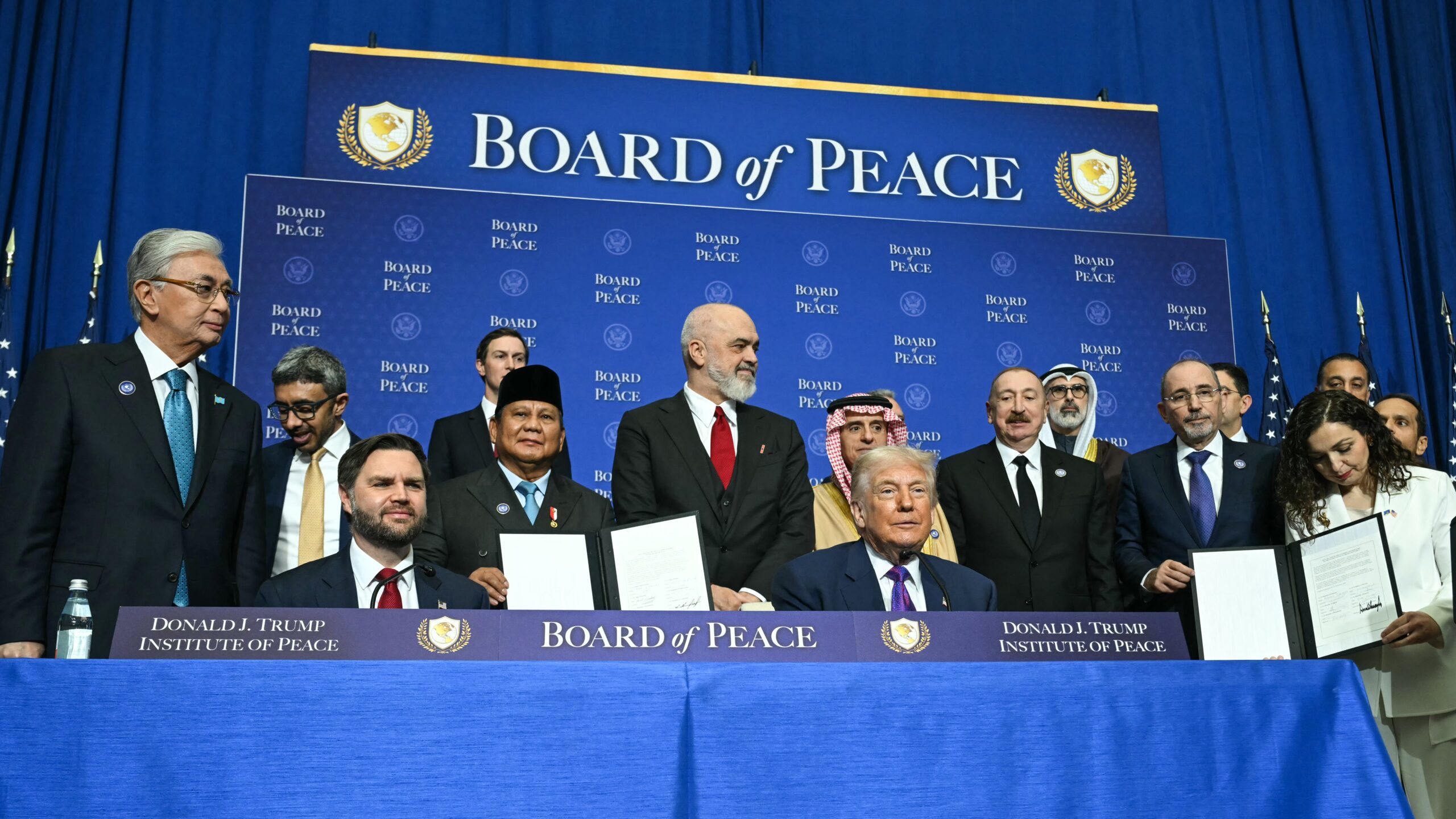
The opening meeting of the Board of Peace will take place on Thursday in Washington. Initially, it aimed to focus on peace in the Gaza Strip. At the time, it enjoyed the support of almost the entire world, including the EU. The celebration of Trump's 20-point peace plan for Gaza in October in Egypt's Sharm el-Sheikh was attended by the chancellor of Germany, the prime ministers of Great Britain and Italy, and the president of France — not to mention the presidents and monarchs of Arab and Muslim countries. Poland, however, had no representative present.
In November, the U.S. president's plan to establish the Board of Peace and send peacekeepers to the Gaza Strip was supported by the U.N. Security Council. It is rare for any of the permanent members to withhold a veto on such crucial matters. Russia and China chose to abstain, while all other members of the Security Council voted in favor, including the veto-wielding U.K. and France.
Opposition of Major European Countries to Trump's Board of Peace
The problem with the concept of the Board of Peace in Europe began at the moment when Trump decided to expand its influence to other conflicts and personally become its head — effectively for life. He can either step down from the chairmanship himself, or the board can decide on it unanimously. That seems unlikely, given that all Americans who are on the board have ties to the president.
Concerns have emerged that the new body, which is supposed to "promote stability" and "secure enduring peace” in the various regions affected or threatened by conflicts, could become a rival to the U.N. In addition, it destroys the international order, especially important for small- and medium-sized countries, whose fate will now be decided by one man: Trump, who is known for coercion and threats. True, the document establishing the Board of Peace speaks about acting in accordance with international law, but not everyone who follows Trump's actions in the world is convinced of this.
Major European countries, including France and Germany, are working to reduce their dependence on America by building a European superpower and asserting European sovereignty. They were particularly reluctant to respond to the enlarged version of the Board of Peace. But European sovereignty over the past 10-15 years requires that countries near Russia, weaker than Germany or France, be cautious in openly rejecting American ideas with "peace" in their names.
An example is Finland. Its president, Alexander Stubb, who managed to develop good relations with Trump last year, called the Board of Peace "a good idea" in an interview a month ago with The Washington Post. He immediately added that it should have a strong mandate from the U.N., as was successfully secured in the Gaza Strip. A few days later, Finnish public media reported that Finland would not accept an invitation to the Board of Peace, adding, "for now."
Trump did not invite the Baltic states to the Board of Peace, although approximately 60 countries received an invitation. The Baltics are especially vulnerable to a potential attack by Russia. They didn't have to take an official position; Latvian politicians, for example, say they "highly" value relations with the U.S.
Is It Possible To Talk About Peace with Vladimir Putin?
Trump invited Russia, which led to the accusation that Putin is supposed to talk about peace at the same table. Trump has already spoken to him; however, President Emmanuel Macron, who is very critical of the Board of Peace, also wants to do so. In early February, he said that preparations were underway for a meeting with Putin in coordination with partners from Ukraine and Europe. So far, Russia has not taken up the invitation to the new Trump organization but, according to the Foreign Ministry in Moscow, "is considering its position." He will not attend the first meeting of the council, which will be held on Thursday in Washington.
Alexander Lukashenko will also not attend, although in January he was very pleased with the invitation and signed a document for Belarus' inclusion in the Board of Peace.
In Poland, the topic of the Board of Peace has become another bone of contention between the government and the president and the Law and Justice opposition. Its leader, Jarosław Kaczyński, said that our country should become a permanent member and therefore pay the required $1 billion. Karol Nawrocki took part in the official presentation of the board during the Davos forum in January. He was even the first of the foreign leaders mentioned by Trump, but Poland was not among the founding members. President Nawrocki is not going to Washington either; he will be represented by the head of the Office for International Policy, Marcin Przydacz.
It seems that Poland will maintain its observer status because the entry into the board must be initiated by the government. Prime Minister Donald Tusk said on Tuesday that the government did not foresee this "under these circumstances and conditions." But he added that the representative of Poland can participate in the deliberations "as an observer."
What Is Bulgaria Doing among the Founding Members of the Board of Peace?
Two EU countries were among the founders of the Board of Peace. One is Hungary, which is not surprising, given Viktor Orbán's anti-Brussels policies and his close ties to Trump. But there is also Bulgaria, which is surprising, because it has so far avoided conflicts with the EU mainstream. Acting Prime Minister Marcin Przydacz was one of the heroes of the ceremony in Davos, but in the coming days he will give up the helm of the government.
"It is not clear whether this is legally binding or whether it can be considered that Bulgaria is already a member of the board," Vessela Cherneva, a Bulgarian analyst at the European Council on Foreign Relations think tank, told Rzeczpospolita. The opposition demanded a debate in Parliament on this issue, but it never took place. The leader of the main ruling party, Boyko Borisov, said that the issue of Zhelyazkov’s signature will not be submitted for ratification now because snap elections are ahead (April 19) and will likely happen afterward, he added.
Why did the interim prime minister decide to do that? It is believed that he was prompted to do so by the oligarch Delan Peevski, who hopes that Trump will remove him from the Magnitsky sanctions list.
Who Will Send Troops to Gaza?
For now, the Board of Peace is dominated by countries interested in its original version — related to the Gaza Strip — including the leading Arab and Muslim states. This week, several EU countries bordering the Mediterranean and with a keen interest in resolving the Israeli-Palestinian conflict (Greece, Cyprus and Italy) confirmed their participation as observers.
Greece also decided to send its troops to the International Stabilization Force in Gaza, provided for in the Trump peace plan and having a U.N. mandate. There are problems with completing the ISFs, especially among the Muslim countries that were supposed to dominate them. Its significant participation (several thousand soldiers) was confirmed a few days ago by Indonesia, the most populous Muslim country. In addition, there will be Moroccans and Albanians in Gaza. Israel does not agree to the participation of Turkey, although Turkey is quite willing.
The opening meeting of the Board of Peace will take place on Thursday in Washington. Initially, it aimed to focus on peace in the Gaza Strip. At the time, it enjoyed the support of almost the entire world, including the EU. The celebration of Trump's 20-point peace plan for Gaza in October in Egypt's Sharm el-Sheikh was attended by the chancellor of Germany, the prime ministers of Great Britain and Italy, and the president of France — not to mention the presidents and monarchs of Arab and Muslim countries. Poland, however, had no representative present.
In November, the U.S. president's plan to establish the Board of Peace and send peacekeepers to the Gaza Strip was supported by the U.N. Security Council. It is rare for any of the permanent members to withhold a veto on such crucial matters. Russia and China chose to abstain, while all other members of the Security Council voted in favor, including the veto-wielding U.K. and France.
Opposition of Major European Countries to Trump's Board of Peace
The problem with the concept of the Board of Peace in Europe began at the moment when Trump decided to expand its influence to other conflicts and personally become its head — effectively for life. He can either step down from the chairmanship himself, or the board can decide on it unanimously. That seems unlikely, given that all Americans who are on the board have ties to the president.
Concerns have emerged that the new body, which is supposed to "promote stability" and "secure enduring peace” in the various regions affected or threatened by conflicts, could become a rival to the U.N. In addition, it destroys the international order, especially important for small- and medium-sized countries, whose fate will now be decided by one man: Trump, who is known for coercion and threats. True, the document establishing the Board of Peace speaks about acting in accordance with international law, but not everyone who follows Trump's actions in the world is convinced of this.
Major European countries, including France and Germany, are working to reduce their dependence on America by building a European superpower and asserting European sovereignty. They were particularly reluctant to respond to the enlarged version of the Board of Peace. But European sovereignty over the past 10-15 years requires that countries near Russia, weaker than Germany or France, be cautious in openly rejecting American ideas with "peace" in their names.
An example is Finland. Its president, Alexander Stubb, who managed to develop good relations with Trump last year, called the Board of Peace "a good idea" in an interview a month ago with The Washington Post. He immediately added that it should have a strong mandate from the U.N., as was successfully secured in the Gaza Strip. A few days later, Finnish public media reported that Finland would not accept an invitation to the Board of Peace, adding, "for now."
Trump did not invite the Baltic states to the Board of Peace, although approximately 60 countries received an invitation. The Baltics are especially vulnerable to a potential attack by Russia. They didn't have to take an official position; Latvian politicians, for example, say they "highly" value relations with the U.S.
Is It Possible To Talk About Peace with Vladimir Putin?
Trump invited Russia, which led to the accusation that Putin is supposed to talk about peace at the same table. Trump has already spoken to him; however, President Emmanuel Macron, who is very critical of the Board of Peace, also wants to do so. In early February, he said that preparations were underway for a meeting with Putin in coordination with partners from Ukraine and Europe. So far, Russia has not taken up the invitation to the new Trump organization but, according to the Foreign Ministry in Moscow, "is considering its position." He will not attend the first meeting of the council, which will be held on Thursday in Washington.
Alexander Lukashenko will also not attend, although in January he was very pleased with the invitation and signed a document for Belarus' inclusion in the Board of Peace.
In Poland, the topic of the Board of Peace has become another bone of contention between the government and the president and the Law and Justice opposition. Its leader, Jarosław Kaczyński, said that our country should become a permanent member and therefore pay the required $1 billion. Karol Nawrocki took part in the official presentation of the board during the Davos forum in January. He was even the first of the foreign leaders mentioned by Trump, but Poland was not among the founding members. President Nawrocki is not going to Washington either; he will be represented by the head of the Office for International Policy, Marcin Przydacz.
It seems that Poland will maintain its observer status because the entry into the board must be initiated by the government. Prime Minister Donald Tusk said on Tuesday that the government did not foresee this "under these circumstances and conditions." But he added that the representative of Poland can participate in the deliberations "as an observer."
What Is Bulgaria Doing among the Founding Members of the Board of Peace?
Two EU countries were among the founders of the Board of Peace. One is Hungary, which is not surprising, given Viktor Orbán's anti-Brussels policies and his close ties to Trump. But there is also Bulgaria, which is surprising, because it has so far avoided conflicts with the EU mainstream. Acting Prime Minister Marcin Przydacz was one of the heroes of the ceremony in Davos, but in the coming days he will give up the helm of the government.
"It is not clear whether this is legally binding or whether it can be considered that Bulgaria is already a member of the board," Vessela Cherneva, a Bulgarian analyst at the European Council on Foreign Relations think tank, told Rzeczpospolita. The opposition demanded a debate in Parliament on this issue, but it never took place. The leader of the main ruling party, Boyko Borisov, said that the issue of Zhelyazkov’s signature will not be submitted for ratification now because snap elections are ahead (April 19) and will likely happen afterward, he added.
Why did the interim prime minister decide to do that? It is believed that he was prompted to do so by the oligarch Delan Peevski, who hopes that Trump will remove him from the Magnitsky sanctions list.
Who Will Send Troops to Gaza?
For now, the Board of Peace is dominated by countries interested in its original version — related to the Gaza Strip — including the leading Arab and Muslim states. This week, several EU countries bordering the Mediterranean and with a keen interest in resolving the Israeli-Palestinian conflict (Greece, Cyprus and Italy) confirmed their participation as observers.
Greece also decided to send its troops to the International Stabilization Force in Gaza, provided for in the Trump peace plan and having a U.N. mandate. There are problems with completing the ISFs, especially among the Muslim countries that were supposed to dominate them. Its significant participation (several thousand soldiers) was confirmed a few days ago by Indonesia, the most populous Muslim country. In addition, there will be Moroccans and Albanians in Gaza. Israel does not agree to the participation of Turkey, although Turkey is quite willing.
Previous article
Next article
