
Has There Been a Change in World Order?
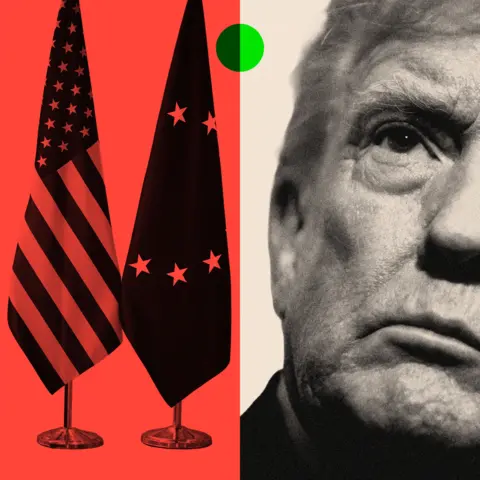
Since Donald Trump took office for his second term as U.S. president, the international balance of power has shifted substantially, altering America’s global position.
After the fall of the Berlin Wall in 1989, which brought an end to the bipolar world order, the United States has sought to achieve total hegemony through the establishment of its own economic, political, military and cultural rules.
Yet, during Trump’s second term, American foreign policy seems to have entered a period of reconfiguration. China’s, concerning economic and political ascendency, as well as Russia’s actions in Eastern Europe, have also presented significant challenges.
Is this reconfiguration an attempt to transform the current unipolar world order into a multipolar one, or does it seek to consolidate American hegemony?
In order to answer this pivotal question, we should first briefly discuss the concept of “world order.” In general terms, world order is neither a theoretical fantasy nor a collection of principles. It is, in simple terms, the configuration of global power. And we can analyze it depending on what form it takes and whether power is concentrated in one, two or more groups.
Thus, the configuration of global power can be unipolar, bipolar or multipolar. This is how we should frame discussions about power on the larger scale.
If we look back at the 20th century and consider the world order at the end of World War II, it can be viewed as bipolar. Two giants, the United States and the Soviet Union, wielded power over their respective spheres of influence.
This was the state of the world during the Cold War. Both nations also differed substantially on ideology: capitalism versus communism. It was a global political battle, with economic blocs and military alliances. Under this bipolar world order, we witnessed an unprecedented nuclear arms race. In little more than two decades, both superpowers accumulated colossal arsenals, each capable of unleashing a nuclear apocalypse.
In 1991, after the Berlin Wall had fallen and the USSR had collapsed, the world order shifted. Clearly, the world was now unipolar. In the absence of the Soviet Union, America assumed its position as the one global superpower, unburdened by structural counterbalances.
With capitalism triumphant and communism crumbling in a world no longer divided by walls, the U.S. went from being a leading power to a hegemonic one. A world dominated by military focus during the Cold War had transformed into a multidimensional hegemony.
Economically, the U.S. had already begun developing its supremacy at the end of World War II with the Bretton Woods system, which gave birth to the International Monetary Fund, the World Bank and the General Agreement on Tariffs and Trade, with the latter becoming the World Trade Organization in 1995. These three institutions are the cornerstones of American economic hegemony. China may be in first place in global trade, but it does not have the institutional power to overthrow the U.S. dollar and impose a different currency on the world.
Politically, following the Cold War, American leadership consolidated its presence in almost all former Soviet states. There are obviously exceptions, though these are now few and far between. In Latin America, after the U.S.’ successful pursuit of Venezuelan President Nicolás Maduro, only Cuba and Nicaragua remain. The political influence of the U.S. can be considered to be nearly universal.
Militarily, American superiority is preeminent, and U.S. military spending grows substantially every year. In the next few years, its yearly budget will exceed $1 billion — much higher than that of China and Russia.
The fourth and final dimension is culture. This is the most important factor in achieving total domination. With little resistance and few exceptions, American culture, especially its consumerism, has imposed itself on every corner of the globe. It even has significant influence in China. For a country to impose its culture on others is to exert symbolic domination: it shapes imaginations, habits and aspirations. It negates the need for an army.
If we look closely, these are the characteristics of the unipolar world order that America has forged since the end of the Cold War.
Obviously, China, which has embarked on an ambitious plan to expand its sphere of influence, is experiencing commercial growth that challenges this hegemony.
The following questions must be answered in order for it to succeed: Do China or Russia have the ability to dethrone the U.S. dollar and impose another currency on the world? Are they able to displace American political influence? Can they erase an American cultural influence that is deeply rooted, even within their own populations?
I recognize that we have not reached that point yet. Maybe we are on the road to it. If this is the case, then we are in a period of transition, so we aren’t yet able to talk about a new world order. The U.S. still imposes its own economic, political, military and cultural rules.
This is not the birth of a new world order, but a moment of strategic transition. Unipolar dominance remains in spite of the growing tensions that are testing it. Structural change has not yet occurred, so it is not clear how the situation will end.
After the fall of the Berlin Wall in 1989, which brought an end to the bipolar world order, the United States has sought to achieve total hegemony through the establishment of its own economic, political, military and cultural rules.
Yet, during Trump’s second term, American foreign policy seems to have entered a period of reconfiguration. China’s, concerning economic and political ascendency, as well as Russia’s actions in Eastern Europe, have also presented significant challenges.
Is this reconfiguration an attempt to transform the current unipolar world order into a multipolar one, or does it seek to consolidate American hegemony?
In order to answer this pivotal question, we should first briefly discuss the concept of “world order.” In general terms, world order is neither a theoretical fantasy nor a collection of principles. It is, in simple terms, the configuration of global power. And we can analyze it depending on what form it takes and whether power is concentrated in one, two or more groups.
Thus, the configuration of global power can be unipolar, bipolar or multipolar. This is how we should frame discussions about power on the larger scale.
If we look back at the 20th century and consider the world order at the end of World War II, it can be viewed as bipolar. Two giants, the United States and the Soviet Union, wielded power over their respective spheres of influence.
This was the state of the world during the Cold War. Both nations also differed substantially on ideology: capitalism versus communism. It was a global political battle, with economic blocs and military alliances. Under this bipolar world order, we witnessed an unprecedented nuclear arms race. In little more than two decades, both superpowers accumulated colossal arsenals, each capable of unleashing a nuclear apocalypse.
In 1991, after the Berlin Wall had fallen and the USSR had collapsed, the world order shifted. Clearly, the world was now unipolar. In the absence of the Soviet Union, America assumed its position as the one global superpower, unburdened by structural counterbalances.
With capitalism triumphant and communism crumbling in a world no longer divided by walls, the U.S. went from being a leading power to a hegemonic one. A world dominated by military focus during the Cold War had transformed into a multidimensional hegemony.
Economically, the U.S. had already begun developing its supremacy at the end of World War II with the Bretton Woods system, which gave birth to the International Monetary Fund, the World Bank and the General Agreement on Tariffs and Trade, with the latter becoming the World Trade Organization in 1995. These three institutions are the cornerstones of American economic hegemony. China may be in first place in global trade, but it does not have the institutional power to overthrow the U.S. dollar and impose a different currency on the world.
Politically, following the Cold War, American leadership consolidated its presence in almost all former Soviet states. There are obviously exceptions, though these are now few and far between. In Latin America, after the U.S.’ successful pursuit of Venezuelan President Nicolás Maduro, only Cuba and Nicaragua remain. The political influence of the U.S. can be considered to be nearly universal.
Militarily, American superiority is preeminent, and U.S. military spending grows substantially every year. In the next few years, its yearly budget will exceed $1 billion — much higher than that of China and Russia.
The fourth and final dimension is culture. This is the most important factor in achieving total domination. With little resistance and few exceptions, American culture, especially its consumerism, has imposed itself on every corner of the globe. It even has significant influence in China. For a country to impose its culture on others is to exert symbolic domination: it shapes imaginations, habits and aspirations. It negates the need for an army.
If we look closely, these are the characteristics of the unipolar world order that America has forged since the end of the Cold War.
Obviously, China, which has embarked on an ambitious plan to expand its sphere of influence, is experiencing commercial growth that challenges this hegemony.
The following questions must be answered in order for it to succeed: Do China or Russia have the ability to dethrone the U.S. dollar and impose another currency on the world? Are they able to displace American political influence? Can they erase an American cultural influence that is deeply rooted, even within their own populations?
I recognize that we have not reached that point yet. Maybe we are on the road to it. If this is the case, then we are in a period of transition, so we aren’t yet able to talk about a new world order. The U.S. still imposes its own economic, political, military and cultural rules.
This is not the birth of a new world order, but a moment of strategic transition. Unipolar dominance remains in spite of the growing tensions that are testing it. Structural change has not yet occurred, so it is not clear how the situation will end.
Previous article
Next article
