The World Can’t Afford To Wait*
The extension of the ceasefire in the US Iran war takes this game of poker into a new round. Iran is stalling in its usual way, and President Donald Trump is in no great hurry either. The standoff has dramatic implications for the rest of the world.
Perhaps the talks between the U.S. and Iran will move forward after all. The ceasefire extension offers some hope that they might resume. Meanwhile, the negotiations for a peaceful resolution to the war have begun to resemble a game of poker. Which party is stalling, which side is showing signs of weakness, and which one holds the stronger cards? The worst case scenario is that both parties maintain an indefinite standoff because they can each afford to bide their time, while the rest of the world enjoys no such luxury.
The regime in Tehran managed to string things out almost until the last moment of the ceasefire without committing to another round of talks. President Donald Trump appeared equally steadfast, initially declaring he had no intention of extending the ceasefire, only to do so the very next day. At the same time, both sides have ratcheted up their bellicose rhetoric in recent days, each claiming its readiness to resume the war, except that, for once, it was not Trump threatening all hell would rain down, but the Iranians.
While both warring administrations persist in their mutual impasse, the global economy is in grave trouble because of the ongoing blockade of the Strait of Hormuz. One reason is the steep rise in oil and gas prices. Increasingly, however, the fact that the war is not only causing essential raw materials to become more expensive, but that it is also leading to physical shortages, is an equally pressing factor. Some Asian countries have already rationed gasoline sales and introduced work-from-home days to conserve energy. Disrupted fertilizer supply chains are inflicting hardship on developing countries, and a shortage of the helium used to manufacture computer chips is affecting the global semiconductor industry.
Which party is stalling, which side is betraying weakness, and which one holds the better cards? The worst part of this crisis is that both parties could maintain an indefinite standoff while they wait for the other side to blink.
Unfortunately, it is also the case that neither side is in a great hurry. Granted, the Iranian regime is being squeezed by lost oil revenues while the Americans blockade its ports. But Iran is used to weathering shortages and sanctions. Trump is also operating under the assurance that the U.S. does not depend on oil production from the Gulf states. Quite the opposite, in fact: United States oil exporters are raking in the profits, thanks to the elevated prices, while, at the same time, the disruption of supplies from the Persian Gulf is hurting America’s largest economic competitors, primarily China, but also Japan and the European Union.
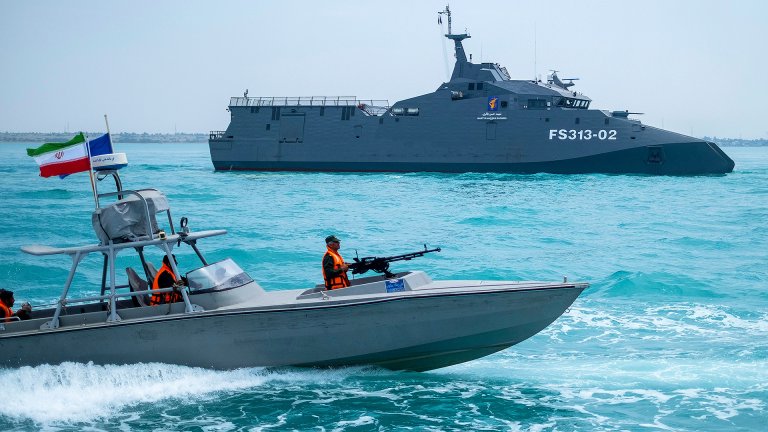
So far, Iran's military strategy has proven remarkably effective. Even more so than any implicit threat from a nuclear missile, the closure of the narrow waterway in the Strait of Hormuz has made it crystal clear to the whole world just how potent a weapon Iran possesses. It's one advantage Iran will not readily relinquish as long as it can sustain its guerrilla warfare by deploying small attack boats and drones against the world’s most powerful military.
The U.S. president is impervious to pressure, except for the homegrown variety. His approval ratings are falling, the MAGA movement’s base has grown skittish because of the war, and the November midterm elections are approaching. But the pendulum of public opinion could just as easily swing the other way — the moment Trump declares victory in the war and gas prices start to fall again.
*Editor’s note: This article is available in its original language with a paid subscription.
Perhaps the talks between the U.S. and Iran will move forward after all. The ceasefire extension offers some hope that they might resume. Meanwhile, the negotiations for a peaceful resolution to the war have begun to resemble a game of poker. Which party is stalling, which side is showing signs of weakness, and which one holds the stronger cards? The worst case scenario is that both parties maintain an indefinite standoff because they can each afford to bide their time, while the rest of the world enjoys no such luxury.
The regime in Tehran managed to string things out almost until the last moment of the ceasefire without committing to another round of talks. President Donald Trump appeared equally steadfast, initially declaring he had no intention of extending the ceasefire, only to do so the very next day. At the same time, both sides have ratcheted up their bellicose rhetoric in recent days, each claiming its readiness to resume the war, except that, for once, it was not Trump threatening all hell would rain down, but the Iranians.
While both warring administrations persist in their mutual impasse, the global economy is in grave trouble because of the ongoing blockade of the Strait of Hormuz. One reason is the steep rise in oil and gas prices. Increasingly, however, the fact that the war is not only causing essential raw materials to become more expensive, but that it is also leading to physical shortages, is an equally pressing factor. Some Asian countries have already rationed gasoline sales and introduced work-from-home days to conserve energy. Disrupted fertilizer supply chains are inflicting hardship on developing countries, and a shortage of the helium used to manufacture computer chips is affecting the global semiconductor industry.
Which party is stalling, which side is betraying weakness, and which one holds the better cards? The worst part of this crisis is that both parties could maintain an indefinite standoff while they wait for the other side to blink.
Unfortunately, it is also the case that neither side is in a great hurry. Granted, the Iranian regime is being squeezed by lost oil revenues while the Americans blockade its ports. But Iran is used to weathering shortages and sanctions. Trump is also operating under the assurance that the U.S. does not depend on oil production from the Gulf states. Quite the opposite, in fact: United States oil exporters are raking in the profits, thanks to the elevated prices, while, at the same time, the disruption of supplies from the Persian Gulf is hurting America’s largest economic competitors, primarily China, but also Japan and the European Union.
So far, Iran's military strategy has proven remarkably effective. Even more so than any implicit threat from a nuclear missile, the closure of the narrow waterway in the Strait of Hormuz has made it crystal clear to the whole world just how potent a weapon Iran possesses. It's one advantage Iran will not readily relinquish as long as it can sustain its guerrilla warfare by deploying small attack boats and drones against the world’s most powerful military.
The U.S. president is impervious to pressure, except for the homegrown variety. His approval ratings are falling, the MAGA movement’s base has grown skittish because of the war, and the November midterm elections are approaching. But the pendulum of public opinion could just as easily swing the other way — the moment Trump declares victory in the war and gas prices start to fall again.
*Editor’s note: This article is available in its original language with a paid subscription.
Previous article
Next article