
American Dithering
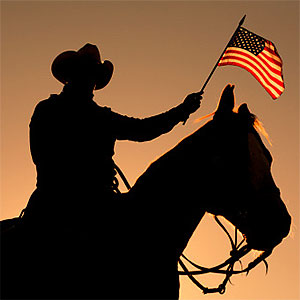
The global community must decide: Does it want a United States that upholds the rules of a democracy, or would it rather follow a cowboy?
Under President John F. Kennedy, 1,300 Cuban exiles invaded Cuba at the Bay of Pigs. President Richard Nixon ordered U.S. troops to invade Cambodia; under President George H.W. Bush, U. S. forces went into Panama. History hasn't looked kindly on these incursions, all of which had no congressional approval. Because of them and many other actions, America's credibility has suffered. Now President Barack Obama is seeking congressional approval to invade Syria and is seen as demonstrating insufficient leadership even before he has launched the first cruise missile.
Obama is torn between calls to end the bloodshed in Syria and a population highly critical of involvement both at home and abroad.
He wants to be a principled president but not an autocrat. The dilemma is larger than he is and possibly touches on the central question of his administration: America's global role. The community of nations will have to decide whether they want an America that upholds democratic principles — and must then accept occasional timeouts and possible reversals — or a cowboy, always spurring his horse onward regardless of whether he is supported by the entire world or just by a few dubious advisers.
Obama's wavering between the so-called red line and his seeking congressional approval is the result of this dilemma. It was inevitable that his adherence to democratic principles would be seen by some as weakness. Politics has changed in the Internet age; it's now all about inclusion and participation, if not with all people, at least with their elected representatives. Obama's decision is an expression of current political culture. The choice between several options is the basis for the democratic process. And when it involves life and death, it means even the motherland of democracy can't afford to make an error.
Under President John F. Kennedy, 1,300 Cuban exiles invaded Cuba at the Bay of Pigs. President Richard Nixon ordered U.S. troops to invade Cambodia; under President George H.W. Bush, U. S. forces went into Panama. History hasn't looked kindly on these incursions, all of which had no congressional approval. Because of them and many other actions, America's credibility has suffered. Now President Barack Obama is seeking congressional approval to invade Syria and is seen as demonstrating insufficient leadership even before he has launched the first cruise missile.
Obama is torn between calls to end the bloodshed in Syria and a population highly critical of involvement both at home and abroad.
He wants to be a principled president but not an autocrat. The dilemma is larger than he is and possibly touches on the central question of his administration: America's global role. The community of nations will have to decide whether they want an America that upholds democratic principles — and must then accept occasional timeouts and possible reversals — or a cowboy, always spurring his horse onward regardless of whether he is supported by the entire world or just by a few dubious advisers.
Obama's wavering between the so-called red line and his seeking congressional approval is the result of this dilemma. It was inevitable that his adherence to democratic principles would be seen by some as weakness. Politics has changed in the Internet age; it's now all about inclusion and participation, if not with all people, at least with their elected representatives. Obama's decision is an expression of current political culture. The choice between several options is the basis for the democratic process. And when it involves life and death, it means even the motherland of democracy can't afford to make an error.