
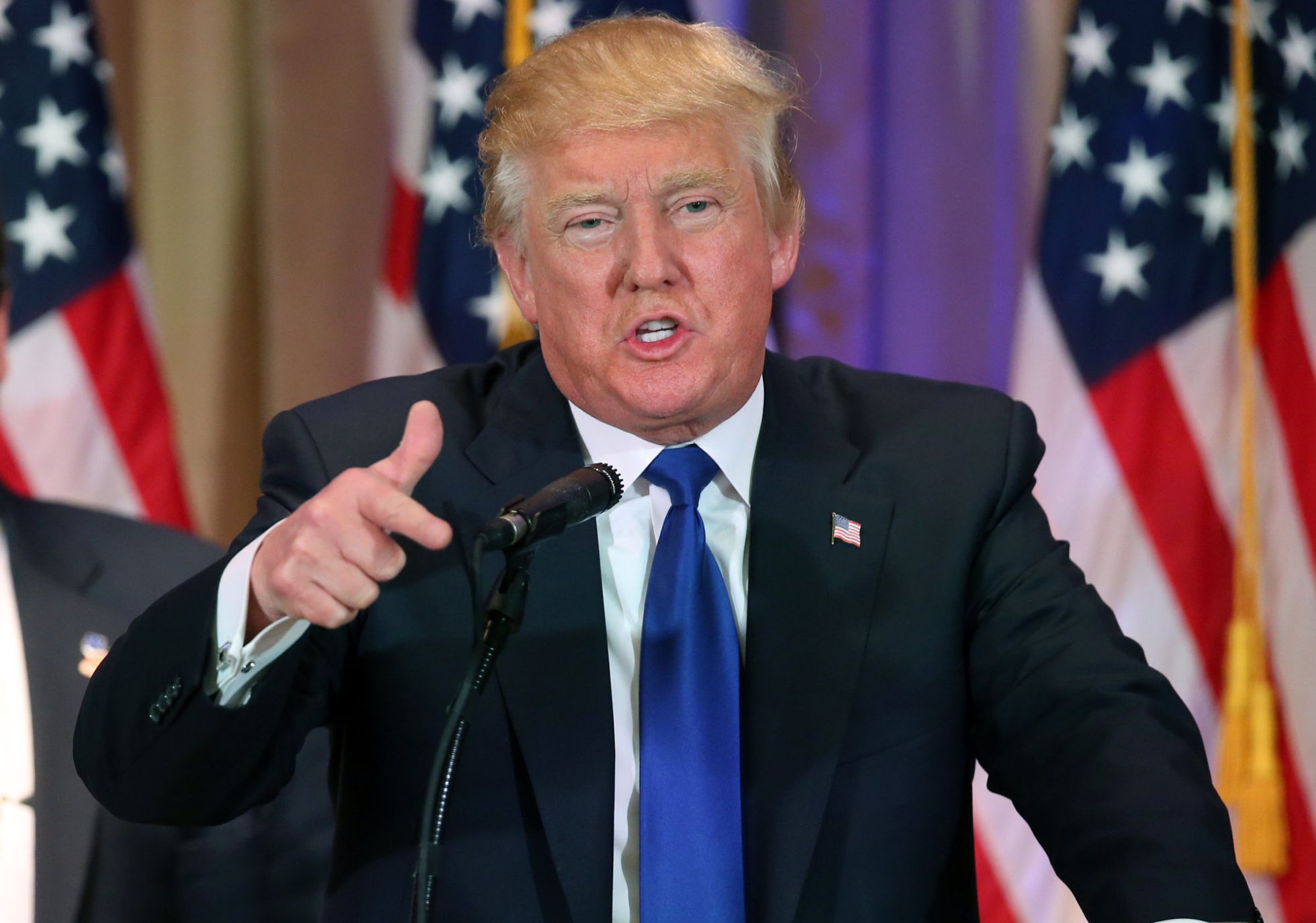
Stopping Trump
The populist millionaire’s victory on Super Tuesday should make the Republican Party react.
Super Tuesday’s primary election results began to brighten the outlook of front-runners in both big American parties, as they showed who could become the Republican and Democrat candidates to conquer the White House in November. What is clear from Tuesday’s decisive journey is alarming, not only for Republicans, but for the whole country.
Populist Donald Trump’s victory in seven of the eleven contested states – and his second place results in the remaining four – confirmed the problem facing the Republican Party. Although 72 percent of the delegates for the July convention, at which the presidential candidate will be appointed, have yet to be elected, Trump is quickly advancing in preference among Republican voters. The polemic candidate celebrated the victory with an unusually – for his standards – moderate tone, which was considered presidential by many in the U.S.
Not only has Trump categorically influenced the radicalization of conservative speech, he could become the Republican presidential candidate. What seemed an extravagance months ago could become reality: the one who insults and despises minorities, women and foreigners, and who offers empty solutions to complex problems, will fight for the White House in Abraham Lincoln party ranks. Time is running out for his party, and it has yet to be seen whether the Republican establishment’s attempts to stop Trump – such as concentrating all their energy and resources on another aspiring candidate – will do any good.
On the Democrat side, Hillary Clinton is ahead, but it can’t yet be said that she has beaten populist Bernie Sanders. This is proof – equally applicable in Trump’s case – of the saturation of a great part of the electorate in making politics disconnected from reality. This doesn’t mean the alternative is better.
Super Tuesday’s primary election results began to brighten the outlook of front-runners in both big American parties, as they showed who could become the Republican and Democrat candidates to conquer the White House in November. What is clear from Tuesday’s decisive journey is alarming, not only for Republicans, but for the whole country.
Populist Donald Trump’s victory in seven of the eleven contested states – and his second place results in the remaining four – confirmed the problem facing the Republican Party. Although 72 percent of the delegates for the July convention, at which the presidential candidate will be appointed, have yet to be elected, Trump is quickly advancing in preference among Republican voters. The polemic candidate celebrated the victory with an unusually – for his standards – moderate tone, which was considered presidential by many in the U.S.
Not only has Trump categorically influenced the radicalization of conservative speech, he could become the Republican presidential candidate. What seemed an extravagance months ago could become reality: the one who insults and despises minorities, women and foreigners, and who offers empty solutions to complex problems, will fight for the White House in Abraham Lincoln party ranks. Time is running out for his party, and it has yet to be seen whether the Republican establishment’s attempts to stop Trump – such as concentrating all their energy and resources on another aspiring candidate – will do any good.
On the Democrat side, Hillary Clinton is ahead, but it can’t yet be said that she has beaten populist Bernie Sanders. This is proof – equally applicable in Trump’s case – of the saturation of a great part of the electorate in making politics disconnected from reality. This doesn’t mean the alternative is better.
Previous article
