
Calexit
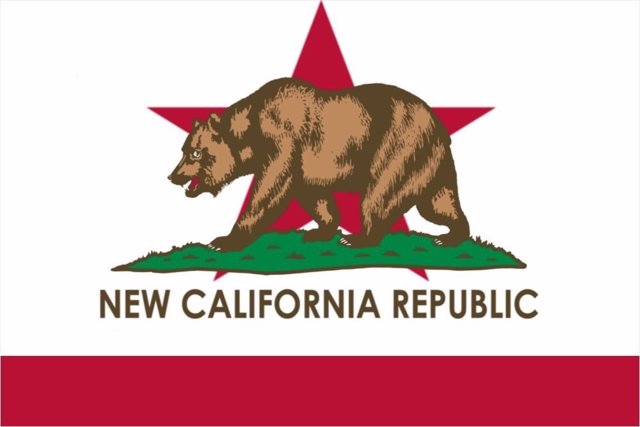
Unable to come to terms with the election of Republican candidate Donald Trump as America’s newest president, Californians are calling for Calexit, as in Brexit; namely, the secession of the Golden State from the (un)United States.
It’ll be some time before any of the 50 U.S. states succeeds in going it alone, the Civil War being a fitting reminder. However, if a miracle does happen, Trump’s job will be made much easier come the 2020 re-elections. Why? On Nov. 8, 61 percent of Californians voted for Hillary Clinton (compared to 33 percent for Trump), meaning that 55 of a total 538 electoral votes fall easily within the Democratic remit (Texas comes in second with 38). If California separates from the U.S., Oregon and Washington (two other primarily Democratic states on the West Coast) will likely look to follow suit. With these three states gone, a Republican presidential candidate would have more chance of winning over Washington D.C.
For the most part, Californians are progressive, green and no stranger to referenda. If America’s newest “Southerners” take hold of their future and achieve victory, what will the remaining “Northerners” do? Will Donald Trump oppose Calexit? It wouldn’t be in his interest if he wants to obtain re-election.
It’ll be some time before any of the 50 U.S. states succeeds in going it alone, the Civil War being a fitting reminder. However, if a miracle does happen, Trump’s job will be made much easier come the 2020 re-elections. Why? On Nov. 8, 61 percent of Californians voted for Hillary Clinton (compared to 33 percent for Trump), meaning that 55 of a total 538 electoral votes fall easily within the Democratic remit (Texas comes in second with 38). If California separates from the U.S., Oregon and Washington (two other primarily Democratic states on the West Coast) will likely look to follow suit. With these three states gone, a Republican presidential candidate would have more chance of winning over Washington D.C.
For the most part, Californians are progressive, green and no stranger to referenda. If America’s newest “Southerners” take hold of their future and achieve victory, what will the remaining “Northerners” do? Will Donald Trump oppose Calexit? It wouldn’t be in his interest if he wants to obtain re-election.
Next article
