
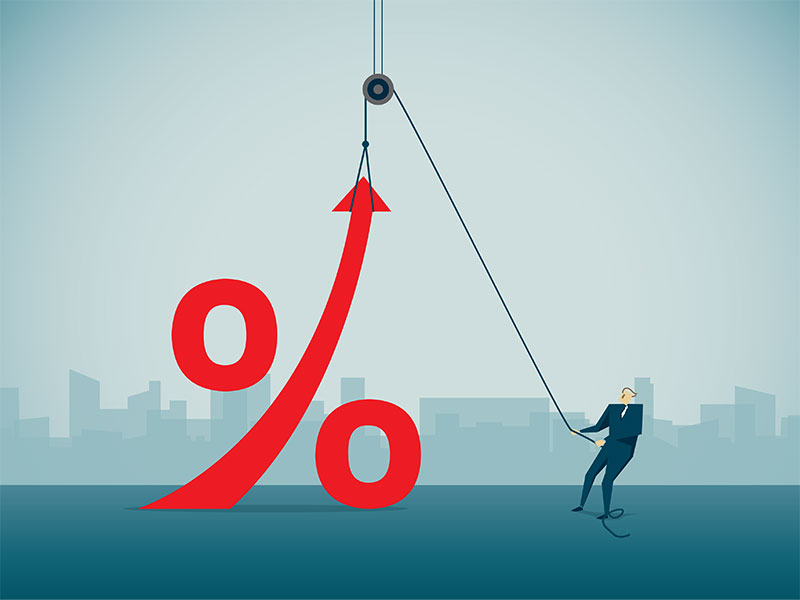
The Interest Curve Written on the Wall
Published in Frankfurter Allgemeine Zeitung
(Germany) on 25 September 2022
by Christian Siedenbiedel (link to
original)
In the U.S., short-term interest rates are currently much higher than long-term rates. According to an old rule among analysts, that foreshadows a calamity.
The U.S. Federal Reserve’s raising of interest rates has created an unusual situation: The so-called yield curve of U.S. bonds has recently become inverted, and it is only getting worse.
That means that short-term interest rates are higher than long-term rates; the yield on a 2-year Treasury note rose on Friday to 4.1%, whereas the yield on a 10-year Treasury note is just 3.7%.
Things have not yet gone so far in Germany, but developments here also have trended in this direction in the last several weeks.
Superficially, this situation is a result of the interest rate raise, which affects short-term rates more acutely than long-term ones. But a yield curve that has been as strongly inverted as that in the U.S. is also considered a sign of an impending recession.
According to a study by the Federal Reserve Bank of San Francisco, every economic downturn in the U.S. since 1955 has been preceded by an inverted yield curve, with just one exception. This suggests that we in Germany, too, should be wary of difficult times ahead.
The U.S. Federal Reserve’s raising of interest rates has created an unusual situation: The so-called yield curve of U.S. bonds has recently become inverted, and it is only getting worse.
That means that short-term interest rates are higher than long-term rates; the yield on a 2-year Treasury note rose on Friday to 4.1%, whereas the yield on a 10-year Treasury note is just 3.7%.
Things have not yet gone so far in Germany, but developments here also have trended in this direction in the last several weeks.
Superficially, this situation is a result of the interest rate raise, which affects short-term rates more acutely than long-term ones. But a yield curve that has been as strongly inverted as that in the U.S. is also considered a sign of an impending recession.
According to a study by the Federal Reserve Bank of San Francisco, every economic downturn in the U.S. since 1955 has been preceded by an inverted yield curve, with just one exception. This suggests that we in Germany, too, should be wary of difficult times ahead.
Previous article
Next article