Betrayed by Trump, Ukraine Was Once a ‘City upon a Hill’
The U.S.-Iran war has caused energy prices to skyrocket, which is bad for Republicans in the midterms. To lower the price of diesel, Donald Trump asked Russian President Vladimir Putin for help, announcing a relaxation of sanctions on Russian diesel exports. Meanwhile, representatives from the U.S., Ukraine and the European Union met in Miami to plan a ceasefire to the Russia-Ukraine war. The U.S. threatened that if Ukraine continued to attack Russian energy facilities, the U.S. would stop sharing intelligence. Trump also called out Volodymyr Zelenskyy as the main culprit responsible for the U.S. diesel price increase due to his inability to reach a ceasefire agreement. Trump publicly demanded that Ukraine replace its president as soon as possible.
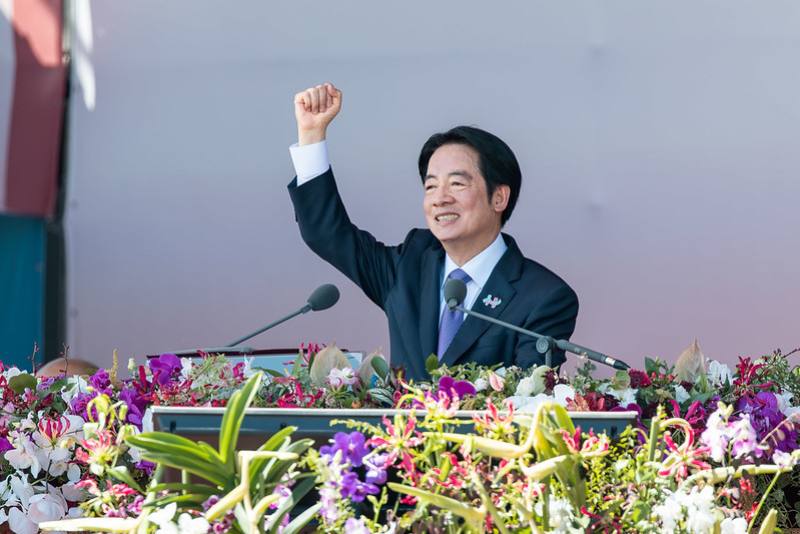
The Democratic Progressive Party currently in power has always supported Ukraine. Unfortunately, President Lai Ching-te never imagined that his National Day speech on the theme “Building a City Upon a Hill,” which was originally a political pledge of loyalty to the U.S., would unexpectedly intersect with Ukraine at a fork in the road for the nation’s fate.
“A city upon a hill” is an important political phrase used by various U.S. presidents. During the Cold War, Ronald Reagan used it as a metaphor for America’s leadership in the fight against communism and its defense of democracy and freedom, and it has been widely cited worldwide since. At the beginning of the Russia-Ukraine war, Kyiv was esteemed by the West as a “shining city upon a hill” and a “beacon of hope for democracy.” In speeches in other countries, Zelenskyy proclaimed that Ukrainians were spilling blood to protect “universal values of the free world” and to stop the spread of authoritarianism. Therefore, on moral grounds, the West must provide Ukraine with unlimited support.
This view was no different from the one expressed in President Lai’s National Day address. He said Taiwan will “prevent authoritarianism from eroding democracy” and is “safeguarding the status quo of peace and stability in the Taiwan Strait and the Indo-Pacific.” With this, he called upon other Indo-Pacific democratic nations to join in preventing the status quo in the region from changing. Little did Lai know that as he proclaimed Taiwan a city upon a hill, Ukraine, another city upon a hill, was being sold out. How absurd and ironic!
Zelenskyy accused Trump of supporting Russia in its attacks on Ukraine by allowing Russian diesel exports, saying “[Ukraine’s negotiation team] is simply being used as a smokescreen.” After Trump called on Ukraine to replace its president, however, Zelenskyy changed his tune and accepted the “energy ceasefire.” Lai should be able to understand this feeling of being wronged.
During their second meeting, Trump and Xi Jinping reached a partial consensus on the historical perspective of World War II. President Lai could not refute this lest he disrupt the talks between the American and Chinese leaders. Domestically, he wrapped Taiwan’s precarious situation in grand classical stories from Christianity. Outwardly, at this crucial milestone at which the U.S. and China are about to begin a new phase of managed competition, Lai tried to use words Washington would understand, binding personal security to the national interests of a great nation. This was immediately undermined, however, by Trump’s betrayal of Ukraine.
With U.S. support, Zelenskyy has long resisted Russia. When Trump decided to turn on Ukraine due to factors such as inflation control and election outcomes and make a deal with Putin, Ukraine’s defense and counterattacks, formerly praised by Washington, were instantly portrayed as “deliberately making trouble for American farmers and ranchers.” Shouldn’t the Lai administration learn from this cautionary tale?
Although Taiwan’s city upon a hill is built on its “guardian mountain” industries, these “mountains” have been constrained by tariff policies and successively relocated to the U.S. Trump’s threat of cutting off intelligence to force Ukraine to compromise is obviously similar to indefinitely postponing arms sales to Taiwan to “remind” the Lai administration to avoid provoking China by approaching the red line of Taiwanese independence. Without the political rhetoric, Taiwan’s “city upon a hill” is actually built on volatile, colliding geopolitical tectonic plates.
Previous article