
Islamic State: The Hand of the West
According to testimonies of four U.S. hostages who were being held in Syria by the Islamic State, this fundamentalist group uses on its captives the same torture techniques recently used by the U.S. government on suspected terrorists captured in different countries. These statements were published by The Washington Post in [the Sept. 2] edition, and refer to interrogation techniques such as waterboarding, in which water is poured over the prisoner's nose and mouth, causing the individual to experience the sensation of drowning.
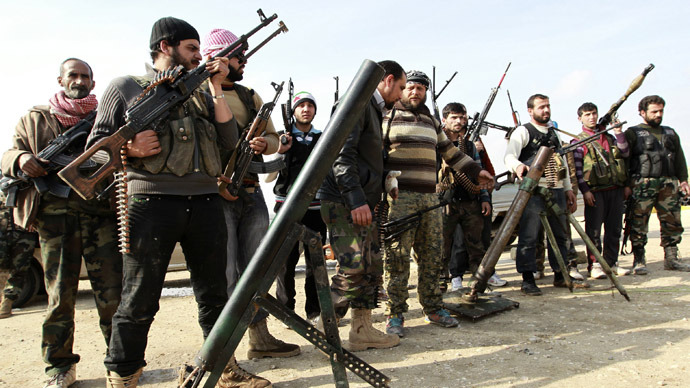
This information by itself does not explain the way in which the Islamic State obtained these sinister methods. It could have been through the narrations of some of the surviving victims of the torture centers set up by Washington in the last decade in different continents, or through a more direct way: consultancies that could have been part of the military support provided by the superpower to the armed rebel groups (including the Islamic State itself) that fight the Syrian regime. Regardless of how it happened, the revelation indicates the voluntary or involuntary influence the U.S. has had in the violation of human rights around the world. It is not a secret that various U.S. government agencies — the Department of Defense and the Central Intelligence Agency (CIA) in particular — have developed regular and systematic torture techniques, and have recorded them in documents such as the seven Pentagon manuals declassified in 1996, and two more belonging to the CIA, disclosed the following year, which were written between 1987 and 1991 to "train" students from the School of Americas in torture techniques subsequently used by military and paramilitary forces from Colombia, Ecuador, El Salvador, Guatemala and Peru. However, there is documentary evidence that the superpower provided training in execution, extortion, torture and electrocution to repressive forces of this hemisphere.
Moreover, Washington's initial aid to the new generation's armed fundamentalists gestated in Syria is preceded by the support the U.S. gave to the fundamentalist factions that fought against the Soviet invaders in Afghanistan, from which al-Qaida would be formed years later, and who were responsible for the 9/11 attacks in New York and Washington. Before this, the executed Saddam Hussein, who started a large-scale armed aggression against Iran in 1980, was financed, counseled and armed by the Ronald Reagan administration, in an attempt to eliminate the then emerging Islamic Republic without getting its own hands dirty.
These facts are a clear sample of the inconsistencies characterizing U.S. politics, and Western politics in general, in the conflicts unfolding in the Middle East, Central Asia and the Islamic world: extremely pragmatic, fluctuating and unscrupulous politics in which the villains of today are the allies of tomorrow and vice versa. Contrary to what is happening with the Islamic State, today Washington and different European governments are clearly supporting the autonomous Iraqi Kurdistan, even though the various Kurdish armed factions which sustain that regional government are — or were, until very recently — included in the catalogs of terrorist organizations created by the U.S. and its allies from the Old Europe.
It is not surprising that, after decades of criminal, immoral and opportunist intervention, and despite the countless invested resources in this endeavor, the U.S. position in the Middle East, Central Asia and the Persian Gulf, far from being consolidated, is becoming weaker and more precarious every day.
This information by itself does not explain the way in which the Islamic State obtained these sinister methods. It could have been through the narrations of some of the surviving victims of the torture centers set up by Washington in the last decade in different continents, or through a more direct way: consultancies that could have been part of the military support provided by the superpower to the armed rebel groups (including the Islamic State itself) that fight the Syrian regime. Regardless of how it happened, the revelation indicates the voluntary or involuntary influence the U.S. has had in the violation of human rights around the world. It is not a secret that various U.S. government agencies — the Department of Defense and the Central Intelligence Agency (CIA) in particular — have developed regular and systematic torture techniques, and have recorded them in documents such as the seven Pentagon manuals declassified in 1996, and two more belonging to the CIA, disclosed the following year, which were written between 1987 and 1991 to "train" students from the School of Americas in torture techniques subsequently used by military and paramilitary forces from Colombia, Ecuador, El Salvador, Guatemala and Peru. However, there is documentary evidence that the superpower provided training in execution, extortion, torture and electrocution to repressive forces of this hemisphere.
Moreover, Washington's initial aid to the new generation's armed fundamentalists gestated in Syria is preceded by the support the U.S. gave to the fundamentalist factions that fought against the Soviet invaders in Afghanistan, from which al-Qaida would be formed years later, and who were responsible for the 9/11 attacks in New York and Washington. Before this, the executed Saddam Hussein, who started a large-scale armed aggression against Iran in 1980, was financed, counseled and armed by the Ronald Reagan administration, in an attempt to eliminate the then emerging Islamic Republic without getting its own hands dirty.
These facts are a clear sample of the inconsistencies characterizing U.S. politics, and Western politics in general, in the conflicts unfolding in the Middle East, Central Asia and the Islamic world: extremely pragmatic, fluctuating and unscrupulous politics in which the villains of today are the allies of tomorrow and vice versa. Contrary to what is happening with the Islamic State, today Washington and different European governments are clearly supporting the autonomous Iraqi Kurdistan, even though the various Kurdish armed factions which sustain that regional government are — or were, until very recently — included in the catalogs of terrorist organizations created by the U.S. and its allies from the Old Europe.
It is not surprising that, after decades of criminal, immoral and opportunist intervention, and despite the countless invested resources in this endeavor, the U.S. position in the Middle East, Central Asia and the Persian Gulf, far from being consolidated, is becoming weaker and more precarious every day.
Previous article
