

ICE: A Cold That Cuts Flesh
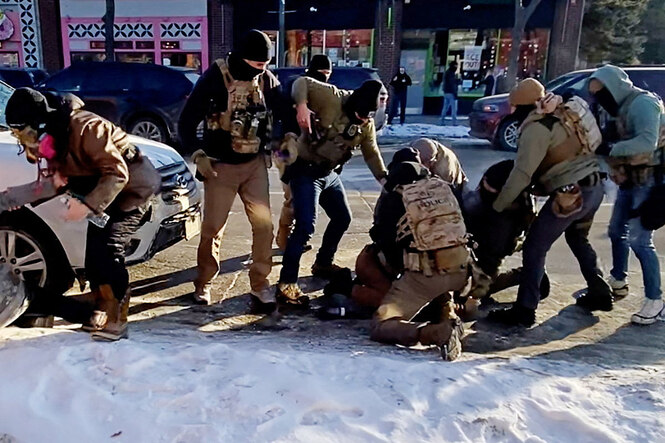
Day after day, a bitter cold envelops us. However, the news from Jan. 24 of yet another civilian death by U.S. Immigration and Customs Enforcement cuts deeper than the cold, into our very flesh. On Jan. 7, Renée Good was killed in Minneapolis, Minnesota, during a federal immigration raid. Only 15 days later, another horrific death has occurred in the same city.
After learning of this news, I immediately recalled a cry etched in my memory: “ICE, get out!” This sharp denunciation by Jason De León, an anthropology professor at the University of California, Los Angeles, kicked off the American Anthropological Association’s annual meeting, held last November in New Orleans. What was surprising were not the words themselves, but rather the instantaneous eruption of cheers as hundreds of anthropologists reacted immediately. This cheer was more than a response to a political rallying cry. It expressed a collective, visceral recognition of how forced displacement and deportation destroy the morality in everyday life. It was a response to a tragedy already predicted, even before civilians were killed by ICE agents.
The ambiance at the American Anthropological Association meeting was quite different before the start of the second Trump administration. Every presentation topic drew attention to the detention and deportation of immigrants. For the anthropologists engaged in fieldwork, recording immigrants’ “lived experiences” had become an essential task. The conference hall was filled with evidence of how tightly violence is woven into a reality that equates “immigrant” with “illegal.” Thomas Csordas, a well-known phenomenological anthropologist and professor at the University of California, San Diego, encouraged the audience to embrace the “immediacy” of the moment. In other words, anthropologists must notice and attend to the subtle, bodily sensations of pain experienced by those suffering. The standard for engaging in anthropology in the United States now seemed clear. Anthropologists must go beyond academic contributions, committing themselves to ethics and public involvement.
Another poignant moment of the meeting was during the expressions of praise and appreciation for the new book, "The Way That Leads Among the Lost" by Angela Garcia, a medical anthropologist and professor at Stanford University. Born in New Mexico, Garcia details the everyday experiences of immigrants and marginalized peoples, including loss, violence and addiction. In America’s reality, where life itself is a crisis, the book became not just a scholarly achievement, but also an ethical intervention. The book’s subtitle is "Life, Death, and Hope in Mexico City’s Anexos."
In the book, Garcia vividly captures the life-threatening migrations of Mexico’s citizens, experiences witnessed firsthand by De León. A section of the book, highlighting how the surge in drug production and trafficking within Mexico City is due to rising drug demand in the United States, is especially painful.
In Mexico, where the system is collapsing and violence is a daily occurrence, parents rely on private facilities called "anexos"* for their children’s survival. To prevent the worst tragedy, children being murdered on the streets or disappearing, parents have no choice but to commit a different form of violence against their children. This agonizing choice is the only survival strategy available to those left behind by a government that has vanished. Garcia’s raw words reveal how parents' moral dilemma, inflicting violence to ensure the survival of their children, hardens into an everyday reality.
The stories we gather from the international press should not be interpreted as Donald Trump the Tyrant’s mere whims or as products of international politics. The United States’ demand for drugs destroys Mexico’s everyday life, and those who escape from this destroyed life are again met with the guns of U.S. ICE agents. We must confront this horrific cycle directly. The road to the anexos is one of crippling fear for any family. Taking this path is not due to any individual failing, but rather the absence of the state and the forces of transnational capital. U.S. deportation policy is more than merely a technical exercise of border control. It is an apparatus that cuts and rearranges networks that shape the meaning of life. The crackdown may be justified through language referencing public safety, but in this space, safety and violence are inseparable.
The bitter cold we are experiencing will dissipate as the season progresses. But the cold of institutionalized crackdowns and deportations will immobilize bodies and relationships long after winter passes. “ICE: A Cold That Cuts Flesh” is not about the weather. It names the language and imagery that disguise coldness as order, and the ways they tear lives apart. What we should witness and remember is how people endure and care for each other in these torn spaces, and how wounds become part of everyday life. This is likely why De León chose “survival” and Garcia chose “hope” as themes for the subtitles of their books. In this time of deadly cold, the anthropological gaze is more important than ever.
*Editor’s note: Anexos are inexpensive, private rehabilitation facilities in Mexico that are somewhat controversial; they are not regulated and some use questionable methods in dealing with the addicts in their care.
After learning of this news, I immediately recalled a cry etched in my memory: “ICE, get out!” This sharp denunciation by Jason De León, an anthropology professor at the University of California, Los Angeles, kicked off the American Anthropological Association’s annual meeting, held last November in New Orleans. What was surprising were not the words themselves, but rather the instantaneous eruption of cheers as hundreds of anthropologists reacted immediately. This cheer was more than a response to a political rallying cry. It expressed a collective, visceral recognition of how forced displacement and deportation destroy the morality in everyday life. It was a response to a tragedy already predicted, even before civilians were killed by ICE agents.
The ambiance at the American Anthropological Association meeting was quite different before the start of the second Trump administration. Every presentation topic drew attention to the detention and deportation of immigrants. For the anthropologists engaged in fieldwork, recording immigrants’ “lived experiences” had become an essential task. The conference hall was filled with evidence of how tightly violence is woven into a reality that equates “immigrant” with “illegal.” Thomas Csordas, a well-known phenomenological anthropologist and professor at the University of California, San Diego, encouraged the audience to embrace the “immediacy” of the moment. In other words, anthropologists must notice and attend to the subtle, bodily sensations of pain experienced by those suffering. The standard for engaging in anthropology in the United States now seemed clear. Anthropologists must go beyond academic contributions, committing themselves to ethics and public involvement.
Another poignant moment of the meeting was during the expressions of praise and appreciation for the new book, "The Way That Leads Among the Lost" by Angela Garcia, a medical anthropologist and professor at Stanford University. Born in New Mexico, Garcia details the everyday experiences of immigrants and marginalized peoples, including loss, violence and addiction. In America’s reality, where life itself is a crisis, the book became not just a scholarly achievement, but also an ethical intervention. The book’s subtitle is "Life, Death, and Hope in Mexico City’s Anexos."
In the book, Garcia vividly captures the life-threatening migrations of Mexico’s citizens, experiences witnessed firsthand by De León. A section of the book, highlighting how the surge in drug production and trafficking within Mexico City is due to rising drug demand in the United States, is especially painful.
In Mexico, where the system is collapsing and violence is a daily occurrence, parents rely on private facilities called "anexos"* for their children’s survival. To prevent the worst tragedy, children being murdered on the streets or disappearing, parents have no choice but to commit a different form of violence against their children. This agonizing choice is the only survival strategy available to those left behind by a government that has vanished. Garcia’s raw words reveal how parents' moral dilemma, inflicting violence to ensure the survival of their children, hardens into an everyday reality.
The stories we gather from the international press should not be interpreted as Donald Trump the Tyrant’s mere whims or as products of international politics. The United States’ demand for drugs destroys Mexico’s everyday life, and those who escape from this destroyed life are again met with the guns of U.S. ICE agents. We must confront this horrific cycle directly. The road to the anexos is one of crippling fear for any family. Taking this path is not due to any individual failing, but rather the absence of the state and the forces of transnational capital. U.S. deportation policy is more than merely a technical exercise of border control. It is an apparatus that cuts and rearranges networks that shape the meaning of life. The crackdown may be justified through language referencing public safety, but in this space, safety and violence are inseparable.
The bitter cold we are experiencing will dissipate as the season progresses. But the cold of institutionalized crackdowns and deportations will immobilize bodies and relationships long after winter passes. “ICE: A Cold That Cuts Flesh” is not about the weather. It names the language and imagery that disguise coldness as order, and the ways they tear lives apart. What we should witness and remember is how people endure and care for each other in these torn spaces, and how wounds become part of everyday life. This is likely why De León chose “survival” and Garcia chose “hope” as themes for the subtitles of their books. In this time of deadly cold, the anthropological gaze is more important than ever.
*Editor’s note: Anexos are inexpensive, private rehabilitation facilities in Mexico that are somewhat controversial; they are not regulated and some use questionable methods in dealing with the addicts in their care.
Previous article
Next article