Iran: The US Faces a Quagmire
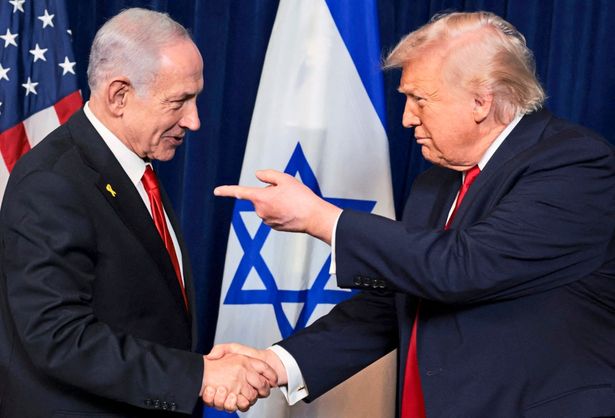
Two weeks of war in the Middle East already feel like an eternity. And it’s not merely because of the world we live in today. A world in which long-term thinking is an anomaly, short attention spans are the norm, and artificial intelligence is a reality capable of churning out a military tactic or a political speech in less than two seconds. One can only explain the unbearable length of a war that is, in fact, still very recent, by a lack of purpose and foresight, mainly on the American side. How is it that the United States and its Israeli ally have enough human intelligence and military technology to finish off the tyrannical Ali Khamenei within the first hour of war, yet could not anticipate Iran’s ability to block the Strait of Hormuz and the world economy? The U.S. chairman of the Joint Chiefs of Staff has just discovered that the strait is a “tactically complex environment” to secure. Meanwhile, the Trump administration would rather attack the “shitty media”* for allegedly negative coverage of the U.S.-Israeli operation. A classic move, but many questions remain about the United States’ involvement, which increasingly appears to have followed in Israel’s footsteps.
Among these questions, how could Trump have thought that by razing Iran’s leader into the ground, its people, slaughtered in the streets just six weeks earlier, would immediately rise up and brandish weapons they do not have? The Iranian regime has been weakened considerably, but it is still breathing. Above all, it is prepared to sacrifice its own country and its people to the last drop of blood before it will capitulate. This is the guiding principle behind all totalitarian regimes that claim to act in the people’s best interest, while they massacre them at the same time. After showing off and flexing his muscles, Donald Trump finds himself pathetically having to authorize the sale of a small amount of Russian oil and seek advice from Volodymyr Zelenskyy on the cheapest way to shoot down Iranian drones that are striking American bases and American allies in the Gulf. In his usual vague and simplistic language and following his claim that the war is “almost over,” the U.S. president now says that seizing power in Iran “might not happen immediately.”
For the first time, Trump has become a critic suffering his own war, and it’s all the more concerning that he has no plan in place as the conflict continues to engulf the entire region. This marks a precedential turning point, as we see Trump think it likely that Vladimir Putin might “help out a little” regarding the Iranians, or that there is nothing Trump can say to ease the anxiety surrounding the stock and oil markets. Trump may very well assert that he will hit “very hard” next week, but even with the world’s largest weapons, he is certainly finding out in this region that a “special operation” can quickly turn into a quagmire, and that the Middle East is not Venezuela.
*Editor’s note: Although accurately translated, this remark could not be independently verified.
Among these questions, how could Trump have thought that by razing Iran’s leader into the ground, its people, slaughtered in the streets just six weeks earlier, would immediately rise up and brandish weapons they do not have? The Iranian regime has been weakened considerably, but it is still breathing. Above all, it is prepared to sacrifice its own country and its people to the last drop of blood before it will capitulate. This is the guiding principle behind all totalitarian regimes that claim to act in the people’s best interest, while they massacre them at the same time. After showing off and flexing his muscles, Donald Trump finds himself pathetically having to authorize the sale of a small amount of Russian oil and seek advice from Volodymyr Zelenskyy on the cheapest way to shoot down Iranian drones that are striking American bases and American allies in the Gulf. In his usual vague and simplistic language and following his claim that the war is “almost over,” the U.S. president now says that seizing power in Iran “might not happen immediately.”
For the first time, Trump has become a critic suffering his own war, and it’s all the more concerning that he has no plan in place as the conflict continues to engulf the entire region. This marks a precedential turning point, as we see Trump think it likely that Vladimir Putin might “help out a little” regarding the Iranians, or that there is nothing Trump can say to ease the anxiety surrounding the stock and oil markets. Trump may very well assert that he will hit “very hard” next week, but even with the world’s largest weapons, he is certainly finding out in this region that a “special operation” can quickly turn into a quagmire, and that the Middle East is not Venezuela.
*Editor’s note: Although accurately translated, this remark could not be independently verified.
Previous article

Next article